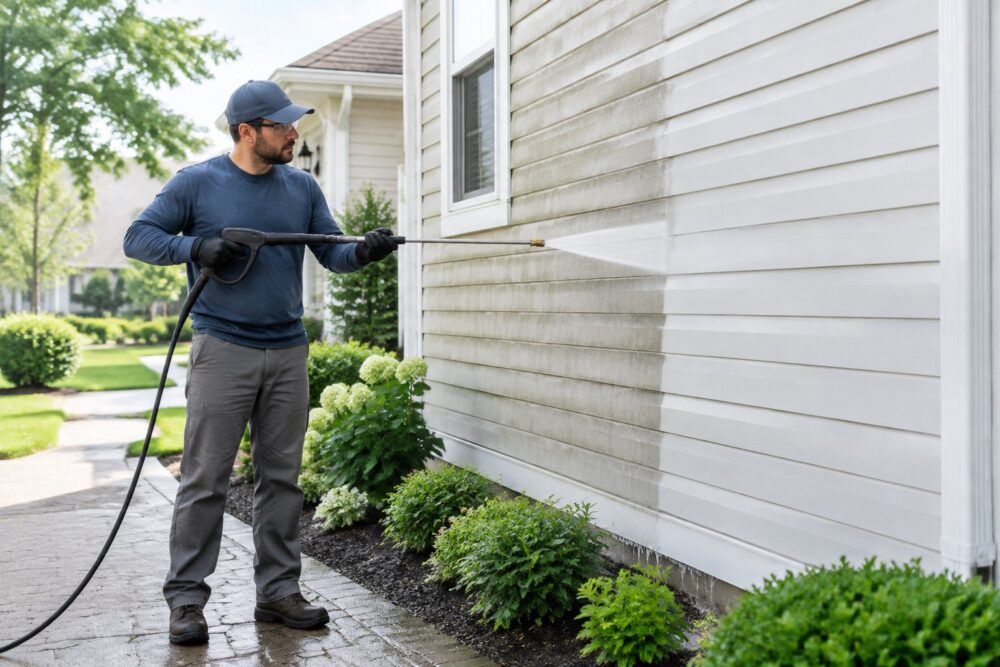
House Siding Cleaning: Which Method Protects Vinyl, Wood, Stucco, and Brick?
Maybe your stucco looks gray-green after a humid summer, or your vinyl siding has black streaks under the eaves. You may be tempted to grab a pressure washer. For vinyl, wood, and stucco, a low-pressure soft wash with a cleaning solution is the safer house siding cleaning method. Brick and its mortar also call for a gentle approach, and concrete driveways can take more pressure. The wrong method can crack panels, gouge wood, or etch stucco, and that damage costs more than the cleaning.
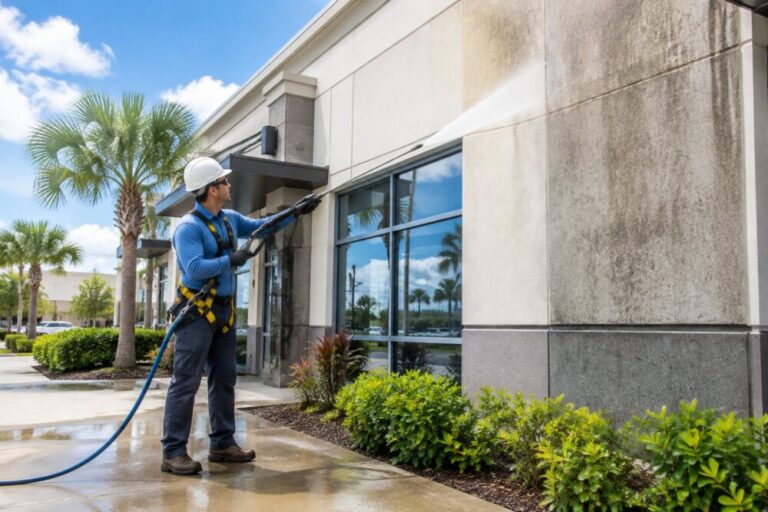
Central Florida makes this choice come up often. Humidity stays high most of the year, and afternoon storms keep walls damp. North-facing walls that never get direct sun turn green first. The Essentials Pressure Washing crew has watched that pattern on Orlando, Clermont, and Minneola homes since 2005. Mold, mildew, and algae grow back fast here, so most homes need exterior house cleaning at least once a year to keep their curb appeal.
Keep reading to find out how soft washing and pressure washing differ, and why each siding material needs its own approach. You will also learn which cleaners are safe, which materials need a closer look, and when a professional assessment makes sense. By the end, you will know what to ask before anyone points a nozzle at your home.
How Do Soft Washing and Pressure Washing Compare for Siding?
Soft washing uses low water pressure and a cleaning solution to kill and lift growth. Pressure washing uses high-pressure water to blast dirt away. Both clean, but they suit very different surfaces.
Here is how the two methods line up on the materials most homes have:
| Material | Method | Why |
|---|---|---|
| Vinyl siding | Soft wash | High pressure can push water behind the laps or crack panels |
| Wood siding | Soft wash or hand cleaning | High pressure can gouge fibers and strip paint or stain |
| Stucco | Soft wash | High pressure can etch the finish and open hairline cracks |
| Brick | Gentle cleaning, with low pressure on mortar | Older or soft brick needs extra care |
| Concrete driveways | Pressure washing at a setting the concrete can handle | Spot treatment handles oil and rust |
Why Can High Pressure Damage Siding?
Siding is built to shed rain falling from above. A pressure washer sends a hard stream sideways or upward, straight into seams and laps. Water that gets behind the siding sits against the wall and has a hard time drying out.
The stream can also cause damage you can see. Vinyl can crack or break through. Wood can splinter and lose its finish. Stucco can get etched lines that look worse than the mildew did.
Stripe marks are another common problem. When the nozzle moves unevenly, it leaves clean bands next to dirty ones. That is why siding manufacturers like James Hardie advise owners to skip high-pressure power washers on their products.
How Does a Soft Wash Clean Mold, Mildew, and Algae?
Soft washing siding lets the solution do the work, which spares the surface from force. The cleaner goes on at low pressure and sits long enough to break down the growth. Then the whole wall gets a top-to-bottom rinse.
Heavily shaded walls with thick organic staining get extra treatment time. Turning up the pressure is the wrong fix for stubborn growth. A good house washing crew also rinses plants before and after so nothing sits in solution.
That same idea, more time and less force, also applies to driveways in its own way. Concrete can take real pressure, so driveway cleaning uses even passes plus spot treatment. Your siding needs the gentler side of the toolbox, starting with the two most common materials.
How Should Vinyl and Wood Siding Be Cleaned?
Vinyl and wood both do best with low pressure and mild cleaners, but they fail in different ways. Vinyl is a thin plastic shell. Wood is a natural material that soaks up water and wears down under force.
What Is the Safer Approach for Vinyl Siding?
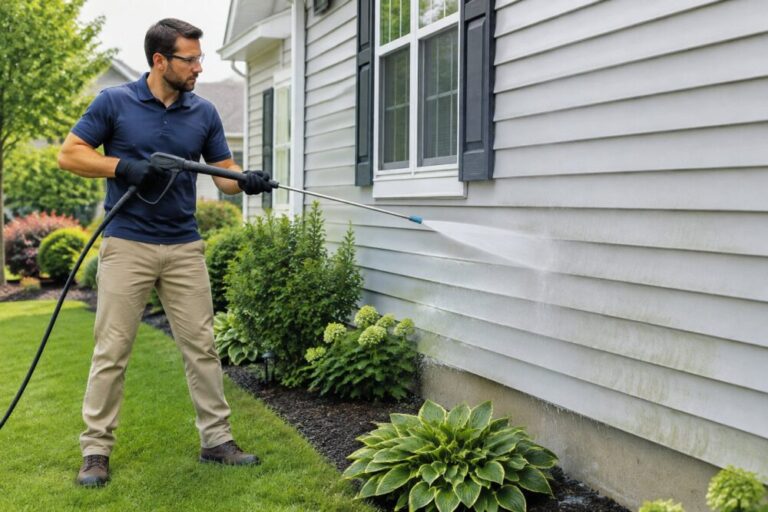
Vinyl siding cleaning works best with a soft wash or a garden hose and a soft brush. Light dust and cobwebs often come off with plain water. Green algae and black mildew need a cleaner made for vinyl and enough time to work.
Pressure washing vinyl siding is where most DIY damage starts. A narrow nozzle held too close can discolor the panel or punch through it. Spraying upward drives water behind the laps, where it can reach the sheathing.
Vinyl also builds up a chalky film from sun exposure. Scrubbing that film with an abrasive pad leaves dull scratches. Stick with a soft-bristle brush or cloth when you clean vinyl by hand.
Why Does Wood Siding Need Extra Care?
Wood siding takes on water, so harsh washing can leave it wet for days. That makes moisture control part of every wood cleaning job.
High pressure raises the grain and can strip paint or stain in patches. Strong chlorine bleach can also discolor wood and weaken its fibers. Many homeowners use oxygen bleach on wood for that reason.
After cleaning, wood should dry fully before you paint, stain, or seal it. If you see soft spots, peeling paint, or rot near the bottom boards, fix those first. Masonry surfaces bring their own set of rules.
What Changes for Stucco and Brick?
Stucco and brick feel solid, so many people assume they can take full pressure. Both are porous, and both can be damaged by water forced into the surface or the joints.
How Can Cleaning Protect Stucco Finishes?
Stucco siding should get a stucco soft wash with low pressure and a cleaning solution. High pressure etches the textured finish and can widen hairline cracks. Once water gets into those cracks, it soaks into the wall behind.
Before any wash, look for cracks, loose patches, and stains running down from windows. Those spots need care or should stay dry. A careful house washing crew checks for damaged areas before the solution goes on.
When Can Water Pressure Harm Brick or Mortar?
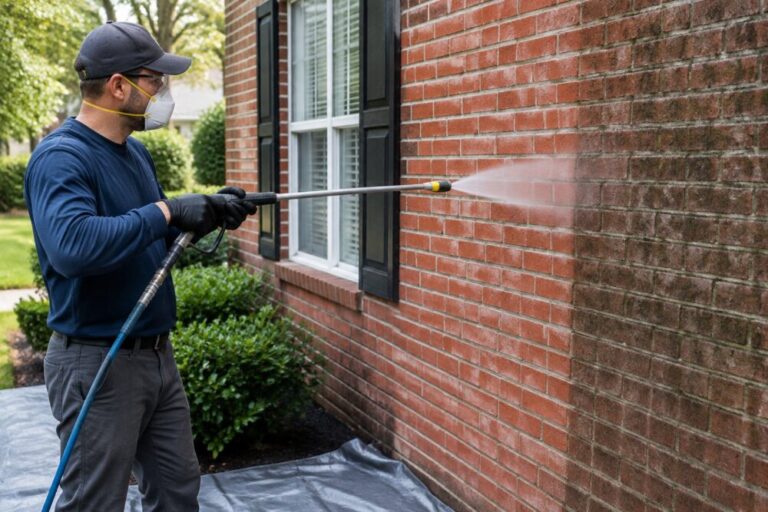
Brick siding is tough, but its mortar is softer than the brick. A pressure washer can wash out mortar from the joints and leave gaps. Older or soft brick can lose its face, which exposes the weaker inside.
Watch for these warning signs before cleaning brick:
- Crumbling or sandy mortar in the joints
- Brick faces that flake or chip
- White, powdery deposits that keep coming back
- Cracks that run through several rows of brick
For mortar-safe methods, see brick cleaning. Cement siding (often called fiber cement) also belongs in this group. It is dense and rigid, but its makers advise low pressure. Once you know your surface, the next question is what to put on it.
Which Cleaners and Tools Are Safe for Siding?
A garden hose, a soft-bristle brush, and a mild cleaner handle more siding jobs than most people expect. Stronger products have a place, but each one fits certain materials and not others.
When Are Water and a Mild Cleaner Enough?
Plain water works for light dust, pollen, and cobwebs. Dish soap and water handles greasy handprints and splashed dirt. Use a soft cloth or soft-bristled brush and rinse before the soap dries.
Work in small sections, and rinse from the top down to avoid streaks. Skip steel wool, wire brushes, and gritty cleansers on every siding type. They scratch vinyl, scuff paint, and dull the finish on fiber cement.
For light growth on vinyl, use a cleaner labeled for vinyl siding and follow the label and the siding maker’s guidance. For heavy algae on a two-story wall, a hose and brush only go so far.
What Should You Check Before Treating Mold or Mildew?
Mold, mildew, and algae need moisture to grow. If a clogged gutter or a leaky hose bib keeps one wall wet, the growth will return soon after cleaning. Fix the water source first.
Then match the remover to the material, and follow the product label and the siding maker’s guidance:
- Vinyl and aluminum siding: A vinyl-safe mold and mildew remover, used per the label.
- Wood: Oxygen bleach, used per the label, to avoid fiber damage.
- Stucco and brick: Dish soap and water for light stains; a cleaner labeled for masonry for heavier growth.
- Fiber cement: Mild soap and water or a siding cleaner approved by the maker.
Protect yourself as well. The CDC advises gloves, sealed goggles, and an N95 respirator for mold cleanup. It also says to never mix bleach with ammonia or other cleaners. People with asthma or allergies should leave the job to someone else.
Which Materials Need a Different Assessment?
Asbestos siding is the biggest concern. It was common on older homes and can look like cement siding. The ATSDR lists siding among the materials owners of older homes should avoid disturbing.
Aluminum siding dents easily and can show chalky oxidation that rubs off on your hand. Painted wood with possible lead paint also needs care, since scraping or blasting it spreads chips. If you are unsure what your siding is, find out before you clean it.
When Is a Professional Assessment Worth It?
A professional assessment is worth it when the wrong method could cost you a repair. That covers two-story walls, heavy growth, unknown materials, and siding with existing damage.
What Should a House Siding Cleaning Estimate Cover?
A clear estimate tells you which method will be used on each surface and why. It should list what gets cleaned. A full house wash covers siding, soffits, fascia, gutter faces, and trim.
Ask how the crew protects landscaping and what stays dry. You should also hear about stains that may not fully come out, such as old rust. If your driveway needs work too, you can ask for a combined estimate that includes driveway cleaning.
When Is It Better Not to Clean Siding Yourself?
You can clean siding without a pressure washer on a small, single-story home with light dirt. Past that point, the risk climbs. Skip the DIY route if any of these apply:
- The walls are two stories or need a tall ladder.
- Mold or algae covers large areas or comes back within months.
- You see cracked stucco, loose panels, or soft wood.
- The home is older and the siding material is unknown.
- You have asthma, allergies, or a weak immune system.
A pro can see what you may miss and pick a method for each surface.
Choose a Cleaning Method That Protects Your Siding
Soft washing is the right call for vinyl, wood, and stucco, and brick needs gentle care around its mortar. Save higher pressure for concrete, where driveway cleaning uses settings the surface can take. Check your material, fix moisture sources, and treat growth with time instead of force.
Essentials Pressure Washing has cleaned Central Florida homes since 2005. The family-run crew focuses on two exterior services: house washing and driveway cleaning.
Not sure which method fits your siding? Call or text (407) 284-9438 with your address and what needs cleaning. You will get a free estimate with no obligation, and you may receive a same-day callback.
Frequently Asked Questions
Can You Pressure Wash Vinyl Siding Without Damaging It?
It is risky, and a soft wash is the safer choice for vinyl. High pressure can crack panels and push water behind the laps. A low-pressure wash with the right cleaner removes mildew and algae without that risk.
What Should You Not Use to Clean Vinyl Siding?
Avoid wire brushes, steel wool, abrasive pads, and gritty cleansers. Never mix bleach with ammonia or other cleaners. Also skip products not made for vinyl, since they can discolor the surface.
Can You Clean House Siding Without a Pressure Washer?
Yes, a garden hose, a soft brush, and a mild cleaner work well on light dirt. For heavy mold or tall walls, a professional soft wash covers the job safely. It also reaches soffits and fascia that are hard to clean from a ladder.
How Much Does Professional Siding Cleaning Cost?
Price depends on home size, siding type, and how much mold or algae has built up. If you want driveway cleaning too, you can ask for a combined estimate. A free estimate is the fastest way to get a price for your home.
Will Mold or Algae Come Back After Siding Is Cleaned?
Yes, growth returns over time in Central Florida’s humidity. Shaded, north-facing walls and spots near leaks come back first. Most homes here need a wash about once a year to stay ahead of it.