Soft Washing Siding: How to Remove Florida Algae Without Damaging Vinyl
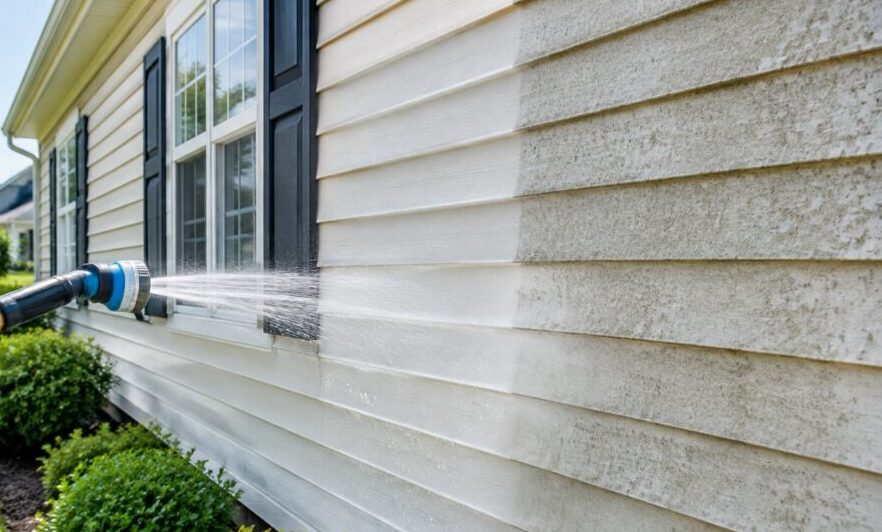
Late summer in Central Florida leaves a mark on vinyl siding. After months of humid days and afternoon storms, a thin green film spreads across the north wall. Dark streaks also creep along the shaded side of the house, behind the oak tree. Soft washing siding is the safe, effective way to clean that growth off vinyl. A low-pressure rinse paired with a cleaning solution kills algae and mildew on vinyl without forcing water behind the panels or scarring the surface.
Local crews in Orlando, Clermont, and Minneola have dealt with this same green and black buildup on Central Florida homes for decades. Some have done it since 2005. That long view shows a clear pattern: the homes that keep their curb appeal are the ones cleaned with a method matched to the surface.
Keep reading to find out why algae loves your siding and how a soft wash removes it. You will also see what happens during a professional visit. By the end, you will know what to expect and be able to decide when your siding is due.
How Does a Soft Wash Remove Algae from Vinyl?
A soft wash removes algae by killing it with a cleaning solution, then rinsing the dead growth away with low-pressure water. The solution does the cleaning, so the water never has to blast the vinyl.
Why Florida Humidity and Shade Encourage Green Growth
Algae and mildew need moisture, a place to cling, and something to feed on. Your vinyl siding offers all three in Central Florida. Humid air keeps the wall damp for hours after sunrise, and dust and pollen give growth a food source.
Shade makes it worse. North-facing walls and sides near trees dry slowly, so green film shows up there first. Sprinkler spray that hits the wall adds even more water to the same spots.
Landscaping matters too. University of Florida (UF) IFAS guidance suggests keeping plants three feet from the house so air can move freely. Thick shrubs pressed against siding trap humid air, and algae and mildew grow fast in that pocket.
How Cleaning Solution, Surfactants, and Dwell Time Work Together
Soft washing uses three parts that work as a team. Each one has a plain job:
- Sodium hypochlorite: The active ingredient in bleach. It kills algae, mold, and mildew so they lift off the surface.
- Surfactants: Soap-like additives that help the mix spread and cling to the wall. Without them, the solution runs off too fast.
- Dwell time: The few minutes the solution sits on the siding before the rinse. This is when the growth dies.
- Low-pressure rinse: A gentle flow of water carries the dead growth and solution away.
The mix strength is set for the job. Heavy green growth on a shaded wall gets more dwell time, and a lightly dirty sunny wall needs less. Store bleach holds roughly 5% to 9% sodium hypochlorite, so pros dilute their solution with care. The gentle rinse that follows is where vinyl stays safe.
Why Does Low Pressure Matter for Vinyl?
Vinyl siding is a thin plastic shell built with overlapping seams. Those seams shed rain that falls downward. They were never built to stop a strong jet of water aimed sideways or upward.
What High-Pressure Water Can Do to Siding and Seams
High-pressure water causes harm in several ways on vinyl:
- It drives water up under the laps and into the wall behind the panels.
- It wets the house wrap, where trapped moisture feeds hidden mold.
- It cuts streaks, often called stripe marks, into chalky or aged siding.
- It cracks brittle panels and knocks loose trim pieces or vent covers.
Pressure washing a wall also tends to leave the algae roots behind. The visible film comes off, but green growth returns quickly. Soft washing siding kills the growth first, so the low-pressure rinse finishes the job without force.
Is Soft Washing Siding Different from Pressure Washing a Driveway?
Yes. The two jobs use different methods because the surfaces are built differently. Concrete is thick and hard, and it can take more pressure. Vinyl is thin and seamed, so it needs a gentle approach.
| Surface | Method | Why It Fits |
|---|---|---|
| Vinyl siding | Soft wash | Thin panels and seams need low pressure; solution kills growth |
| Stucco and painted block | Soft wash | Protects paint and keeps water out of cracks |
| Concrete driveway | Pressure wash at a set level | Hard surface handles pressure to lift oil spots and tire marks |
| Pavers | Lower pressure | Helps keep joint sand in place |
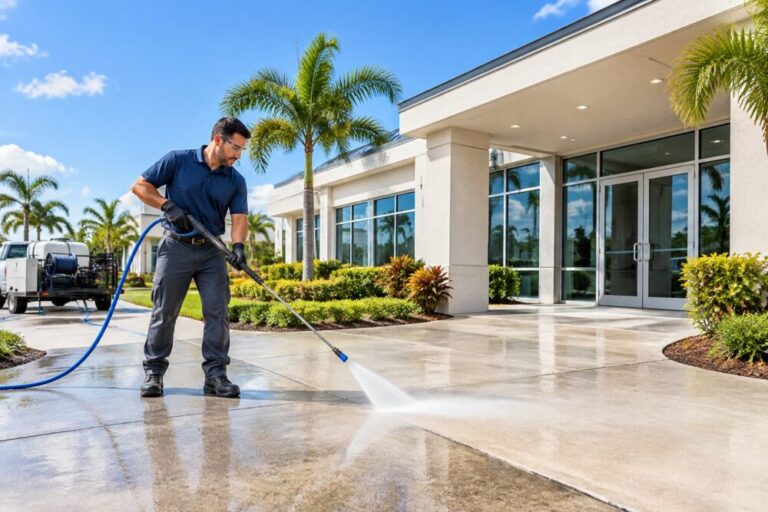
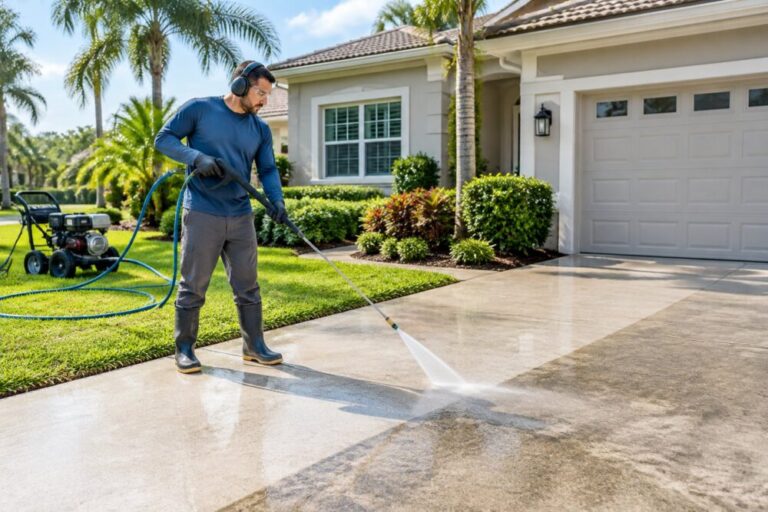
If your concrete has oil spots or green film, driveway cleaning in Orlando uses the pressure concrete can take. Neither method fits every surface. Matching the method to the material keeps each part of your property safe, and that starts before the first spray.
What Happens During a Siding Wash?
A professional siding wash follows a set order: inspect, protect, treat, and rinse. Each step guards your home during exterior cleaning.
Checking for Damage and Areas That Must Stay Dry
The crew walks your home before any water comes out. They look for loose or cracked panels, gaps around windows, and broken seals. Spraying near a weak spot can push water inside the wall.
They also mark items that must stay dry. Outdoor outlets, light fixtures, and doorbells get covered or avoided. Damage found at this stage gets pointed out to you before work begins.
Protecting Landscaping Before and After the Rinse
Plants near the house get soaked with clean water before the soft wash chemicals go on. Wet leaves and soil absorb less of the solution. After the wash, the plants get rinsed again to clear any runoff.
This two-step rinse protects flower beds and hedges along your foundation. It also covers grass edges near the walls. Planters, hoses, and outdoor furniture should be moved out of the way.
Treating Growth and Rinsing at Low Pressure
The solution goes on from the bottom up, which helps prevent streaks. A house wash covers siding, soffits, fascia, gutter faces, and trim. Shaded walls with heavy staining get extra treatment time instead of extra pressure.
After dwell time, the crew rinses from the top down at low pressure. Dead algae and dirt slide off with the water. A final rinse of the walls and plants clears leftover solution. Vinyl is common in Florida, but plenty of homes mix in other materials.
Does the Method Change for Other Siding Materials?
The soft wash idea stays the same, but the details change with the material. Stucco, brick, painted block, and wood each have their own weak points.
Cleaning Stucco Without Forcing Water into Cracks
Stucco siding is porous, which means it soaks up water like a hard sponge. Hairline cracks are common, and strong pressure can push water straight through them. Moisture that gets behind stucco is slow to dry and can harm the wall underneath.
Building scientists point out that wet stucco often has no drainage space behind it. That makes gentle cleaning even more important. A soft wash lets the solution lift mold and mildew while the low rinse keeps water on the surface.
Why Wood Siding Needs a Condition Check First
Wood siding stays healthy only while its paint or stain is intact. Bare spots, peeling paint, and soft boards soak up water quickly. Cleaning wet wood in poor shape can speed up rot.
A careful crew checks the coating and probes soft areas before washing. If the finish has failed, repairs or repainting should come before a full clean. The condition of any siding also shapes how long a clean lasts.
When Should Florida Homeowners Wash Their Siding Again?
Most Central Florida homes need a new wash when green or dark growth starts showing again. Shade, weather, and siding age decide how fast that happens.
Signs That Growth Is Returning
Watch for these early signs on your vinyl siding:
- A faint green tint on the north wall or behind trees
- Gray or black specks under eaves and on soffits
- Dark streaks running down from gutters
- A dull, dirty look that hurts your curb appeal
Catching growth early makes the next wash easier. Light film comes off with a shorter treatment than thick buildup that has spread for years. You can find more seasonal tips on the exterior cleaning blog.
Why Results Vary by Shade, Weather, and Siding Condition
No wash keeps algae away forever. Spores float in Florida air all year, and they settle back onto damp walls. A shaded wall near a pond will turn green sooner than a sunny one.
Old, chalky vinyl holds dirt more easily than newer panels. A rainy summer speeds regrowth. Trimming branches, aiming sprinklers away from the walls, and fixing leaky gutters all help your siding stay clean longer.
Choosing a Gentle Clean for Florida Siding
Soft washing is the right fit for algae and mildew on vinyl because it kills the growth and rinses gently. High-pressure water risks seams, panels, and the wall behind them. A careful visit adds an inspection, protects your plants, and rinses at low pressure.
Essentials Pressure Washing is a family-run crew that has cleaned Central Florida homes since 2005. The crew uses a soft wash on siding and the right pressure on concrete. You can see local options for house washing in Orlando, Clermont house washing, and house washing in Minneola. Pair it with Clermont driveway cleaning or Minneola driveway cleaning and price it as one job.
Learn more about pressure washing in Orlando, Clermont pressure washing, or Minneola pressure washing. You can also browse all house and driveway services or visit the Essentials Pressure Washing home page. Ready to see your home clean? Call or text (407) 284-9438 with your address for a free estimate, no obligation, with a same-day callback.
Frequently Asked Questions
Is It Better to Soft Wash or Pressure Wash Vinyl Siding?
Soft washing is better for vinyl siding. The cleaning solution kills algae and mildew, and the low-pressure rinse protects seams and panels. High pressure belongs on hard surfaces like concrete.
Can I Soft Wash Siding with a Pressure Washer?
Some pressure washers can be set up for low-pressure soft washing with the right nozzle and chemical system. A standard machine aimed at the wall can still force water behind the panels. Mixing and applying the solution safely also takes care around plants and fixtures.
Will Soft Washing Remove Every Dark Stain on Vinyl Siding?
No, soft washing will not remove every dark stain. It works well on algae, mold, mildew, pollen, and dirt. Rust, fading, and some old stains may stay, and a good crew will tell you what to expect before starting.
How Long Does a Soft Wash Last on a Florida House?
How long a soft wash lasts depends on shade, rain, and the age of your siding. Shaded walls and older vinyl turn green sooner than sunny walls and newer panels. Watch the north side of your house for the first signs of growth.
What Should I Ask About Before Hiring Someone to Wash My Siding?
Ask what method the crew uses on your siding and how they protect your landscaping. Also ask whether they inspect for damage first and what the wash covers, such as soffits, fascia, and gutter faces. A clear, free estimate should answer each of these.