Soft Wash House Washing vs. Pressure Washing: Which Is Safer for Your Home?
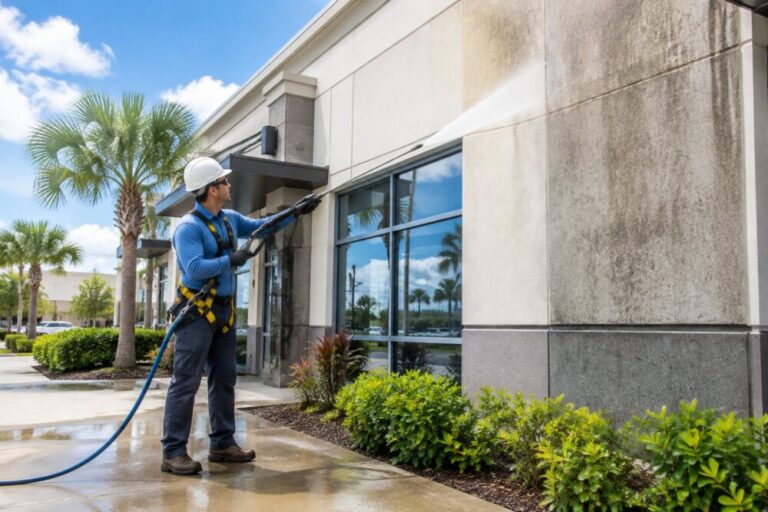
Green streaks creep across the stucco under your eaves after a long, humid Central Florida summer. Gray film settles on the vinyl siding along the shady north wall. You want it gone, but you have heard stories about pressure washers chipping paint and cracking stucco. For most house exteriors, including vinyl siding, stucco, painted surfaces, and brick, soft wash house washing is the safer choice; save higher pressure for hard surfaces like concrete driveways.
Local crews in Orlando, Clermont, and Minneola have cleaned homes in this climate for decades, some since 2005. That experience points to one clear lesson. The surface decides the method. Siding and stucco need a gentle approach. Concrete can take more force.
In this guide, you’ll learn how soft washing and pressure washing differ and which one fits each part of your home. You will also see what high pressure can damage and what a low-pressure house wash looks like step by step. By the end, you will be able to ask any contractor the right questions about your own exterior.
What Changes When You Use Soft Washing Instead of Pressure Washing?
The cleaning work moves from the water stream to the cleaning solution. With soft washing, a mild mix breaks down growth, and low-pressure water rinses it away. With pressure washing, the force of the water does most of the scrubbing.
Both methods count as exterior cleaning, and both have a place. The difference is how much stress each puts on the surface you are cleaning.
How Does Soft Wash House Washing Remove Mold, Mildew, and Algae?
Soft washing kills organic growth where it lives. Mold, mildew, and algae root into the tiny pores and texture of siding and stucco. Spraying hard water at them knocks off the top layer but leaves the roots behind.
A soft wash solution soaks into those pores. It breaks down the growth, loosens dirt and pollen, and lets the surface rinse clean with about the pressure of a garden hose. Because the roots are treated, regrowth comes back more slowly in Florida’s heat and humidity.
This matters in shaded spots. Corners that never see direct sun stay damp, and growth there runs thick. Extra treatment time handles those areas better than extra force.
When Does Water Pressure Do the Cleaning?
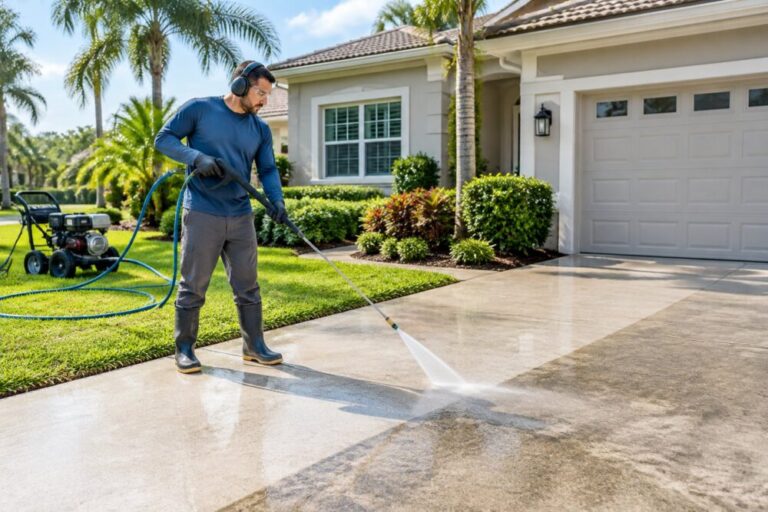
Pressure does the work on hard, dense surfaces built to take it. A concrete driveway is the best example. Oil spots, tire marks, and ground-in dirt sit on and in the surface, and force helps lift them out.
Pressure washers spray water at high force to clean large, sturdy surfaces. The CDC notes that this spray can cause serious wounds that first look minor. That same force is what strips paint and gouges soft materials on a house.
Even on concrete, the setting has to fit the slab. Pavers, for example, need a lower-pressure approach so the joint sand stays in place.
Is Power Washing the Same as Pressure Washing?
In everyday talk, yes. Most homeowners and many contractors use the two terms for the same thing: high-pressure water cleaning.
Some in the trade say power washing uses heated water, while pressure washing uses cold water. For your house, the detail that counts is the pressure level. Whether someone calls it power washing or pressure washing, high force on siding or stucco carries the same risks.
So the useful question for any crew is simple. Ask what pressure and what solution they plan to use on each surface of your home.
Which Method Fits Your Exterior Surface?
Most of your home’s walls call for soft washing, and your driveway calls for pressure. Here is how that plays out surface by surface on Central Florida homes.
Vinyl Siding and Stucco
Vinyl siding and stucco both need a soft wash. Vinyl panels overlap, and high pressure can push water up behind them. Trapped moisture behind siding feeds mold where you cannot see it.
Stucco is porous and textured, and most Florida stucco is painted. High pressure can blast paint off, widen hairline cracks, and drive water into the wall. A soft wash cleans the texture without that stress. You can see how this works locally on the soft wash house washing in Orlando page.
Painted Wood and Painted Block
Painted surfaces should be soft washed. Paint is a thin film, and a high-pressure stream finds every weak spot. Chalky, oxidized paint comes off with very little force.
Wood adds another risk. High pressure raises the grain, splinters soft spots, and soaks the boards. Painted concrete block is tougher underneath, but the paint on top still peels if you hit it hard. Low pressure plus the right solution keeps the paint where it belongs.
Brick and Mortar
Brick is sturdy, but mortar joints are softer than the brick itself. High pressure can wear down mortar over time and open gaps where water gets in.
A soft wash removes mildew, algae, and cobwebs from brick without that wear. Some stains, like red clay splash at the base of a wall, need more help. In those spots, a careful crew may use medium pressure on solid brick and sound mortar, after checking the joints first. If you live in Lake County, the Clermont house washing page lists brick among the surfaces covered.
Concrete Driveways and Walkways
Concrete is where pressure belongs. A dense slab handles the force needed to pull out oil, tire marks, and black algae from its pores.
Good driveway work still follows a process:
- Spot-treat first: oil, irrigation rust, and heavy organic growth get a pretreatment.
- Clean in even passes: steady, overlapping passes prevent the stripe marks you see on rushed jobs.
- Detail the edges: cracks, expansion joints, and borders get extra attention.
- Adjust for the surface: pavers and stamped concrete get a gentler approach than plain concrete.
Local examples include driveway cleaning in Orlando and Clermont driveway cleaning. Once you know which surface gets which method, the next question is what goes wrong when that match is ignored.
What Can High Pressure Damage on a House?
High pressure damages the soft, thin, or sealed parts of a house first. Paint, stucco texture, wood fibers, caulk, and mortar all wear faster than you might expect under a narrow, forceful spray.
The damage does not always show the same day. Water forced into walls can lead to mold, rot, or peeling weeks later.
Paint, Stucco, and Wood
Paint chips and peels when a pressure washer stream hits it. On stucco, the stream can also chew into the texture and leave blotchy patches that need repainting.
Wood takes damage in a different way. The spray raises fibers, leaves fuzzy or gouged lines, and soaks into end grain. Wet wood under Florida humidity is an open invitation for rot and more mildew.
Common signs of pressure damage on a house include:
- Paint stripped in lines or patches
- Etched lines or “wand marks” in stucco or wood
- Fuzzy, raised wood grain on trim or fascia
- New peeling or bubbling paint a few weeks after cleaning
Siding Seams, Window Seals, and Mortar Joints
Seams and seals are the weak points. Vinyl siding seams, the caulk around windows, and the rubber seals on window frames are built to shed rain falling down. They are not built for water blasted sideways or upward.
When high pressure gets behind siding or past a window seal, water stays inside the wall. Mortar joints on brick wear thinner with each high-pressure cleaning, which lets more water in over time. Soft washing avoids these risks because the rinse is gentle enough to run off the way rain does.
What Happens During a Low-Pressure House Wash?
A professional soft wash follows a set order: inspect, protect, apply, wait, rinse, and check. Each step protects your home and your yard while the solution does the cleaning.
Check Vulnerable Areas and Rinse Landscaping
The job starts with a walk around your house. A good crew looks for damaged siding, loose trim, cracked stucco, failed window seals, and outlets or fixtures that need to stay dry. Noting existing damage up front protects you and the crew.
Next comes the landscaping. Plants get rinsed with plain water before any solution goes on. Wet leaves absorb less of the cleaning mix. Items hanging on the walls get taken down, and metal fixtures like brass or copper lights get extra care because the solution can tarnish them.
Apply a Surface-Matched Solution Without High Pressure
The crew applies a house wash mix with a soft wash system or low-pressure sprayer. This mix usually includes sodium hypochlorite (the active ingredient in bleach) diluted with water, plus a surfactant. A surfactant is a soap-like additive that helps the solution cling to walls and soak into texture.
Household bleach contains 5% to 9% sodium hypochlorite, according to the CDC. A house wash mix is diluted further and adjusted for the surface and how heavy the growth is. Light dirt and cobwebs need a mild mix. Heavy growth in shaded corners gets a stronger spot treatment.
Allow Treatment Time, Then Rinse and Inspect
The solution needs time on the surface. This “dwell time” lets it break down mold, mildew, and algae. The crew keeps the walls from drying out during this step and keeps plants wet nearby.
Then the house gets a low-pressure rinse from top to bottom. Soffits, fascia, gutter faces, and trim are rinsed along with the walls. Landscaping gets a final rinse, and the crew walks the house again to check for missed spots. Even a careful process like this has limits, and it helps to know them before you book.
What Are the Limits of Soft Washing?
Soft washing handles organic growth and everyday grime well, but it does not fix every problem. Some stains come from minerals, metal, or damage, and those react differently to a cleaning solution.
Why Deep-Set Stains May Remain
Some marks are not on the surface; they are in it. Rust from irrigation water, red clay splash, and old water stains soak deep into stucco, brick, and concrete. A soft wash solution targets organic growth, so mineral stains like these may fade only partly or stay put.
Long-term growth leaves marks too. Algae that sat on light stucco for years can leave a shadow after the growth itself is gone. Stains under paint, or paint that has faded unevenly, will also show once the dirt is gone. Clean walls sometimes reveal problems that grime was hiding.
Why Surface Condition and Landscaping Still Matter
The condition of your exterior shapes the result. Chalky, oxidized paint can rub off even with low pressure. Cracked stucco and loose siding need care around the damaged spots, and some areas should stay dry.
Landscaping also limits how a job runs. Delicate plants near the walls need constant rinsing, and some may need to be covered. Growth that keeps coming back fast often points to a moisture source, like sprinkler spray hitting the wall. The Florida Department of Health lists outdoor sprinkler spray as a moisture source that feeds mold. Adjusting those sprinkler heads helps your clean house stay clean longer.
Choose the Method That Fits Your House
Soft washing is the safer choice for the walls of your home, and pressure washing is the right tool for concrete driveways and walkways. Siding, stucco, painted wood, painted block, and brick all clean up best with low pressure and a surface-matched solution. Concrete can take the force that oil and tire marks need.
Before you hire anyone, ask what method and pressure they will use on each surface. A crew that answers clearly, surface by surface, is a crew that knows what it is doing.
Essentials Pressure Washing has cleaned Central Florida homes and driveways since 2005, matching the method to the surface on every job. You can browse all house washing and driveway services or check your area: pressure washing in Orlando, pressure washing in Clermont, or pressure washing in Minneola. Minneola homeowners can also see Minneola house washing and Minneola driveway cleaning. More tips live on our exterior cleaning blog.
Not sure which method is right for your surface? Call or text (407) 284-9438 or visit the Central Florida pressure washing home page to request a free estimate. You will get a same-day callback with a no-obligation quote.
Frequently Asked Questions
Is Soft Washing Safe for Painted Siding?
Yes, soft washing is the safer method for painted siding. Low pressure keeps the spray from chipping or peeling sound paint. Paint that is already chalky or failing may still rub off, so a crew should check it first.
Can I Soft Wash My House with a Pressure Washer?
You can, if the machine is set up for low-pressure application with a wide tip or a downstream injector for the solution. The risk comes from switching to a narrow, high-pressure tip on siding or stucco. Many homeowners hire out the job to avoid handling chemicals and ladders.
What Cleaning Solution Is Used to Soft Wash a House?
Most house wash mixes use diluted sodium hypochlorite plus a surfactant that helps the mix cling to walls. The strength gets adjusted for the surface and the amount of growth. Never mix bleach with ammonia or acid cleaners, because that creates a dangerous gas.
Will Soft Washing Remove Every Stain on Brick or Stucco?
No, soft washing does not remove every stain. It works best on mold, mildew, algae, dirt, and pollen. Rust, red clay, and old mineral stains often need a separate treatment and may not come out fully.
What Affects the Cost to Soft Wash a House?
The size and height of your home have the biggest effect on cost. How heavy the growth is, how much landscaping needs protection, and the surface types also play a part. Booking house washing and driveway cleaning together as one job can simplify the quote, so ask for a free estimate with both included.