Vinyl Siding Cleaning: Safe Steps for Mold, Mildew, and Stubborn Grime
Your vinyl siding looked bright when it went up. After a few humid Central Florida summers, the north wall has a green film. Black specks of mildew sit under the eaves, and a gray haze covers the panels near the sprinklers. You want it clean again, but you don’t want to crack a panel or force water into your walls doing it.
Florida weather makes this a regular chore. Heat, shade, and moisture feed mold and algae most of the year, so siding here gets dirty faster than it does up north. Essentials Pressure Washing has cleaned homes in Orlando, Clermont, and Minneola since 2005, and the crew sees this buildup every week. The safest methods are well known and easy to follow.
The safe way to handle vinyl siding cleaning is a gentle soft wash. Use a mild cleaner, a soft brush or low-pressure spray, and a full rinse before anything dries. Keep reading to find out which cleaners work on dirt, mold, and mildew, and why high pressure is risky on vinyl. You’ll also learn which signs mean you should call a pro instead of grabbing the hose.
How Do You Wash Vinyl Siding Safely?
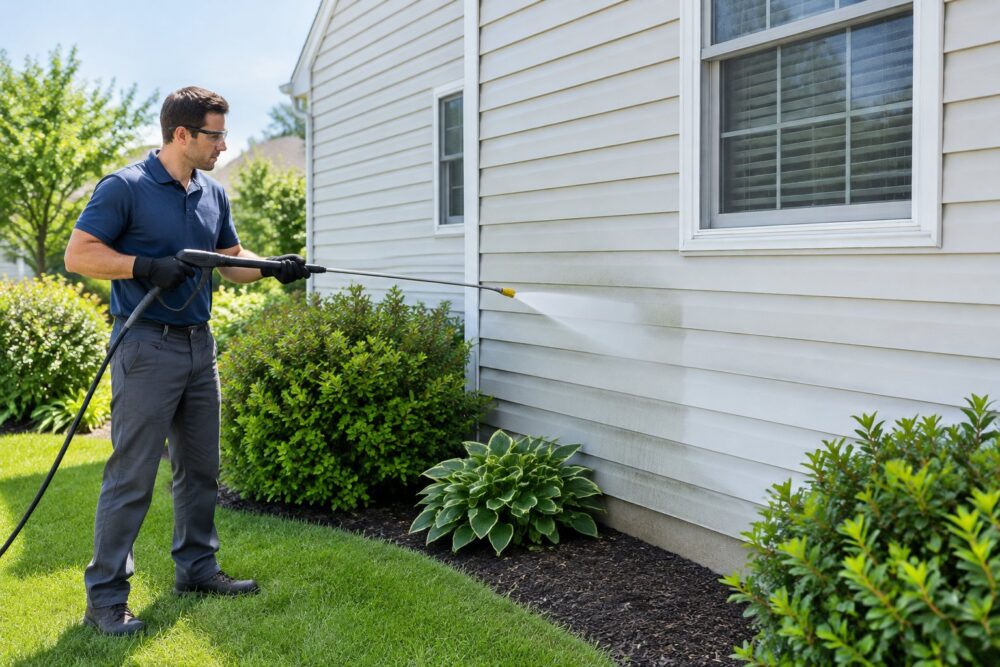
You wash vinyl siding safely by using low pressure, a mild cleaner, and a soft-bristled brush, working one small section at a time. A garden hose handles most of the rinsing. The goal is to lift grime off the surface without scratching the vinyl or pushing water behind it.
What to Check Before Vinyl Siding Cleaning
Walk the whole house before you get anything wet. Look for loose, cracked, or warped panels. Water and cleaner can get behind damaged spots and stay there.
Check these items as you go:
- Panel condition: Note cracks, gaps at seams, or panels that sag or bulge.
- Openings: Find outlets, light fixtures, dryer vents, and gaps around windows and pipes.
- Weep holes: These small slots at the bottom of panels let water drain out. Never aim spray straight into them.
- Plants and brick: Brick and foundation beds sit right in the runoff path.
- Ladder spots: Decide whether you can reach high walls from the ground with a long-handled brush.
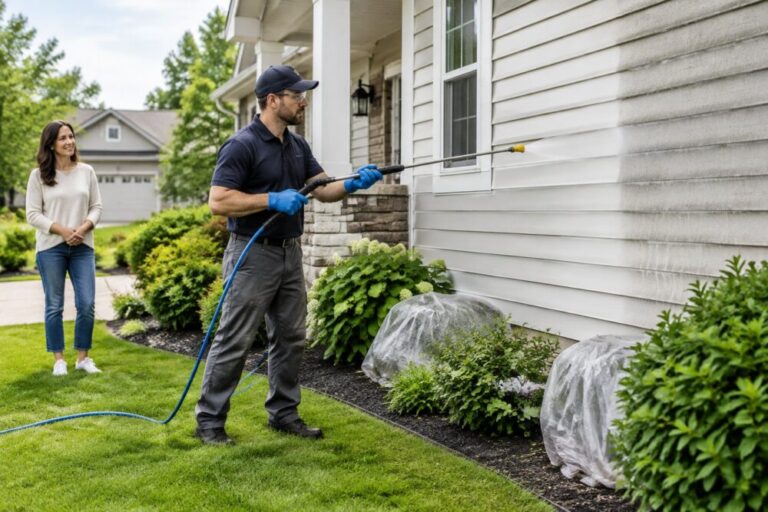
Close windows and turn off power to outdoor outlets in the work area. Wet your plants with plain water so they soak up less cleaner. Pull mulch back from the foundation too, since sprinkler splash throws it onto the panels and leaves a residue.
Rinse, Clean, and Gently Brush in Small Sections
Start with plain water. Spray a wall with your garden hose and brush it lightly. On lightly dusty siding, water alone may be all you need.
If grime stays, mix your cleaner and work in sections about the size of what you can reach. Apply cleaner from the bottom of the wall up. Cleaner that runs down onto wet, already-soaped siding is less likely to leave streaks.
Use a long-handled soft-bristle brush, like the kind made for washing cars. Never use a metal brush, steel wool, or a scraper on vinyl. Vinyl is tough, but it scratches, and scratches hold dirt.
Rinse Before the Cleaner Dries
Rinse each section while it is still wet. Cleaner that dries on vinyl leaves a cloudy film and streaks, especially in direct Florida sun.
Rinse from the top down so clean water flows over the areas you already washed. Hold the hose at a slight downward angle. That keeps water running with the lap of the panels and away from the seams.
Wash shady walls in the morning, and save sunny walls for later in the day when they have cooled. Once the method is set, the next choice is what goes in your bucket.
Which Cleaners Work on Dirt, Mold, and Mildew?
A mild soap and water mix handles most everyday dirt on vinyl, and stronger products are for mold and mildew that won’t move. Start gentle and step up only if you need to. Each stronger cleaner adds some risk to your plants, your skin, or the siding finish.
| Buildup | Start with | Keep in mind |
|---|---|---|
| Pollen, dust, and dirt | Plain water, then dish soap and water | Rinse before it dries |
| Light mold or mildew | A diluted white vinegar cleaner | Follow the label and test a hidden spot |
| Stubborn mildew | A bleach product used per its label | Soak plants before and after |
| Thick algae on tall or shaded walls | A professional soft wash | It needs the right mix and contact time |
Whatever you use, never mix cleaners.
Start With a Mild Cleaner for Everyday Grime
For pollen, dust, and rain-splashed dirt, a few squirts of dish soap in a bucket of water work well. It’s cheap, gentle, and rinses off easily.
For heavier grime and soot, use a cleaner labeled for vinyl siding and follow its directions. Scrub it on with your soft brush and rinse well.
When Can Diluted White Vinegar Help?
A diluted white vinegar cleaner can work on light mold and mildew. Follow the product label or your siding maker’s care guide for how much to use. It’s a common choice when you want to go easier on nearby grass and plants.
Vinegar works best on fresh, thin growth. Thick green algae on a shady north wall usually needs more than vinegar. Apply the mix, let it sit a few minutes while staying wet, brush gently, and rinse.
Use Bleach Products Carefully and Never Mix Cleaners
For stubborn mildew, some people use a chlorine bleach product. Follow the product label and your siding maker’s care guide for how much to use. Bleach can burn plants, so soak beds with water before and after.
Use plain, unscented household bleach. Most household bleach in the U.S. contains 5% to 9% sodium hypochlorite, the active ingredient. Wear gloves and eye protection when you mix and spray it.
The Centers for Disease Control and Prevention (CDC) warns you to never mix bleach with ammonia or any other cleaner. That includes vinegar. Mixing them releases fumes that are dangerous to breathe. Oxygen bleach is a milder product some homeowners prefer, and it also should not be mixed with other cleaners.
Test Spot Treatments Before Using Them Widely
Before you treat a whole wall, test any cleaner on a hidden spot behind a shrub or near a corner. Let it dry, then check for fading, dull spots, or a chalky look.
Match the spot cleaner to the stain:
- Grease or motor oil: An oil soap or glass cleaner.
- Rust or grass stains: A mild all-purpose spray cleaner.
- Paint, tar, or pencil: A gentle cream cleanser with fine grit.
- Mildew spots: A diluted vinegar cleaner or a mildew remover labeled for vinyl.
Never use acetone or nail polish remover on vinyl. It eats into the surface, and the damage can’t be fixed. With the cleaner picked, the bigger question for most people is how hard to spray it.
Why Choose a Soft Wash Instead of High Pressure?
A soft wash fits vinyl because the cleaner does the work and the water stays at low pressure. Vinyl panels are thin and hang loosely by design so they can expand in the heat. Strong spray can bend them, crack them, or drive water behind them.
How a Soft Wash Cleans Without Relying on Force
In a soft wash, cleaner goes on at low pressure and sits on the siding for a short time. It loosens mold, mildew, and dirt so a gentle rinse carries them away. On heavily shaded walls, more time with the cleaner does the job, with no extra pressure needed.
This is the same idea behind brushing by hand with a hose. A pro setup adds the right mix and better reach for second stories, soffits, and fascia.
Soft washing is the match for siding and stucco, and house siding cleaning compares each material. Concrete driveways are a different story. Concrete is thick and hard, so it handles pressure washing at a setting strong enough to clear oil spots and tire marks. The method follows the surface.
How High Pressure Can Damage Panels or Push Water Behind Them
A power washer used the wrong way does real harm on vinyl. A narrow nozzle held close can dent or crack a panel, strip the color, or leave stripes. Water blasted upward slips under the panel laps and into the wall.
That trapped water feeds mold inside the wall and wets insulation where you can’t see it. It can also soak around windows and outlets. If you do use a power washer on vinyl, check that your siding maker allows it and follow its limits. These habits also help:
- Use a wide-angle nozzle, never a narrow, pinpoint tip.
- Stand back and keep the tip well away from the siding.
- Angle the spray slightly down, never up under the panel edges.
- Stay away from weep holes, seams, vents, and window edges.
- Brush stains near openings by hand.
Even with care, pressure washing vinyl siding leaves little room for error. That’s one reason some jobs are better handed off.
When Does the Job Call for a Professional?
Call a pro when the growth is thick, the walls are tall, or the panels are already damaged. In those cases, the risk of a fall, a cracked panel, or water behind the wall outweighs the savings of doing it yourself.
Watch for Heavy Growth, High Walls, or Damaged Panels
Thick green or black growth that comes back right after you scrub needs a stronger mix and the right contact time. Getting that balance wrong burns plants or leaves streaks. Light pollen film is a weekend job; years of algae on a shaded wall is a different job.
Height is the next concern. Two-story walls, soffits, and gutter faces mean ladder work with a wet brush and a hose. That’s a real fall risk on soft Florida sod.
Damaged siding is the third sign. Cracked, loose, or warped panels let water in during any wash. A pro should note those spots and work around them.
Ask How the Crew Will Protect Seams, Openings, and Plants
Before you hire anyone, ask how they will clean your siding and what pressure they use. A good answer names a soft wash for vinyl and explains why. A crew that plans to blast the whole house at one setting is a red flag.
Ask these questions when you get a quote:
- Do you walk the house first and check for damaged panels?
- How do you keep water out of vents, outlets, and window edges?
- Do you rinse my plants before and after cleaning?
- What areas are included, such as soffits, fascia, gutter faces, and trim?
- What happens if a stain does not fully come out?
Honest crews tell you up front that some old stains may fade without vanishing. For homes near Lake County, house washing in Minneola follows the same steps. After a good wash, a little upkeep stretches the time until the next one.
How Can You Limit Buildup Between Washes?
You limit buildup by catching growth early on shaded walls and rinsing off pollen before it sticks. In Central Florida humidity, small habits between washes keep mold and mildew from getting a strong hold.
Check Shaded Walls for Returning Algae and Mildew
Mold and mildew show up first on the sides of your home with the least sun. In most yards, that’s the north wall and any side behind tall trees or a privacy fence. Check those walls every couple of months, especially after the rainy season. Learn more about mildew on siding and why it returns.
Look for a faint green tint near the ground or black dots under the eaves. Not sure what that green stuff on your siding is? Start there. Treat small patches early with your vinegar mix or mild soap and a soft brush. Trim shrubs back a foot or two from the house so air and light can reach the siding.
Aim sprinklers away from the walls. Constant spray keeps the bottom panels damp and leaves orange rust marks from well water. That wet strip is where algae starts.
Rinse Pollen and Dirt When a Gentle Spray Is Enough
Spring pollen turns siding yellow-green in Florida. A plain hose rinse from the top down washes most of it off before it mixes with dew and turns into grime. No cleaner is needed for this step.
Rinse after big storms that splash mud onto the lower panels, too. Brush away cobwebs and wasp nests under eaves with a soft broom.
Plan a full wash about once a year for most homes, and sooner for heavily shaded houses. When that time comes, the method you pick decides how your siding looks after.
Choose a Gentle Method for Clean Siding
Vinyl siding comes clean with low pressure, mild cleaners, and a full rinse. Start with water and soap, use diluted vinegar or a bleach product per its label for mildew, and never mix cleaners. Keep high pressure off vinyl, and call a pro when growth is heavy, walls are tall, or panels are damaged.
Essentials Pressure Washing has cleaned homes across Central Florida since 2005. The crew walks the house first, rinses your plants, and soft washes siding, soffits, fascia, gutter faces, and trim. If your driveway also has oil spots or green film, you can request a combined estimate that includes driveway cleaning.
Ready to see what your home looks like clean? Get a free estimate from Essentials Pressure Washing, no obligation. Call or text (407) 284-9438 with your address and what needs cleaning, any day from 7:30 a.m. to 7:30 p.m. You may hear back the same day.
Frequently Asked Questions
What Is the Best Thing to Use to Clean Vinyl Siding?
A mild mix of soap and water with a soft-bristle brush is the best place to start. For light mold and mildew, a diluted white vinegar cleaner can work, used per the product label. Heavier mildew may need a bleach product used per its label, and never mixed with other cleaners.
Will Dish Soap Clean Vinyl Siding?
Yes, dish soap and water clean everyday dirt, pollen, and dust off vinyl siding. It’s gentle on the panels and rinses off easily. It won’t do much on thick algae or set-in mildew, which need a stronger cleaner.
Can You Clean Vinyl Siding Without Scrubbing?
Yes, a soft wash cleans vinyl siding with little or no scrubbing. The cleaner sits on the siding long enough to loosen grime, and a low-pressure rinse carries it away. Stubborn spots near vents or windows may still need a light pass with a soft brush.
Is It Better to Pressure Wash or Soft Wash Vinyl Siding?
Soft washing is better for vinyl siding. High pressure can crack thin panels, strip color, and push water behind the siding into your walls. Save higher pressure for hard surfaces like concrete driveways.
How Often Should Vinyl Siding Be Cleaned in Central Florida?
Most Central Florida homes need a full siding wash about once a year. Shaded walls, homes under trees, and houses near lakes may need it sooner because mold and algae grow fast in the humidity. Quick hose rinses during pollen season help stretch the time between washes.