Mildew on Siding: Why It Returns in Central Florida and How to Slow Regrowth
Your siding looked clean last spring. Now there is a gray film on the north wall and dark streaks under the eaves. Mildew on siding keeps coming back in Central Florida because humidity, shade, and repeated wetting give spores what they need to regrow, so the fix is a gentle cleaning plus less water on your walls. One wash removes the growth you can see. It does not change the conditions that brought it back.
Crews who have cleaned Orlando, Clermont, and Minneola homes for years see the same pattern often. Growth is worst on shaded walls, behind shrubs, and anywhere a sprinkler head hits the house. Those spots turn green or gray again first, sometimes within months of a good cleaning.
Keep reading to find out why mildew returns, which siding types need the closest watch, and how to clean visible growth without damage. You will also learn simple ways to slow regrowth. By the end, you can decide whether a small spot is a weekend task or a job for a soft wash.
Why Does Mildew on Siding Keep Coming Back?
Mildew returns because the spores never leave. They float in outdoor air all year, and they settle on any wall that stays damp long enough to support new growth.
Cleaning removes the colony on the surface. It cannot stop new spores from landing tomorrow. If that wall still stays wet for hours each day, the cycle starts over.
How Do Florida Humidity and Shade Affect Siding?
Central Florida air carries a lot of moisture most of the year. Morning dew sits on siding, and summer storms soak walls almost daily. A wall in full sun dries by midmorning. A shaded wall can stay damp until afternoon.
Shade comes from oak canopies, tall hedges, a neighbor’s house, or simply a north-facing side. Those walls get less direct sun and less airflow. Pollen and dust also stick to damp siding and give mildew something to feed on.
That is why you often see growth on one side of the house and not the others. The siding is the same. The drying time is different.
Where Does Excess Water Come From?
Excessive moisture is the main driver of mold growth on siding, and much of it comes from sources around the house. The Florida Department of Health lists outdoor sprinkler spray hitting walls as one common source of moisture.
Watch for these sources on your property:
- Sprinkler heads aimed at or near the wall
- Clogged gutters that spill over the fascia and down the siding
- Downspouts that dump water right at the foundation
- Mulch beds or soil piled against the bottom of the wall
- Shrubs touching the siding and holding rain against it
- Air conditioner condensate lines draining near the house
Each one adds wet hours to the same patch of wall. The type of siding then decides how much that extra water matters.
Which Siding Types Need the Closest Watch?
Porous surfaces like wood and stucco hold moisture longest, so they need the closest watch. Smooth materials still grow mildew, but it stays mostly on the surface.
Wood and Stucco in Damp, Shaded Areas
Wood siding absorbs water and gives mildew a food source in the wood itself. Once paint or stain wears thin, growth can work into the grain. That leaves dark spots that are harder to lift and a surface that stays damp longer.
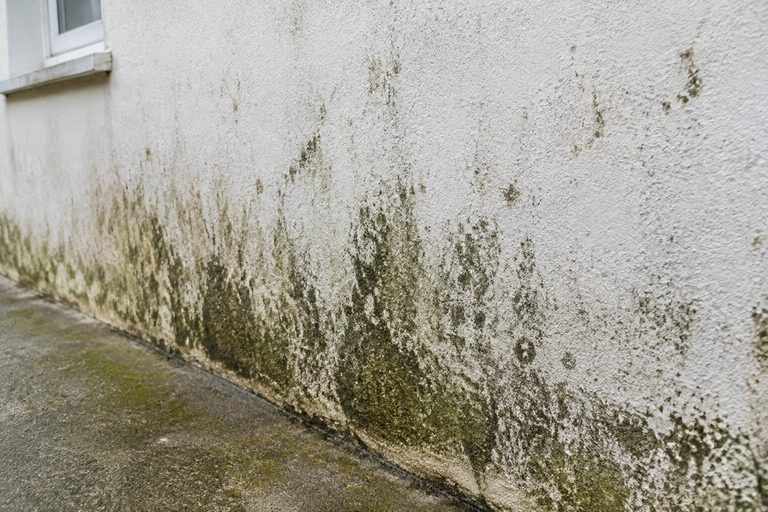
Stucco siding is rough and porous. Its texture traps dirt, pollen, and water in tiny pockets. On a shaded stucco wall, green or black growth often shows up first along the bottom few feet, where splash and sprinkler spray hit.
Painted block behaves much like stucco. Both need a gentle method, since hard spray can chip paint or widen hairline cracks.
Vinyl and Fiber Cement Can Grow Surface Mildew Too
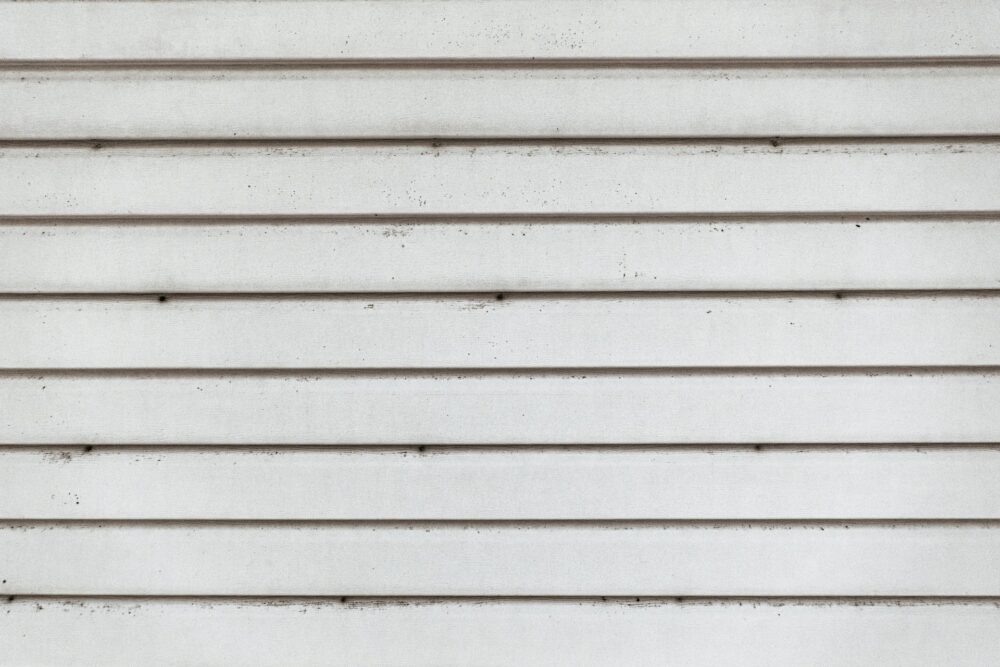
Vinyl siding does not feed mildew, but the dust and pollen on it do. On shaded vinyl, you will see a gray or green film, often heaviest under the overlaps of each panel.
Fiber cement siding is sturdy and painted. Mold on siding of this type tends to sit on the paint layer. It cleans up well when caught early, though stains can set in if the film is left for years.
Here is a quick guide to what to watch:
- Wood: dark spots, soft areas, and peeling paint on shaded sides
- Stucco and painted block: green streaks near the ground and under eaves
- Vinyl: gray film along panel laps and behind shrubs
- Fiber cement: surface film on north walls and near gutters
Knowing your siding type also tells you how gently it needs to be cleaned.
How Can You Clean Visible Growth Without Damaging Siding?
Low pressure and the right cleaner remove mildew safely on almost every siding type. Force is what causes damage, so the goal is to let the cleaning solution do the work.
When Is a Small DIY Cleaning Job Reasonable?
A small patch you can reach from the ground is a fair DIY job. Florida health guidance says most people can handle mold patches under about 10 square feet, roughly 3 feet by 3 feet.
For a small area, a basic routine looks like this:
- Wet the wall and nearby plants with a garden hose.
- Apply a vinyl siding cleaner, oxygen bleach, or diluted hydrogen peroxide with a garden sprayer.
- Let it sit a few minutes, then work it gently with a soft-bristled brush.
- Rinse from the top down, then rinse your plants again.
If you choose a bleach solution, the CDC advises no more than 1 cup per gallon of water. Never mix bleach with ammonia or other cleaners. Wear gloves and goggles, and skip ladder work on a second story.
How Does a Professional Soft Wash Differ from Scrubbing?
Soft washing uses low pressure and a cleaning solution to break down mildew at the root. The solution sits on the wall long enough to loosen the growth, then a gentle rinse carries it away.
Scrubbing works on small spots. Across a whole house, it leaves missed areas, brush marks, and roots in the texture of stucco. A full soft wash covers siding, soffits, fascia, gutter faces, and trim in even coverage. That more complete mildew removal is why growth takes longer to come back.
Heavily shaded walls get more dwell time with the cleaner. More pressure is not the answer on siding.
What Can Go Wrong with High-Pressure Washing?
High pressure on siding causes damage you cannot rinse away. Common problems include:
- Water forced behind vinyl panels, where it sits and feeds new growth
- Chipped or stripped paint on stucco, wood, and fiber cement
- Gouges or fuzzing in wood grain
- Widened cracks in stucco and painted block
- Stripe marks across the wall from uneven passes
High pressure has its place. Concrete driveways can take more pressure to clear oil spots, tire marks, and algae. Pavers need lower pressure to keep joint sand in place. Siding and stucco call for a soft wash every time.
What Helps Slow Mildew Regrowth?
Cutting the hours your walls stay wet is the best way to slow regrowth. Good siding maintenance focuses on improving drainage and ventilation around the house.
Keep Sprinklers, Gutters, and Drainage from Wetting Walls
Walk your yard while the sprinklers run. Turn or swap any head that sprays the wall. Many homes have one zone that hits the same corner every morning, and that corner is often the greenest.
Clean gutters before and during the rainy season. Make sure downspouts carry water a few feet away from the house. Pull mulch and soil back so the bottom of the siding can dry.
Trim Plants to Help Shaded Siding Dry
Shrubs pressed against siding hold rain and block air. Trim them back so there are at least a few inches of space between leaves and wall. Thin low branches that shade the same wall all day.
You do not need to cut down trees. Letting in a few more hours of sun and breeze shortens drying time on that side of the house.
Watch for Growth That Returns Quickly or Stains That Remain
If mildew returns within a few weeks of cleaning, look for a hidden water source. Leaks around windows, a broken gutter seam, or a dripping hose bib can keep one spot wet. Florida health guidance notes that mold returning quickly often signals an underlying moisture problem.
Some stains stay after cleaning. Older growth on wood or bare stucco can leave marks in the surface itself. Soft, flaking, or cracked areas need repair before any washing.
A Cleaner Siding Routine for Central Florida
The routine that works best here pairs a gentle cleaning with less water on your walls. Clean growth while it is still a light film. Then fix the sprinkler, gutter, and plant issues that keep shaded walls damp.
A simple yearly plan:
- Spring: check shaded walls after pollen season and rinse light film
- Before summer rains: clean gutters and adjust sprinkler heads
- Late summer: look for green streaks near the ground and under eaves
- Any time: wash when growth covers more than a small patch
Essentials Pressure Washing has cleaned Central Florida homes since 2005 and offers only two services, listed on our house washing and driveway cleaning services page. Book house washing in Orlando, house washing in Clermont, or house washing in Minneola. We check the exterior first and rinse your landscaping before and after.
If your concrete is green too, you can pair the job with driveway cleaning in Orlando, driveway cleaning in Clermont, or driveway cleaning in Minneola. It is priced as one job. See local details for pressure washing in Orlando, Clermont pressure washing, and Minneola pressure washing, or browse more tips on our exterior cleaning blog.
Ready to see your siding clean? Visit Essentials Pressure Washing or call or text (407) 284-9438 for a free estimate with no obligation. Send your address, and we aim to call back the same day.
Frequently Asked Questions
Does White Mildew on Siding Need Cleaning?
Yes, white or gray film is still mildew and should be cleaned. It spreads and darkens over time, and it holds moisture against the wall. Light growth comes off much more easily than old, dark staining.
Is Mildew on House Siding Dangerous?
Outdoor mildew is mostly a surface and appearance problem, though it can bother people with mold allergies or asthma. Those people should avoid doing the cleanup themselves. Long-term growth can also wear down paint and wood.
Why Does Mildew Return to Vinyl Siding After Washing?
It returns because spores keep landing and the wall stays damp. Shade, sprinkler spray, and dirt in the panel laps give it a fresh start. Water forced behind panels by high pressure can make it worse.
Is Bleach or Vinegar Better for Mildew on Siding?
A diluted bleach solution or oxygen bleach works better than vinegar on most mildew. Keep household bleach to no more than 1 cup per gallon of water, and rinse your plants well. Never mix bleach with vinegar, ammonia, or other cleaners.
Can Soft Washing Stop Mildew from Coming Back Permanently?
No, soft washing does not prevent mildew forever. It removes growth more completely than scrubbing, so regrowth takes longer. Cutting moisture with drainage, sprinkler, and plant changes is what keeps walls cleaner between washes.