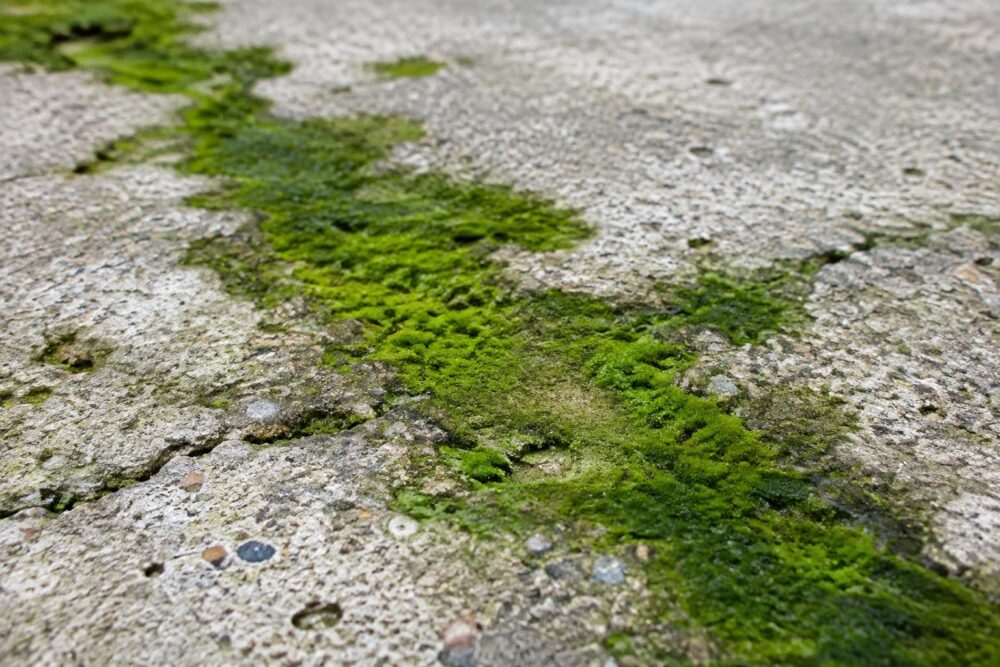
Green Algae on Concrete: How to Clean Your Driveway Without Surface Damage
A shady strip of your driveway turns slick and green after a few weeks of afternoon storms. The walkway by the downspout looks the same. To remove green algae from concrete, rinse off loose debris and scrub small patches with an oxygen bleach cleaner used per its label. Then pressure wash the slab at a setting it can handle, in even passes at a steady distance. That method helps clear the growth without etching the surface or leaving stripe marks.
Central Florida gives algae what it needs for most of the year: heat, humidity, and frequent rain. Homes in Orlando, Clermont, and Minneola with oak cover, irrigation overspray, or north-facing slabs see green film return faster. Open, sunny driveways stay clear longer. Essentials Pressure Washing has cleaned driveways here since 2005, and the same patterns show up from street to street.
Keep reading to learn how to clean algae off your concrete safely and which cleaners help or cause problems. You’ll also see why the growth keeps returning. By the end, you will know whether the job suits a weekend project or a professional crew.
How to Remove Green Algae From Concrete
You can remove algae from concrete in three stages: prep the surface, treat and scrub, then rinse with pressure. Skipping the prep is how most driveway damage and streaking starts.
Clear Debris and Check the Concrete
Sweep or blow off leaves, pine straw, and dirt first. Wet organic debris feeds algae, and it clogs the surface so cleaners cannot reach the growth underneath.
Next, walk the slab and look for cracks, flaking spots, and loose edges. Older or worn concrete needs a gentler approach, and spots where the surface is already chipping can break apart under strong spray. Also note any plants, mulch beds, or grass along the edges that you will need to protect.
Wet down nearby landscaping before you apply any cleaner. A soaked plant absorbs less of the solution that drifts or runs off the slab.
Scrub Small Patches and Rinse
For a few square feet of green film, a stiff nylon brush and a cleaning solution often do the job. Apply the solution, let it sit for the time on the label without drying, then scrub in small circles.
Keep these steps in mind for patch work:
- Work in sections small enough to stay wet the whole time.
- Use a nylon brush; wire bristles scratch the cement paste and leave marks.
- Scrub joints and cracks, where algae roots in deepest.
- Rinse each section with a garden hose before moving on.
Heavy growth or a full driveway takes far longer by hand. That is where a pressure washer comes in.
Use a Pressure Washer Without Damaging the Surface
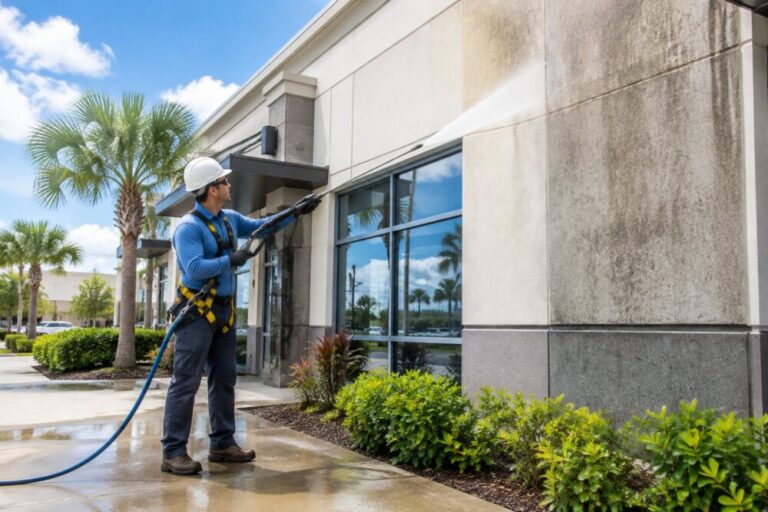
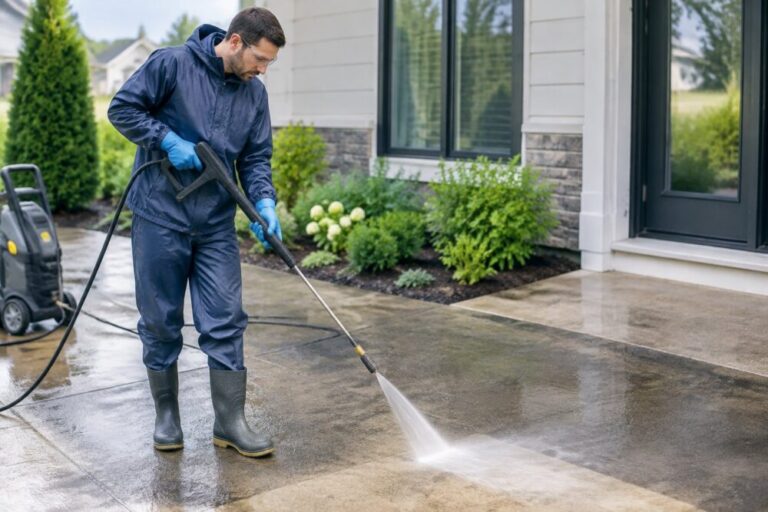
Pressure washing suits concrete because a sound slab handles more force than siding or stucco can. The key is control: a fan tip, a steady distance of about a foot, and overlapping passes in one direction.
Holding the wand too close or using a narrow zero-degree tip cuts lines into the surface. Those lines show up as stripes once the concrete dries. Start at a low point and work toward the drain so dirty water does not run back over clean areas.
Safety counts too. The CDC notes that pressure washer spray injuries can look minor but turn serious, so never point the wand at people or pets. With the method set, the next question is what to put on the algae first.
Which Cleaning Solutions Should You Use or Avoid?
Oxygen bleach is a common starting point for homeowners. Chlorine bleach works faster but needs more care, and some popular home remedies cause more trouble than they solve. Whatever you choose, follow the product label.
| Cleaner | Where it fits | Cautions |
|---|---|---|
| Oxygen bleach | Small patches, with a longer dwell time | Follow the label and protect nearby plants |
| Chlorine bleach | Faster action on growth | Never mix it with other cleaners; protect plants |
| Vinegar | Not recommended | Its acid slowly wears the cement paste |
| Boiling water | Tiny spots only | Cools fast on a slab and risks burns |
Oxygen Bleach for Small Areas
Oxygen bleach (sodium percarbonate, the active ingredient in products like OxiClean) breaks down into water, oxygen, and soda ash. It can lift green algae from concrete pores. Still protect nearby grass and plants, and follow the label.
Mix the powder in warm water according to the label, since it dissolves poorly in cold water. Apply it to the slab, give it time to work, and keep the area damp. It acts more slowly than chlorine, so plan on a longer dwell time and a second round for thick growth.
Chlorine Bleach and Plant Protection
Chlorine bleach contains sodium hypochlorite, which kills algae on contact. Most household bleach contains 5% to 9% sodium hypochlorite, and it must never be mixed with other cleaners because the fumes are dangerous to breathe.
Bleach harms grass, shrubs, and flower beds. Before you use it near landscaping:
- Soak plants and turf with water before and after you apply it.
- Follow the product label for how to use it.
- Wear gloves and eye protection.
- Rinse the slab well so runoff does not pool in beds.
Why Vinegar and Boiling Water Need Caution
Vinegar is an acid, and acid slowly eats at the cement paste on concrete. Repeated use roughens the surface, which gives algae more places to grab on. It also does little to thick growth.
Boiling water kills surface algae in a small spot, but it cools quickly on a wide slab. Carrying it across a driveway also puts you at risk of burns. Neither option reaches the growth living inside the pores, which is why algae keeps coming back.
Why Does Algae Grow on Concrete?
Algae grows on concrete because the slab holds water, sits in shade, and has a rough surface full of tiny pores. In Central Florida, those conditions last nearly all year.
How Shade, Moisture, and Concrete Texture Help It Spread
Common green algae, such as Chlorella, need water, light, nutrients, and carbon dioxide to live. Researchers have even grown Chlorella on concrete blocks on purpose, since the surface gives the algae a place to settle and spread.
On your driveway, the pattern follows the water. Spots under tree canopies, beside downspouts, and in the path of sprinkler overspray stay damp the longest. Broom-finished concrete has grooves that trap moisture and spores, so growth starts in those lines and spreads outward. That is how a green driveway gets started.
How Green Growth Differs From Dark Growth
Green growth is usually younger algae sitting near the surface, and it rinses off more easily. Black algae on concrete is often older growth, or a mix of algae, mold, and dirt, that has worked deeper into the pores.
Use these signs to tell them apart:
- Green film: slick when wet, often in shaded or damp patches, responds well to treatment and a rinse.
- Dark or black spots: rougher texture, slower to lift, may need longer treatment time and more than one round.
- Old staining: may leave a shadow even after the growth is gone, so full color return is not promised.
Once you know what is growing and why, you can change the conditions that let it come back.
How Can You Slow Algae Regrowth?
You slow algae regrowth by keeping the concrete drier and brighter. Cleaning removes the growth, but the conditions decide how fast it returns.
Fix Standing Water and Drainage Problems
Proper drainage is the biggest factor you control. Point downspouts away from the slab, or add extensions so roof water drains into the yard.
Adjust sprinkler heads that spray onto the driveway or walkway. If water pools in low spots after rain, those areas will green up first. Clear the expansion joints so water drains through them and does not sit on top.
Reduce Shade and Clear Organic Debris
Trimming low limbs lets more sun reach the slab, and sunlight dries the surface faster. Even a few extra hours of direct light slow growth in shady corners.
Sweep away leaves, seed pods, and grass clippings each week or two. That debris holds moisture and breaks down into food for algae. Some homeowners also apply a sealer after a deep cleaning, which helps reduce how much water the concrete absorbs.
None of these steps stops algae forever in a humid climate. They stretch the time between cleanings, which matters when you decide whether to handle the next round yourself.
When Is Professional Driveway Cleaning Worth Considering?
A professional driveway cleaning makes sense when the area is large, the growth is slippery, or the concrete is old enough that a mistake could damage it.
Large or Slippery Areas
A full driveway and walkway can take a homeowner most of a day with a rented machine. Uneven passes on a big slab often leave visible stripes once the concrete dries.
Green algae also makes walking surfaces slick, which puts older family members and visitors at risk. If you are dealing with a wide area in Orlando, local driveway cleaning in Orlando covers walkways and pool decks along with the driveway.
Worn Concrete or Growth That Returns After Cleaning
Older concrete with surface wear, pitting, or exposed stone needs careful pressure control. Too much force speeds up that wear and roughens the slab further.
Growth that comes back within weeks usually means it is rooted in the pores. Pros spot-treat heavy organic growth, clean in even passes, and detail the edges, cracks, and expansion joints. For local slabs, see what concrete cleaning in Orlando involves.
Choose a Method That Cleans Without Damaging Concrete
Green algae on concrete comes off safely when you match the method to the surface. Treat the growth first, then use controlled pressure on a sound slab, and protect your plants throughout.
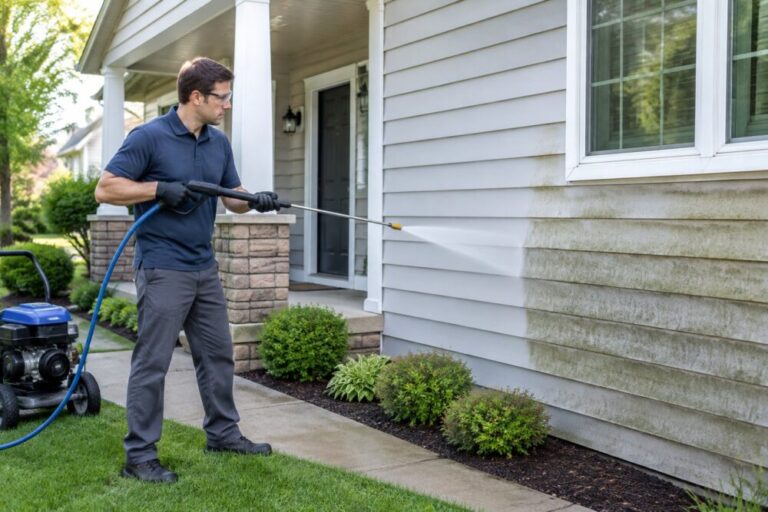
The same rule applies to the rest of your home. Concrete can take the pressure it needs, while siding and stucco need a low-pressure soft wash with cleaning solutions. Pavers need lower pressure to keep joint sand in place. If your walls are as green as your driveway, a soft wash can help there too. You can request a combined estimate for house and driveway work.
Essentials Pressure Washing has cleaned Central Florida exteriors since 2005 as a family-run, local crew.
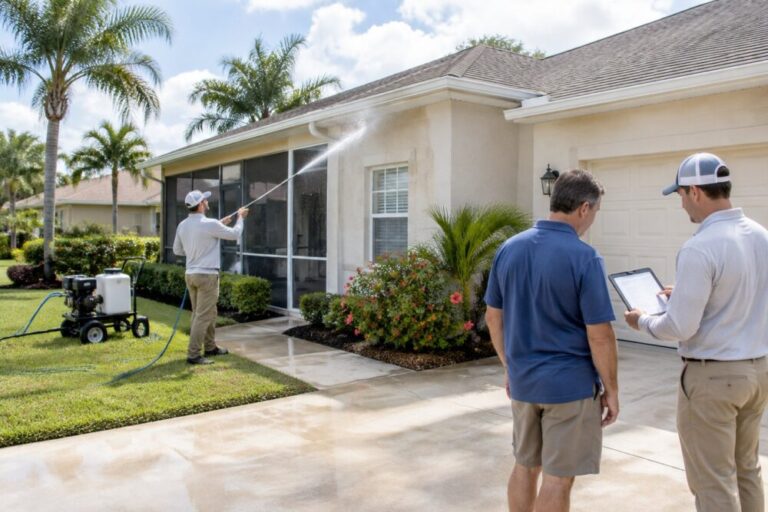
Not sure which method is right for your surface? Call or text (407) 284-9438, or visit Essentials Pressure Washing to send your address. You will get a free estimate, no obligation, and you may get a same-day callback.
Frequently Asked Questions
Is Green Algae on Concrete Slippery?
Yes, green algae makes concrete slick, especially when it is wet after rain or irrigation. Shaded walkways and driveway edges become the most dangerous spots. Cleaning the growth off and improving drainage lowers the risk.
What Is the Best Way to Remove Green Algae From a Concrete Driveway?
Treat the algae with a cleaning solution, let it sit, then pressure wash with a fan tip in even, overlapping passes. Scrub the joints and cracks where growth roots deepest. Protect nearby plants by wetting them before and after.
Can Pressure Washing Damage Concrete?
Yes, it can if the tip is too narrow or the wand is held too close. That leaves stripe marks or roughens worn concrete. Steady distance, a wide fan tip, and pressure matched to the slab’s condition prevent most damage.
Should I Use Vinegar or Bleach to Clean Algae off Concrete?
A cleaner labeled for concrete, used per its label, works better than vinegar. Vinegar is acidic and slowly wears the surface with repeated use. Never mix bleach with vinegar or any other cleaner, since the fumes are harmful.
Can I Keep Algae From Coming Back Permanently?
No, algae will return over time in Central Florida’s heat and humidity. You can slow it down by fixing drainage, trimming shade, and sweeping off debris. Regular cleaning keeps the slab looking clean between treatments.