How to Remove Rust Stains From Concrete When the Water Itself Is the Problem
Orange arcs on the sidewalk. A rusty fan shape across the bottom of the garage door. Speckles on the driveway the week after the lawn was fed. Rust is one of the few stains that can look worse after a regular pressure wash, because the dirt around it comes off and the orange stands out even more.
If you are working out how to remove rust stains from concrete, the answer is a cleaner that dissolves iron, usually one based on oxalic or citric acid, followed by a thorough rinse. Water pressure on its own will not lift rust, and household bleach will not either. The real work is figuring out where the iron is coming from, because in much of Central Florida it arrives in the irrigation water every morning.
Where Rust Stains on Concrete Come From
The shape of the stain usually tells you the source before you pick a cleaner.
Curved bands and fan shapes. These line up with sprinkler heads. Penn State Extension notes that problems with high-iron irrigation water mostly center around staining of concrete surfaces. The same Penn State page explains that water carrying dissolved iron tends to look clear, and that the iron oxidizes and turns rust-colored as the water is exposed to air. That is why the water coming out of the head looks fine but the wall it lands on does not.
Scattered dots and freckles. Small round spots across a driveway or walkway are often fertilizer. Many lawn fertilizers contain iron, and granules that bounce onto the concrete leave a rust dot when they get wet.
Rings and squares. A circle under a planter, a rectangle where a grill stood, or four dots under patio chair legs come from metal sitting on damp concrete.
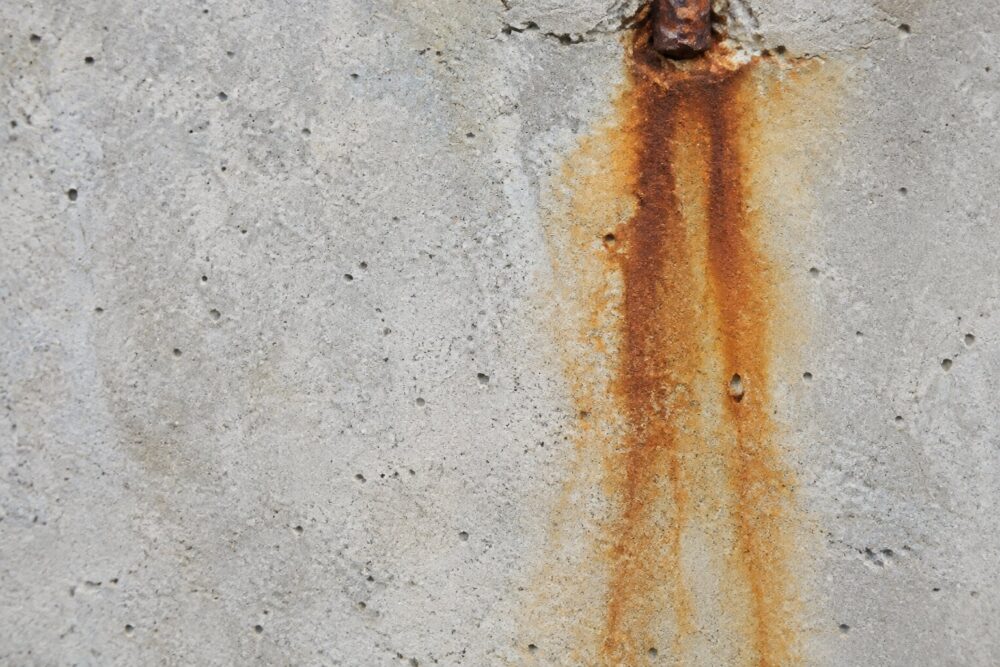
Streaks running down from a wall. Rust bleeding from a railing, a hose bib or an old nail in stucco will run down onto the slab below it.
Lines along a crack. If the orange follows a crack or appears from inside the slab, it may be steel reinforcement rusting underneath. That is a structural question rather than a cleaning one.
Why Pressure Washing Alone Does Not Remove Rust
Rust is iron oxide bonded into the top layer of the concrete. Water at any pressure moves dirt, algae and loose grime, but it does not dissolve iron. Pushing harder only etches the concrete around the stain, which leaves a rough patch that holds dirt and looks even worse.
Bleach is a common mistake too. It works on organic growth, but it does nothing for iron, so the orange is still there once the slab dries. Never mix bleach with an acid-based rust remover, because the combination releases toxic chlorine gas. If you use both on the same slab, rinse thoroughly in between.
How to Remove Rust Stains From Concrete, Step by Step
For Light, Recent Stains
Fresh fertilizer dots and light sprinkler marks sometimes respond to mild household acids.
- Wet the concrete with plain water.
- Pour lemon juice or white vinegar over the spots and let it sit for 10 to 15 minutes.
- Scrub with a stiff nylon brush, not a wire brush.
- Rinse thoroughly.
If the stain fades but does not disappear, repeat once. If nothing changes, move to a dedicated product.
For Older or Heavier Stains
Commercial rust removers made for concrete usually contain oxalic acid or a similar iron-dissolving ingredient. Follow the label closely, because strength and dwell time vary between products.
- Protect the lawn and plants. Soak the grass and beds along the edge with water first and keep a hose running nearby. Acid cleaners can burn turf.
- Test a small hidden spot. Some cleaners lighten colored or stamped concrete, and they can dull sealers.
- Apply evenly and keep it wet. Let it work for the time on the label without letting it dry on the surface.
- Agitate gently. A nylon brush helps the cleaner reach into the pores.
- Rinse well. Leftover acid keeps working on the concrete. Rinse longer than seems necessary.
Wear chemical-resistant gloves and eye protection, and keep the product away from your skin. Oxalic acid is toxic if swallowed, so store it where children cannot reach it and keep kids and pets off the area until it is rinsed and dry.
What to Avoid
- Muriatic acid. It is much stronger than most stains need and can etch the surface and damage nearby metal, plants and paint.
- Wire brushes. They leave tiny steel fibers behind that rust and create new spots.
- Working in full sun. Cleaner dries too fast and leaves blotches. Early morning or a cloudy day is better.
Stopping Rust Stains From Coming Back
Cleaning a sprinkler stain without changing the water just resets the clock. These steps make the difference:
Test the irrigation water. UF/IFAS notes that most Florida well water is high in iron and advises that if you suspect a problem, the first step is to have the water tested. Your county Extension office can point you toward treatment, and the options UF/IFAS lists include water softeners, oxidizing filters and combined chlorination and filtration systems. The right one depends on how much iron the test finds.
Aim the heads at the grass. Even with iron in the water, a stain needs water to land on concrete. Rotating or lowering heads so they stop hitting the driveway, walls and kick plates cuts the problem down fast.
Sweep fertilizer off hard surfaces. After every application, blow or sweep stray granules back onto the lawn before the sprinklers run.
Lift metal off the slab. Put plastic feet or pads under planters, grills and furniture.
Seal the concrete if you want extra protection. A penetrating sealer slows how fast iron soaks into the pores, which makes future stains easier to clean.
Rust Removal Rewards Experience More Than Muscle
Getting rust out of concrete is mostly a matter of chemistry. A crew that cleans concrete every day will know which product suits your surface, how to protect the lawn, and how to blend the cleaned area with the rest of the slab so you do not end up with a bright patch in the middle of a dull driveway.
Rust is also often mixed in with other stains. A Central Florida driveway can have algae in the shade, oil under the car and rust along the sprinkler line all at once. Treating each one with the right method, then cleaning the whole surface evenly, gives a result that looks consistent. If you are dealing with the other dark marks too, our guides on why driveways turn black and driveway stain removal cover those.
Essentials Pressure Washing provides driveway cleaning and sidewalk cleaning across Central Florida, including Minneola and Orlando. Call (407) 284-9438, describe the stains and where they sit, and we will put together a free estimate for you with no obligation.
Frequently Asked Questions
What Is the Best Way to Remove Rust Stains From Concrete?
An oxalic acid or citric acid based rust remover, applied to wet concrete, left to dwell and then rinsed well, works on most stains. Lemon juice or vinegar can handle light, fresh marks. Always test a small area first.
Why Does My Sprinkler Water Leave Orange Stains?
The water contains dissolved iron. It is invisible in the pipe, but once it hits the air it oxidizes and settles on whatever it lands on. Much of Florida’s well water is high in iron, which is why irrigation from a private well so often leaves orange marks on concrete, stucco and even plants.
Will Bleach Remove Rust From a Driveway?
No. Bleach kills mold and algae but does not dissolve iron, so the stain stays. It must never be mixed with acid-based cleaners, because the combination gives off toxic gas.
Can Rust Stains Come Back After Cleaning?
Yes, if the source is still there. Fertilizer granules, metal furniture and iron in irrigation water will keep producing new stains until they are dealt with. Redirecting sprinkler heads and treating the water are the long-term fixes.
Does Rust Stain Remover Damage Concrete?
Used as directed and rinsed thoroughly, most concrete rust removers are safe on plain concrete. Strong acids, long dwell times or skipping the rinse can etch the surface or lighten colored and sealed concrete.