Commercial Building Cleaning: Safe Exterior Care for Orlando Storefronts
Mildew creeps across a stucco storefront after a wet Orlando summer. Black streaks run down from the parapet, and the entry walk turns green where the awning shades it. Customers see all of it before they reach your door. Commercial building cleaning for an Orlando storefront means washing the exterior: facades, trim, entries, and walkways. Each surface gets a matched method, with a low-pressure soft wash for stucco and siding and pressure washing for sturdy concrete. This guide covers the outside of your building only. It does not cover janitorial or indoor work.
Central Florida humidity keeps exterior surfaces damp for long stretches. That moisture feeds mold, mildew, and algae on walls, especially on north-facing and shaded sides. Pollen, dirt, and cobwebs pile up under soffits and around signs. Oil drips and gum collect where cars park and people walk. Essentials Pressure Washing has worked on these surfaces since 2005, and each one needs its own approach.
In this guide, you’ll learn which parts of your building need exterior cleaning and which method fits stucco, brick, siding, and concrete. You’ll also see where exterior work ends and janitorial work begins. By the end, you’ll know which crew to call for each job and what an exterior cleaning should cover.
How Does Commercial Building Cleaning Differ from Indoor Services?
Commercial building cleaning on the exterior deals with weather, sun, and Florida humidity. Indoor commercial cleaning services deal with daily use inside the building. The surfaces, tools, and schedules are different, so most businesses hire them separately.
| Exterior building cleaning | Janitorial cleaning | |
|---|---|---|
| Where | Facades, trim, soffits, entries, and walkways | Offices, floors, restrooms, and interior windows |
| Main problems | Mold, mildew, algae, pollen, and stains | Everyday dirt, trash, and restroom use |
| How often | Less often, usually about once a year | Daily or weekly |
Building Facades and Storefront Exteriors
Your facade is the largest surface customers see. On most Orlando storefronts, that means stucco, painted block, brick, or some type of siding. Each one collects its own mix of grime.
Here’s what usually builds up on a commercial exterior:
- Mold and mildew: gray, green, or black patches, worst on shaded walls and under overhangs.
- Algae streaks: dark lines running down from rooflines and gutters.
- Pollen and dust: a yellow or gray film, heavy in spring.
- Cobwebs and wasp nests: tucked into soffits, light fixtures, and sign brackets.
- Sprinkler stains: orange or brown marks low on walls where irrigation water hits.
A full exterior wash covers more than the flat walls. It should include soffits, fascia, gutter faces, and trim. Those edges frame the building, and dirty trim makes a freshly painted wall look tired. See how commercial exterior cleaning handles each of these surfaces.
Commercial and HOA Sidewalks, Entries, and Walkways
The concrete in front of your door takes heavy foot traffic. Gum, spilled drinks, and tracked-in dirt darken it fast. Shaded walkways grow green algae that turns slick after rain.
Clean walking surfaces are a safety issue, too. OSHA requires employers to keep walking-working surfaces clean and free of hazards like spills and leaks. Algae film on an entry walk is the kind of slip risk worth removing.
HOA common areas face the same problems on a bigger scale. Long sidewalks, pool entry paths, and clubhouse walks pick up oil, rust from irrigation, and organic growth. Edges, cracks, and expansion joints need detail work so the surface looks even from end to end.
What Janitorial and Interior Cleaning Cover Instead
Janitorial services handle the inside of your building on a daily or weekly schedule. That work includes:
- Office cleaning and dusting
- Floor care and carpet cleaning
- Trash removal
- Restroom cleaning and restroom sanitation
- Interior window washing
A facility cleaning company keeps the inside running. An exterior cleaning crew comes less often and brings water-fed equipment, cleaning solutions, and surface-specific methods. Knowing which job you need keeps quotes simple. The next question is how each outdoor surface should be cleaned.
Which Cleaning Method Fits Each Exterior Surface?
The right method depends on how hard and how porous the surface is. Soft materials like stucco and paint need low pressure and the right cleaning solution. Hard, sturdy concrete can take more pressure. Using one setting for everything causes damage or leaves the job half done.
Soft Washing for Stucco, Siding, and Painted Surfaces
Soft washing uses low water pressure plus a cleaning solution that breaks down mold, mildew, and algae. The solution does the work. Then a gentle rinse carries the grime away.
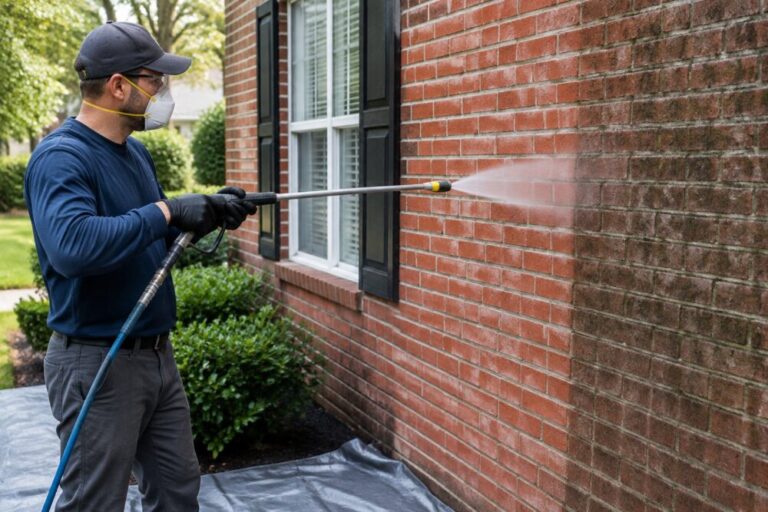
This fits stucco because stucco is porous and textured. High pressure can chip the finish, open hairline cracks, or force water behind the wall. Painted block and siding face the same risk. A hard spray can strip paint, lift siding panels, or leave stripe marks.
Soft washing also reaches deeper into the growth. Pressure alone often knocks off the top layer and leaves growth behind, so mildew can return fast. On heavily shaded walls, the better fix is more treatment time on the surface, not more pressure.
Surface-Matched Cleaning for Brick and Mortar
Brick looks tough, but the mortar between bricks is softer. High pressure can wash out mortar joints and pit older or softer brick. That damage lets water in and costs far more to fix than a cleaning.
A low-pressure soft wash fits most commercial brick. It lifts mildew, algae, and dirt from the brick face and the joints without blasting them. Some buildings have older or historic brick that needs extra care. For those, the National Park Service offers historic building preservation guidance on gentle treatment.
Before washing, a good crew checks brick for loose mortar, cracks, and crumbling edges. Those spots get noted so you know the condition before any water touches the wall.
Pressure Washing for Suitable Concrete Walkways
Plain concrete sidewalks and entries can take higher pressure. Concrete is dense and hard, so commercial pressure washing lifts embedded dirt, tire marks, and gum. A surface cleaner that spins in even passes avoids the striped look a single wand leaves behind.
The surface still decides the setting. Here’s how common walking surfaces compare:
- Plain concrete: pressure washing at a setting the slab can take, with spot treatment first for oil and rust.
- Pavers and brick pavers: lower pressure to keep joint sand in place.
- Stamped or sealed concrete: a gentler setting to protect the pattern and coating.
- Cracked or worn concrete: reduced pressure near damaged areas to avoid making them worse.
Oil and irrigation rust get spot-treated before the main wash. Edges, cracks, and expansion joints get detailed by hand. With the methods set, the next step is knowing what the job looks like on your property.
What Does an Exterior Cleaning Visit Include?
An exterior visit covers more than the wash itself. It includes a walk-through of the property, protection for nearby areas, and a final rinse of everything outside. For the full wash process and quote, see commercial building washing.
Assessing Mold, Mildew, Algae, Oil Spots, and Surface Condition
The crew starts by walking the property with you or your manager. They look for mold and mildew on walls, algae on shaded walks, and oil spots near parking. They also check for damaged areas before any cleaning starts.
That walk-through catches things you want to know about:
- Cracked or loose stucco and chipped paint
- Loose mortar or crumbling brick
- Outlets, light fixtures, and signs that need to stay dry
- Old rust or oil stains that may not fully come out
Florida’s health department notes that mold only needs moisture to grow, along with food and a place to grow. On a building exterior, shade and sprinkler spray supply plenty of that moisture. The walk-through shows where growth will likely come back first.
Planning Access Around Customers, Staff, and Foot Traffic
Unlike janitorial work, exterior cleaning happens where customers walk in. The crew works one section at a time, and early morning suits entries and front walks.
Wet concrete is slick, and the spray itself is a hazard. The CDC warns that a pressure washer’s strong spray can cause serious wounds and throw objects at people nearby. Cones, clear signs, and one open path to your door keep foot traffic safe.
Protecting Nearby Areas and Rinsing After Cleaning
Landscaping gets rinsed with plain water before and after cleaning. That dilutes any cleaning solution that drifts onto shrubs, grass, or flower beds. Outlets, electrical boxes, and signs get covered or kept dry.
After the walls and walks are clean, the crew rinses everything down. That includes windows, doors, and nearby walks that caught overspray. Ask for a final walk-through so you can check corners, trim, and entries before the crew leaves. The last step is making sure your quote matches that full scope.
How Do You Confirm What Exterior Cleaning Covers?
Check exactly what each quote covers, then the method each crew plans to use. Two prices can look close and describe very different jobs.
Confirm the Surfaces, Stains, and Areas Included
A clear quote lists every area being cleaned. Vague wording like “clean front of building” leaves room for missed soffits or skipped side walls. Ask each company to spell out the scope.
Check that the quote names:
- Each wall or side of the building
- Soffits, fascia, gutter faces, and trim
- Sidewalks, entries, and walkways, with rough sizes
- Stains getting spot treatment, such as oil, rust, or gum
- Landscape rinsing before and after
If you manage more than one location, ask for each site to be priced on its own line. That makes it easier to compare and to approve one site at a time.
Ask About Methods, Boundaries, and Realistic Stain Results
Ask each company how they’ll clean stucco and how they’ll clean concrete. If they plan to use the same high pressure on both, keep looking. A crew that matches the method to the surface protects your building.
Check the boundary with your janitorial contract too. Interior windows, floors, and restrooms belong to the indoor crew, so they won’t appear on an exterior quote.
Ask for honest stain results. Fresh oil and new algae usually come out well. Old rust and deep oil soaked into concrete may fade without disappearing. A trustworthy crew tells you that up front. With quotes in hand, you’re ready to pick a next step.
Choosing the Right Care for Your Building Exterior
The right care for your building is a soft wash on stucco, siding, painted block, and brick. Pair it with surface-matched pressure washing on sturdy concrete walks. Add a careful walk-through, a plan that works around your customers, and a clear quote. That combination protects your property and keeps your storefront looking cared for.
Essentials Pressure Washing has cleaned Central Florida exteriors since 2005 as a family-run, local crew. The team focuses on two services: exterior house washing and driveway cleaning. Both use the same surface-matched approach that fits storefront walls and walkways.
When you’re ready, send your address and what needs cleaning. Call or text (407) 284-9438 or visit the Essentials Pressure Washing homepage for a free, no-obligation estimate. You may get a same-day callback.
Frequently Asked Questions
Does Exterior Building Cleaning Include Indoor Janitorial Work?
No. Exterior cleaning covers walls, trim, soffits, entries, and walkways outside the building. Office cleaning, floor care, trash removal, and restroom sanitation are handled by janitorial services.
What Parts of a Building Does Exterior Cleaning Cover?
It covers the walls, whether stucco, painted block, brick, or siding. It also covers soffits, fascia, gutter faces, and trim. Entries and front walks can be added, with spot treatment for oil and rust.
Are Sidewalks and HOA Common Areas Part of Exterior Cleaning?
Yes. Business sidewalks, entry walks, and HOA common-area paths are exterior surfaces. They get pressure washing at a setting the concrete can handle, plus detail work on edges and joints.
Does Exterior Cleaning Include Window Washing?
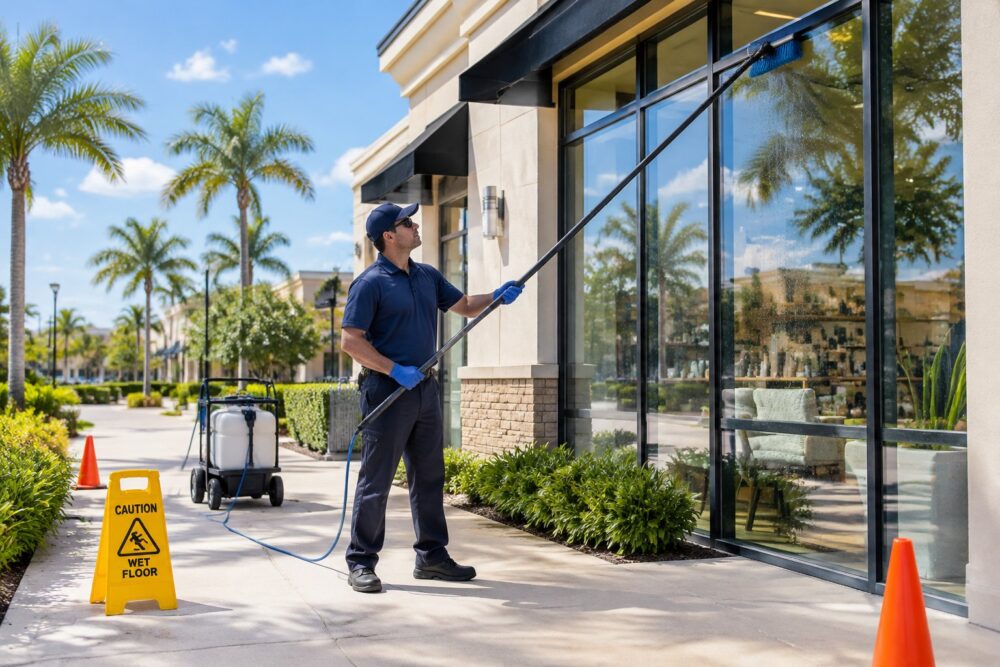
Glass near the work area gets rinsed down during an exterior job. Interior window washing is part of janitorial work. If you want a detailed glass finish, list it separately when you ask for quotes.