Home Exterior Cleaning for Painted Houses: How to Wash Without Peeling Paint
Your painted block or stucco walls looked fresh a few years ago. Now there’s a gray film on the north side, green streaks under the eaves, and black dots on the trim after another humid Central Florida summer. You want it clean, but you’ve heard pressure washing can peel paint right off a house.
For painted walls, the safest choice is a low-pressure soft wash with a paint-compatible cleaner. It kills the mildew and lifts dirt without blasting the finish. Good home exterior cleaning on painted surfaces depends on gentle pressure and the right solution. Force is the wrong tool. Local crews who have worked Florida exteriors for years know that shaded walls, afternoon storms, and year-round humidity keep paint damp and growing mildew.
Keep reading to find out how to check your walls before washing and why soft washing protects paint. You’ll also learn how to clean a painted house step by step and when the job is better left to a pro. By the end, you’ll be able to choose a method that gets the walls clean and leaves the paint where it belongs.
What Should You Check Before Washing Painted Walls?
Check the condition of the paint and the type of surface before any water touches the wall. A five-minute walk around the house tells you where washing is safe and where it could cause damage.
Good house exterior cleaning starts with what you can see. Loose paint, open cracks, and gaps around trim decide how much water and pressure the wall can take.
Look for Peeling Paint, Cracks, and Loose Trim
Walk the whole house in daylight and look closely at each wall. Pay extra attention to the sides that get afternoon rain and little sun. Look for these problems:
- Peeling or flaking paint. Any water stream will lift loose edges and make the bare patch bigger.
- Blisters or bubbles. These hold trapped moisture, and pressure can pop them open.
- Hairline cracks in stucco or block. Water sprayed into cracks can soak into the wall behind the paint.
- Loose trim, fascia, or window caulk. Gaps let water get behind boards and into the framing.
- Chalky paint. If your finger comes away white, the paint is old and wears away easily.
The University of Florida notes that painted walls should be free of mildew, cracks, and blisters to keep rain out. Mark any trouble spots with painter’s tape so you skip or go light on them.
Identify the Painted Surface and the Stains on It
Different painted surfaces react to water in different ways. Painted stucco and block are porous, so they soak up water and hide mildew in the texture. Painted wood siding swells when soaked and loses paint fastest at the board edges. Vinyl siding isn’t usually painted, but if yours has been, that paint grips less firmly than paint on wood.
Next, name the stain. Green or black spots that spread are mildew or algae. A gray, dusty layer is dirt and pollen. Orange or brown streaks near sprinklers are rust from irrigation water. Mildew needs a cleaner that kills it, while dirt rinses off with mild soap. Rust stains on paint may not come out with a wash at all.
Once you know the surface and the stain, the choice between soft washing and pressure washing gets much easier.
Why Is Soft Washing Usually Safer for Painted Surfaces?
Soft washing protects paint because the cleaning solution does the work and the water stays at low pressure. A pressure washer uses force to scrape grime off, and on paint that force can scrape the finish too.
Painted surfaces need a gentle touch. Concrete driveways can take a higher pressure setting because bare concrete has no coating to peel. Your walls are a different story.
How Low Pressure and Cleaning Solutions Remove Organic Growth
Mildew and algae grow roots into the texture of stucco and the grain of painted wood. Spraying hard knocks off the top layer and leaves the roots behind, so the green comes back fast. A soft wash solution soaks into that growth and kills it where it lives.
The process is straightforward:
- The surface is wet down, and nearby plants are rinsed.
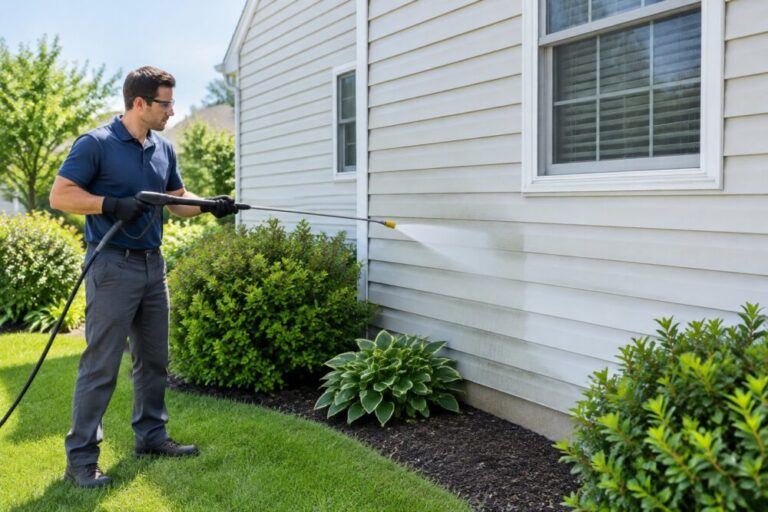
- The cleaning solution goes on at low pressure, close to the flow of a garden hose.
- The solution sits for several minutes to break down mildew and dirt.
- The wall is rinsed top to bottom with low-pressure water.
Heavily shaded walls with thick growth get more time with the solution. Extra pressure is the wrong fix for them. That keeps the paint film intact while the stain comes off.
When a Pressure Washer Can Strip Paint or Push Water into Gaps
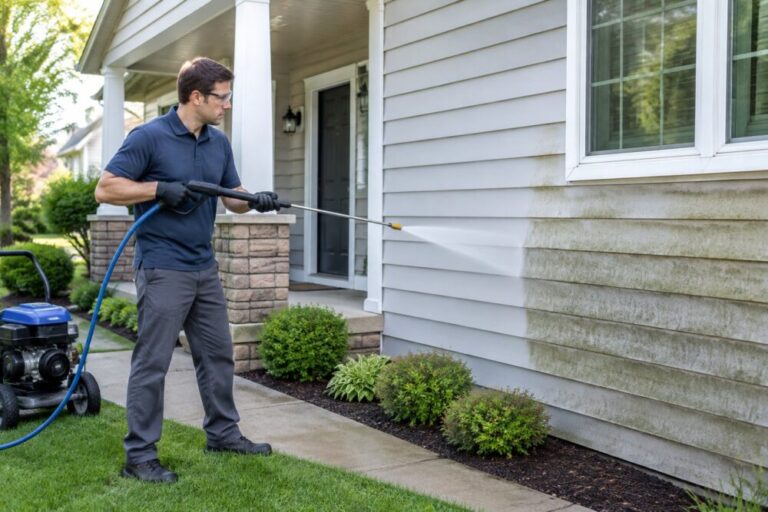
A pressure washer sprays water hard enough to cut into soft materials. That’s why the CDC describes these machines as tools for large, sturdy surfaces such as buildings and roads, and warns their spray can cause serious wounds. That same power peels paint.
Here’s where high pressure hurts painted homes most:
- Peeling edges: The stream gets under a loose edge and lifts whole sheets of paint.
- Etching: Stucco and soft wood get grooved, leaving stripe marks under the paint.
- Water intrusion: Spray forced behind siding, trim, or window caulk can soak insulation and wood.
- Uneven fading: Older, chalky paint wears thin in patches, so the wall looks blotchy.
Pressure washing still has a place. It works well on bare concrete driveways and walkways at the right setting. On painted walls, the gentler method comes first.
How Do You Clean a Painted House Without Damaging the Finish?
You can clean a painted house yourself with a garden hose, a soft scrub brush, and a cleaner that is safe for paint. Go slow, work in small sections, and keep water away from gaps and openings.
Protect Plants, Close Openings, and Test a Small Area
Start with prep. Rinse shrubs and flower beds with plain water so any cleaner that drips on them is diluted. Cover delicate plants with a light tarp, and pull back potted plants and patio furniture.
Close every window and door. Cover outdoor outlets, light fixtures, and dryer vents with plastic and painter’s tape. Turn off sprinklers so they don’t spray rust-colored water on wet walls.
Then test your cleaner on a hidden spot, like a wall behind the AC unit. Let it sit, rinse, and wait for it to dry. If the paint looks dull, soft, or comes off on a cloth, stop and rethink the cleaner.
Treat Mildew with a Paint-Compatible Cleaner
Oxygen bleach is a good choice for most painted surfaces. It is gentler on paint and plants than straight chlorine bleach. Mix it with water following the label, then add a small amount of mild dish soap to help it cling.
Work on one section at a time, from the bottom up, so the cleaner doesn’t run down dry paint and leave streaks. Apply it with a pump sprayer or a soft scrub brush. Let it sit for the time listed on the label, but don’t let it dry on the wall.
For stubborn mildew in stucco texture, scrub lightly with a soft-bristle brush. Never use a wire brush or a stiff deck brush on paint. Do this in the cooler morning hours, since Florida afternoon sun dries cleaner in minutes.
Rinse Gently and Check for Remaining Stains
Rinse each section with a garden hose from the top down. A regular spray nozzle on a gentle setting is plenty. Keep the stream angled down so water doesn’t shoot up under siding laps or trim.
Rinse your plants again when you finish. Once the walls dry, walk the house and look for spots you missed. Faint shadows of mildew may need a second treatment. Rust stains and deep, years-old growth may only fade, since some staining sets into the paint itself.
If the walls still look patchy after two rounds, the issue may be the paint or the reach of your ladder.
When Should You Hire Help for Painted House Washing?
Hire help when the paint is failing, the walls are too tall to reach safely, or the mildew keeps coming back after you wash. A pro can match the method to your walls and handle second-story work without a shaky ladder.
Know When Failing Paint or Hard-to-Reach Areas Need Attention First
Wide areas of peeling paint mean the wall needs repair and repainting. Washing first can still help, since paint sticks better to a clean wall. But it takes a careful, low-pressure hand around the loose spots.
Height is the other big reason. Soffits, fascia, and second-story walls are hard to reach with a garden hose and brush. Leaning ladders on wet ground near a two-story wall is a real fall risk. A soft wash rig sprays solution and rinse water up high from the ground.
Repeat growth is a sign too. If the north side of your house turns green a few months after you scrub it, the roots likely survived. A professional soft wash with a longer treatment time often slows that regrowth.
Ask What the House Wash Covers and Which Tasks Are Separate
Before you book, ask exactly which parts of the house are included. A typical wash covers the siding or stucco walls, soffits, fascia, gutter faces, and trim. Cobwebs and wasp nests often come down in the same pass.
Some tasks are separate jobs. Gutter cleaning (scooping leaves out of the inside of the gutter) is a different service from washing the gutter faces. Detailed window cleaning on glass is also separate in most cases. Ask about these up front so your quote has no surprises.
Good questions to ask any company:
- Will you check my walls for damage before washing?
- How do you protect my landscaping?
- What pressure and cleaner do you use on painted surfaces?
- Can you clean my driveway in the same visit?
Choose a Gentle Method for Your Painted Exterior
A low-pressure soft wash is the right way to clean painted walls in Central Florida. It kills mildew at the root and leaves your paint intact. Save higher pressure for bare concrete, and check your walls for cracks and loose paint before any wash.
A clean house adds real curb appeal, and so does a clean driveway. Essentials Pressure Washing has cleaned Central Florida exteriors since 2005. The family-run crew soft washes painted stucco, block, and siding, and uses pressure suited to the surface on concrete. You can see our house washing and driveway cleaning services or look up your town:
- Orlando: Orlando house washing, driveway cleaning in Orlando, and pressure washing in Orlando
- Clermont: soft wash house washing in Clermont, Clermont driveway cleaning, and Clermont pressure washing
- Minneola: house washing in Minneola, Minneola driveway cleaning, and pressure washing Minneola FL
Send your address and tell us what needs cleaning. Call or text (407) 284-9438 for a free estimate with no obligation, and we’ll get back to you the same day.
Frequently Asked Questions
What Is the Best Way to Clean a Painted House Exterior?
A low-pressure soft wash with a paint-safe cleaner is the best way to clean painted walls. The solution kills mildew and loosens dirt, and a gentle rinse carries it away without lifting paint.
Can Pressure Washing Peel Paint off a House?
Yes, high pressure can peel paint, especially where it is already loose, blistered, or chalky. It can also etch stucco and push water behind trim, which is why painted walls are better served by a soft wash.
Can I Use a Garden Hose to Clean Painted Siding?
Yes, a garden hose works well for rinsing painted siding after you apply a cleaner like oxygen bleach. Keep the spray angled downward so water doesn’t run up under laps and trim.
How Often Should I Wash My Painted House in Central Florida?
Most Central Florida homes need a wash about once a year. Heavily shaded houses and north-facing walls that stay damp may need it sooner.
How Much Does Professional House Washing Cost?
Price is set by the size of your home, the number of stories, and how much mildew has built up. A free estimate gives you a real number for your house, and you can bundle a driveway cleaning into the same job.
Does a House Wash Include Windows and Gutter Cleaning?
A house wash covers the gutter faces, but cleaning debris out of gutters is a separate task. Detailed window glass cleaning is also separate, so ask what’s included before you book. You’ll find more home care tips on the Essentials Pressure Washing blog and our Central Florida homepage.