Concrete Cleaning Orlando: How Pros Work Toward Even Results and Fewer Stripe Marks
Your concrete driveway in Orlando sits in the sun and rain all year. A gray green film creeps across the shady side, oil drips spread under the car, and orange sprinkler stains climb the edges. When you finally rent a pressure washer, the slab can come out cleaner but streaked with light and dark bands that look worse than before.
For even concrete cleaning in Orlando, hire a local crew that uses a surface cleaner on the open slab, spot-treats oil and rust first, and details the edges by hand. That mix of tools and order of steps helps prevent stripe marks. Essentials Pressure Washing has worked on Central Florida driveways since 2005. Humidity, shade, and irrigation water change the job from one house to the next.
Keep reading to find out why local driveways get dirty so fast, what causes stripes, and how a pro works through each step. You will also learn what a fair quote should include. By the end, you can judge whether a crew will give your driveway an even clean that lifts your curb appeal.
Why Do Orlando Driveways Get Dirty So Quickly?
Orlando driveways stay damp for long stretches, and damp concrete feeds growth. Add daily car traffic and sprinkler water, and a slab can look tired within a year or two of its last cleaning.
Two kinds of dirt build up on your concrete. One is living growth like algae and mildew. The other is stains from cars and water. Each needs its own fix, which is why concrete cleaning services in Orlando treat them as separate problems.
How Humidity and Shade Lead to Organic Buildup
Concrete is full of tiny pores that hold water. In Central Florida’s humidity, those pores dry slowly, and shaded areas may stay wet most of the day. Algae, mold, and mildew settle into that moisture and spread as a green, gray, or black film. Learn more about green algae on concrete.
The worst growth shows up in a few predictable spots:
- The strip along the north side of the house
- Under oak trees or large palms that drop leaves and block sun
- Low spots where rain water pools after storms
- Edges next to sod and beds that get hit by sprinklers
Summer is the rainy season here, so growth speeds up from June through September. Shaded slabs often need extra treatment time, since the growth goes deeper than the top layer. If the film has turned dark, see what causes black stains on concrete.
Where Oil Spots, Tire Marks, and Irrigation Rust Come From
Oil spots start as small drips from a parked car. Over time, the oil soaks down into the concrete and turns into a dark stain. Fresh spots lift much easier than ones that have baked in the Florida sun for years.
Tire marks come from hot rubber. When you turn the wheel while parked, the tire leaves a dark smear on the surface. These sit on top and clean up well with proper surface cleaning.
Rust stains are a big issue in this area. Much of Florida’s well water carries iron, and as little as 0.3 ppm iron can cause staining. Each time your sprinklers run, they leave a thin orange layer that builds into bands along the driveway.
Knowing what is on your slab helps explain why pressure alone leaves a patchy result, and why stripes form so easily.
What Causes Stripe Marks on Concrete?
Stripe marks come from uneven cleaning. Some parts of the slab get more force or more time than others, so they come out lighter. The darker bands between them are dirt that never fully lifted.
Why Uneven Pressure Leaves Visible Lines
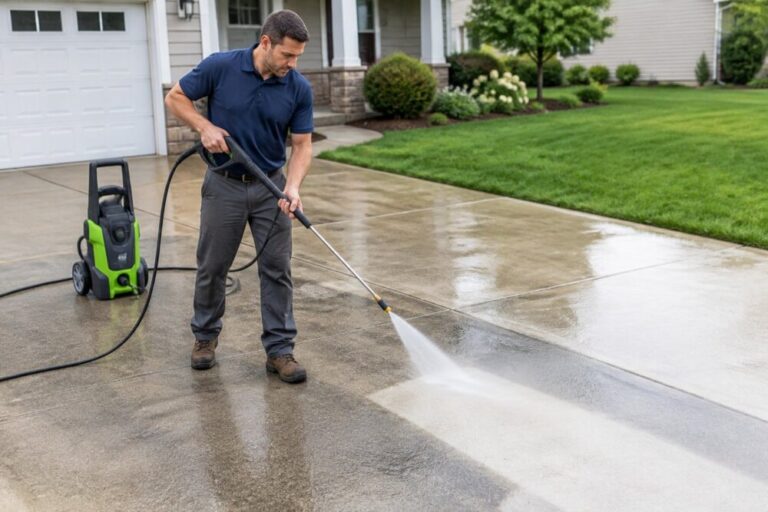
A handheld wand sprays a narrow fan of water. The closer the tip gets to the concrete, the harder it hits. As your arm swings, the distance changes, and so does the cleaning strength.
That swing leaves a pattern people call zebra stripes. You may also see wand marks, which are curved lines from the arc of each sweep. On top of that, holding the tip too close can etch the surface and leave a lasting mark.
Pressure washing is also not something to take lightly. The CDC warns that the strong spray can cause serious wounds that look minor at first. That is one more reason many homeowners leave large slabs to a pro.
How Overlapping Passes Help Produce an Even Clean
Pros use a surface cleaner for the open areas of the driveway. It looks like a round cover with spinning spray arms inside. It holds the nozzles at the same height the whole time, so every inch gets the same force.
The operator moves it in straight, steady rows. Each row overlaps the last one a little, so no thin strip gets missed. The goal is one even finish from the garage door to the street.
Those steady passes are only one part of professional concrete cleaning. The steps before and after count just as much.
How Do Professionals Clean a Concrete Driveway?
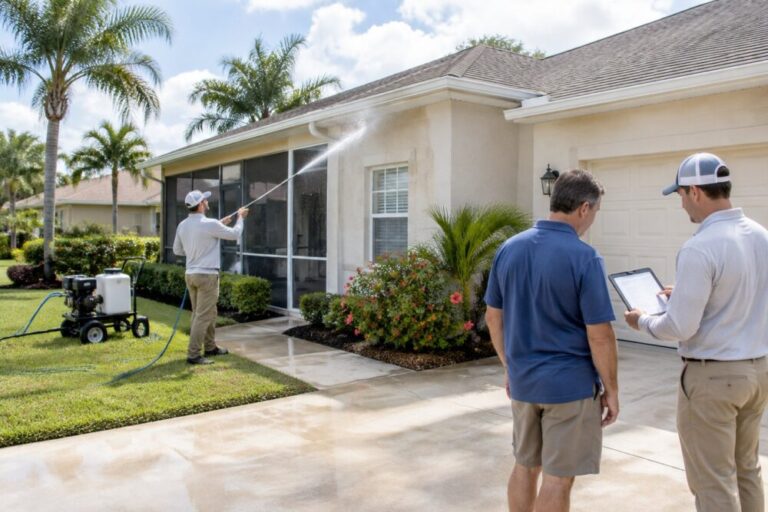
A pro handles driveway cleaning in a set order: inspect, treat stains, clean the slab, then detail the edges. Skipping a step is what leaves rust shadows, gray patches, or dirty borders behind.
Inspect the Surface and Spot-Treat Stains
The crew walks the driveway before any water goes down. They look for cracks, loose patches, and spalling, which is when the top layer of concrete flakes off. Older or flaking slabs get a lighter touch.
Next comes stain treatment. Oil, rust, and heavy organic growth do not come off with plain pressure. Each one gets its own treatment, left to sit, before the main cleaning pass. Rust removal depends on how long the stain has been there.
Match the Cleaning Method to Concrete or Pavers
Concrete is hard and dense, so it can take higher pressure than siding. That pressure, set right for the slab’s age and condition, is what clears tire marks and ground-in grime. A worn slab gets a gentler setting.
Pavers are a different story. High pressure blasts the sand out of the joints between the bricks. So pavers get a lower-pressure approach that keeps the joint sand in place.
Your house needs a softer touch still. Siding and stucco get a soft wash, which uses low pressure and a cleaning solution to kill mold and mildew. Strong pressure could force water behind siding or chip stucco.
Here is how the methods line up:
- Poured concrete: pressure set for the slab’s condition, with a surface cleaner on open areas
- Pavers and brick pavers: lower pressure to protect joint sand
- Stamped concrete: care around the pattern and any sealer
- Siding and stucco: soft wash with low pressure and treatment time
Clean in Even Passes and Detail the Edges
After treatment, the crew runs the surface cleaner across the slab in overlapping rows. This step helps prevent stripe marks and works toward a uniform look.
Then comes the hand work. A wand cleans the borders where the slab meets grass and beds, plus cracks and expansion joints. Those joints are the cut lines in the concrete, and they trap dirt and seeds.
A final rinse pushes loose dirt off the surface. Once you know these steps, you can tell whether a quote covers the full job.
What Should a Driveway Cleaning Quote Cover?
A good quote lists every surface being cleaned and any stains that need extra treatment. When those details are spelled out, you can compare prices fairly and avoid surprises on the day of the job.
Surface Size, Condition, and Access
Size is the starting point. A two-car driveway takes less time than a long drive with a side parking pad. The quote should match what you see on your property.
Condition changes the price too. A slab with years of black growth takes more treatment than one cleaned last year. Cracks and flaking may call for a lighter method, which can slow the work.
Access is the last piece. The crew needs a water source and room to move equipment. If cars, trash cans, or a boat sit on the driveway, plan to move them before the visit.
Stains That May Need Extra Treatment
Ask the provider to point out stains that will get spot treatment. Common ones include:
- Oil and transmission fluid spots under where you park
- Orange irrigation rust along the edges
- Thick black or green growth in shaded areas
- Tire marks near the garage
A fair quote will be honest about old stains. Deep oil and long-standing rust may fade a lot without vanishing. You can see how one local crew handles these on its page for driveway cleaning in Orlando.
Walkways or Other Hard Surfaces Included in the Job
Your driveway is rarely the only dirty concrete on the property. Front walkways and pool decks collect the same mildew and grime. Ask whether they can be included in the same estimate.
If your siding also looks green, ask whether a house wash can be included in the same estimate.
Choose an Even Clean for Your Orlando Driveway
A more even driveway comes from the right steps in the right order. You want stain treatment first, a surface cleaner on the open slab, and hand detailing on the edges. You also want pressure set for your concrete or pavers, with a soft wash saved for siding and stucco.
Essentials Pressure Washing is a family-run crew that has cleaned Central Florida driveways since 2005. That is more than 21 years of local work on concrete, pavers, and stamped surfaces.
When you are ready, send your address and a note on what needs cleaning. Call or text Essentials Pressure Washing at (407) 284-9438 for a free estimate with no obligation. You may get a same-day callback.
Frequently Asked Questions
How Much Does Professional Concrete Cleaning Cost in Orlando?
The price depends on the size of your driveway, its condition, and how many stains need spot treatment. Adding walkways, a pool deck, or a house wash changes the total. A free estimate based on your address and photos gives you a real number for your property.
Can Pressure Washing Damage a Concrete Driveway?
Yes, if the pressure is too high or the tip is held too close, it can etch lines into the surface. At the right setting, healthy concrete handles pressure well. Old or flaking slabs need a lighter touch, which is why a pro checks the slab first.
Can Old Oil or Rust Stains Be Completely Removed?
Fresh stains lift much better than old ones. Oil that has soaked in for years and rust that has built up from sprinklers may fade a lot without fully disappearing. How much comes out depends on how long the stain has been there.
Will Dawn Dish Soap Clean a Concrete Driveway?
Dish soap can loosen a fresh oil drip, but it will not lift set-in oil, rust, or mildew from deep in the pores. Soapy runoff also flows to storm drains, which carry water untreated to nearby lakes. Use only small amounts and rinse toward the lawn.
What Should I Avoid Using to Clean Concrete?
Skip strong acids like muriatic acid, which can etch the surface and harm plants. Avoid using high pressure on pavers, since it washes out joint sand. Never hold a pressure washer tip close to the slab or point it at people or pets.