Driveway Pressure Washing Cost: What Central Florida Homeowners Should Budget
You notice it when you pull into the driveway after a long Central Florida summer. The concrete has a gray-green film, a dark oil spot sits where the car parks, and orange rust lines trace the sprinkler pattern. Before you call anyone, you want to know what driveway pressure washing cost looks like for your property.
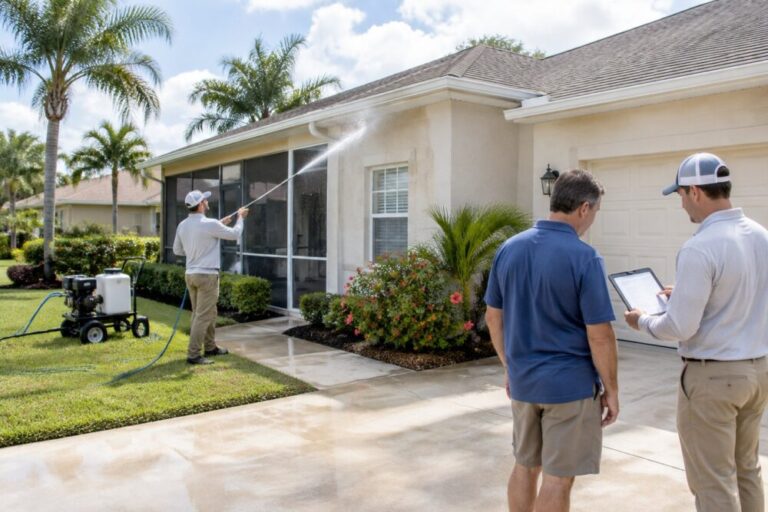
Your price comes from square footage, stain treatment time, surface type, and any minimum charge, and the only number you can trust is a local quote based on your actual slab. A local, family-run crew that has cleaned driveways in Orlando, Clermont, and Minneola since 2005 sees these same factors on every job. Humidity, shade, and irrigation water shape what each driveway needs.
Keep reading to find out how pricing is built, which details raise or lower the number, and how to compare quotes fairly. You will be able to judge whether a quote fits the work your driveway needs before you book anything.
What Should You Budget for a Driveway Wash?
Budget for the size of your slab plus the extra work your stains need. Most pricing starts with area, then adjusts for oil, rust, algae, and access.
Published price guides give you a starting point, but they cannot see your driveway. The subsections below show how the math works so a quote makes sense when you get it.
How Is Driveway Pressure Washing Cost per Square Foot Calculated?
Many contractors measure the cleanable area and multiply it by a per-square-foot rate. A two-car driveway, a side apron, and a front walk each add footage to that total.
To measure your own, multiply length by width for each rectangle and add them together. Curved or flared sections can be estimated as rough rectangles.
The base rate covers a standard clean: setup, an even surface pass, edge detailing, and a final rinse. Stain treatment and special surfaces are often priced on top, which you will see in the next section.
Why Are Published Prices Not a Local Quote?
National cost guides average jobs from many regions, climates, and labor markets. A slab in a dry climate does not grow the black algae a shaded Clermont driveway does.
Those guides also leave out what you see from the curb:
- How long rust from well or reclaimed irrigation water has been sitting
- Whether the concrete is old, cracked, or spalling (flaking at the surface)
- Pavers that need lower pressure to keep joint sand in place
- Hoses that must run far from the spigot, or tight access past parked cars
Use national figures to sanity-check a quote. Use a local estimate to plan your actual budget.
What Might a 500-Square-Foot Driveway Cost?
A 500-square-foot driveway is about the size of a small single-car drive with a short apron. Your cost is 500 times the local per-foot rate, plus any stain treatments.
Ask each contractor for the per-foot rate and the cost of each add-on. Then do the math yourself. If the result falls below their minimum, the minimum is what you pay.
A clean slab in full sun lands close to the base number. A shaded slab with algae, oil spots, and sprinkler rust takes longer, so expect the total to climb.
Why Can a Small Driveway Still Have a Minimum Charge?
Every job carries fixed costs before any water hits concrete. Drive time, equipment setup, a property walk, and breakdown take the same effort on a small slab as a large one.
A minimum charge covers those costs. It is the reason a short walkway alone can cost close to what a full driveway does.
You can get more value from a minimum by adding nearby surfaces like a sidewalk or front walk to the same visit. That leads straight into the factors that move your price.
What Changes the Price of Driveway Cleaning?
Size, stains, and surface material account for most price differences. Two driveways of the same size can price very differently if one sits under oaks and grows algae all year.
How Do Size, Layout, and Access Affect the Quote?
More square footage means more surface cleaner passes and more rinse time. Layout matters too, since a long, narrow drive with many edges takes more wand detailing than a simple rectangle.
Access changes the work in ways you might not expect:
- Steep slopes, common on Clermont hills, need careful water control
- Cars, trash cans, or planters left on the slab slow the crew down
- Gates or narrow side yards limit where hoses and equipment can go
- A distant water spigot adds hose runs and setup time
Clear the driveway the night before and the crew starts faster. That can keep your quote closer to the base rate.
How Do Oil Spots, Tire Marks, Algae, and Mildew Affect Cleaning Time?
Stains add time because many of them need treatment before the main pass. Oil and irrigation rust need targeted treatment, since rust and oil do not lift with plain pressure alone.
Organic growth works the same way. On shaded slabs, black algae lifts with treatment and even pressure, and grinding at it does not work. Tire marks near the garage often need extra passes where cars turn.
Age changes the outcome. Fresh oil and rust lift more easily than stains that have soaked in for years. Some deep stains fade without disappearing, so ask what result to expect before you pay for treatment.
Why Does Driveway Material and Condition Matter?
Plain broom-finish concrete handles the most pressure, so it cleans fastest. Pavers, brick pavers, and stamped concrete need more care, which adds time.
Condition matters as much as material type. Old or spalling concrete gets a lighter touch to avoid making the surface worse. Cracks and expansion joints collect dirt and growth that need wand work.
A good contractor checks the slab before quoting. That inspection decides which method fits, and method affects your price too.
Does the Cleaning Method Affect the Price?
Yes. The method decides how long the job takes, and time drives cost. Each surface gets the pressure it can safely take, plus treatment time where stains need it.
This surface-matched idea applies across a whole property. Siding and stucco get a low-pressure soft wash, which uses cleaning solution to break down mold and mildew so high pressure never hits the wall. Concrete is tougher, so it gets more pressure. You can see how the two services fit together on the house washing and driveway services page.
When Is Pressure Washing Appropriate for Concrete?
Poured concrete in good shape is the right match for pressure washing. It holds up to higher pressure, which clears grime and organic film across the slab.
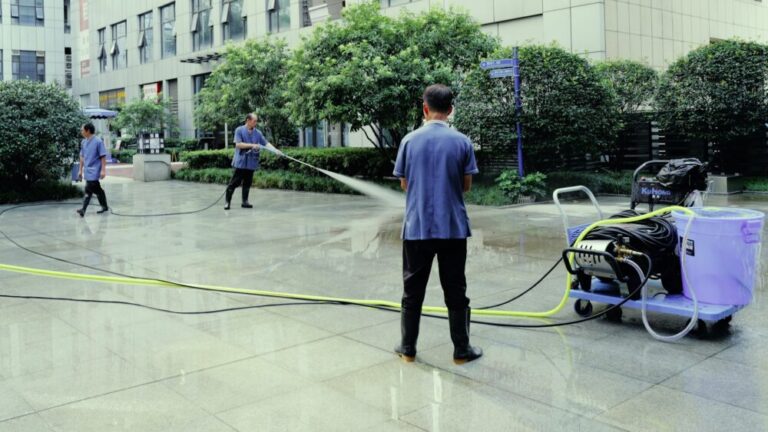
A rotating surface cleaner spreads that pressure evenly. It leaves one uniform finish with no wand stripes or zebra marks. Wand work then handles edges, cracks, and joints.
Heavy shade and thick algae call for extra treatment time. Turning up the pressure is the wrong fix, because it can etch the surface. This approach takes a little longer, and it protects your concrete.
When Do Pavers, Brick Pavers, or Stamped Surfaces Need a Gentler Approach?
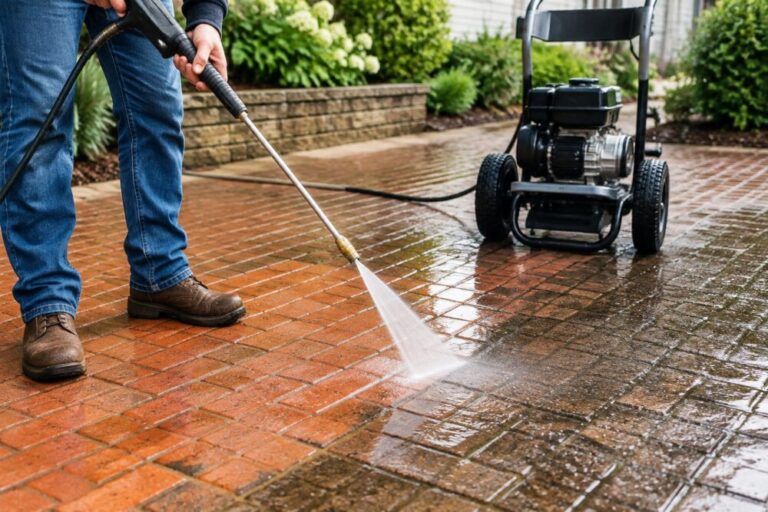
Pavers need lower pressure so the sand between them stays in place. Blowing out joint sand loosens pavers and invites weeds and ants.
Brick pavers get the same care. Stamped concrete has a textured, often colored finish that too much pressure can wear down. Lower pressure on these surfaces means more passes and more time.
Expect a paver or stamped driveway to price a bit above plain concrete of the same size. Once you know what drives the number, you can line up quotes side by side.
How Can You Compare Quotes for the Same Job?
Compare quotes by checking what work each one covers, line by line. A low number that skips edge detailing or stain treatment is a different job from one that includes both.
What Should a Driveway Cleaning Estimate Include?
A clear estimate names every surface and the method for each. Look for these items:
- Total area or a list of surfaces (driveway, walkway, sidewalk)
- Method for each surface, such as full pressure for concrete or lower pressure for pavers
- Stain treatments by type: oil, rust, algae
- Edge, crack, and expansion joint detailing
- Landscaping protection and a final rinse
If an item is missing, ask about it. A straightforward contractor answers plainly and puts it in writing.
Are Walkways, Stain Treatments, and Sealing Included?
Walkways and sidewalks are often priced as added square footage. Confirm they appear on the quote if you want them cleaned.
Stain treatments vary the most between contractors. One may include light oil spotting, while another lists rust as a separate line. Ask how age affects results on each stain.
Driveway sealing is a separate job from cleaning. It needs a clean, fully dry slab and its own materials, so driveway sealing cost appears apart from the wash. Check each quote so you compare cleaning to cleaning.
Can You Price a House Wash and Driveway Cleaning Together?
Yes. Many homeowners book both on one visit, which spreads setup and travel across a bigger job. Tell the contractor everything you want cleaned when you ask for a quote.
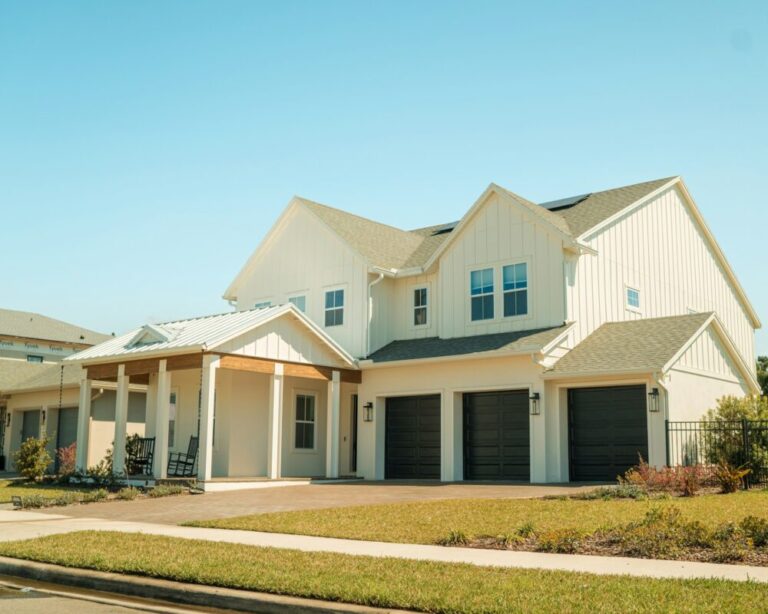
The house uses a soft wash on siding, stucco, brick, and painted block, covering soffits, fascia, gutter faces, and trim. Local details are on the pages for house washing in Orlando, Clermont house washing, and soft washing in Minneola.
This works well before listing photos or a family event. Both surfaces finish the same day.
When Is Hiring a Professional Worth Considering?
Hiring makes sense when stains have set in, the surface needs special care, or you lack the right equipment. Rental pressure washers lack a surface cleaner in many cases, which is how stripe marks happen.
Pavers and older slabs carry more risk with DIY. Too much pressure strips joint sand or deepens surface flaking. Fixing that costs far more than a professional cleaning.
For a plain concrete slab with light dirt, a careful DIY job can work. For oil, rust, heavy algae, or pavers, a pro brings the treatment and the right settings. Browse more property care tips on the Essentials Pressure Washing blog.
Getting an Accurate Price for Your Driveway
The most accurate number comes from a contractor who sees your slab, measures it, and notes every stain. Square footage sets the base, stain treatments and surface type adjust it, and a minimum charge sets the floor.
Before you request a quote, gather these details: rough measurements, the surface type, photos of oil or rust spots, and any extra areas like a walkway. That lets a contractor give you a real number fast.
Essentials Pressure Washing has cleaned Central Florida driveways since 2005, matching the method to each surface. Find local details for driveway cleaning in Minneola, or see pressure washing in Orlando, Clermont pressure washing, and Minneola pressure washing. Send your address and what needs cleaning, or call or text (407) 284-9438 for a free estimate with no obligation and a same-day callback.
Frequently Asked Questions
How Much Does It Cost to Wash a 1,500-Square-Foot Driveway?
Multiply 1,500 by your local per-square-foot rate, then add any stain treatments. A larger slab like this rarely hits a minimum charge. Shade, algae, and pavers push the total higher than a clean concrete slab in full sun.
Does Washing a Driveway and Sidewalk Together Cost Less?
Adding a sidewalk to the same visit is usually cheaper than booking it alone. Setup and travel are already covered, so you mainly pay for the extra square footage.
Will an Old Oil or Rust Stain Cost Extra to Treat?
Yes, old oil and rust are often priced as separate treatments. Rust from irrigation water needs a specific treatment, and results depend on how long it has been there. Ask what to expect before you approve the work.
Is Driveway Sealing Included in a Cleaning Quote?
Sealing is a separate service, so check whether a quote lists it. Cleaning comes first, and sealing needs a fully dry slab. Compare cleaning-only quotes against each other for a fair match.
What Details Should I Send to Get an Accurate Driveway Cleaning Estimate?
Send your address, rough measurements, and the surface type. Add photos of oil spots, rust, or algae, plus any walkways or sidewalks you want included. These details let a contractor quote the real job.