Soft Wash Stucco Safely: How to Clean Mildew Without Damaging Your Walls
Your stucco looked bright last spring. After a humid Central Florida summer, the north wall has a green haze, and dark streaks run down from the gutters. You want it clean, but you worry a pressure washer will crack the finish or strip the paint.
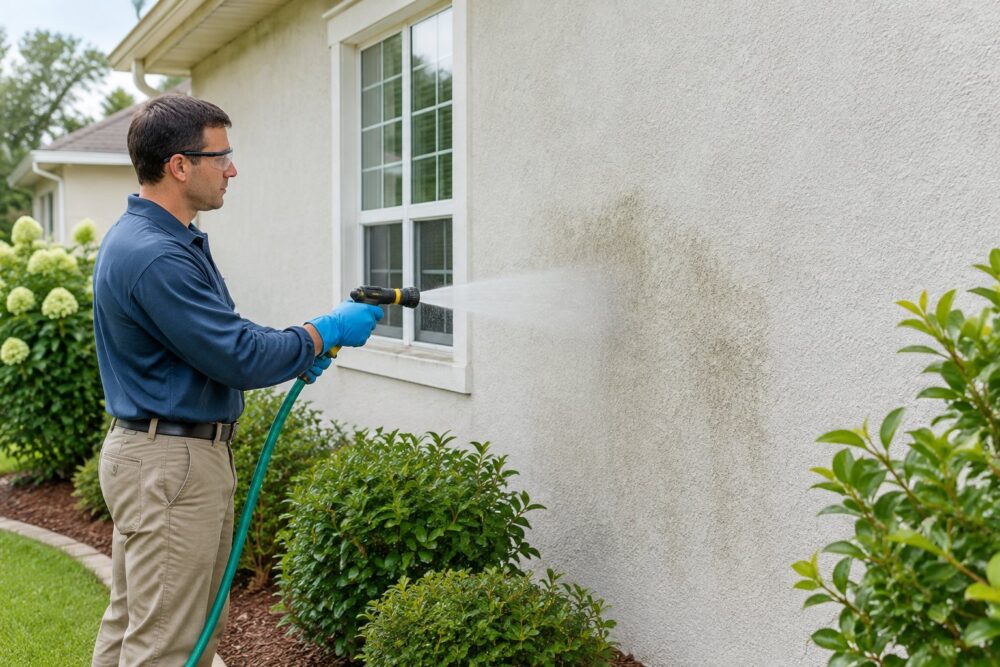
The safe way to clean that growth is to soft wash stucco: a low-pressure spray of cleaning solution that breaks down mildew and algae, followed by a gentle rinse. High pressure stays off the wall. Stucco is porous and textured and often painted, so the cleaner does the work and the water only carries it away.
Keep reading to find out why high pressure is risky on stucco, what to check before any water touches your walls, and how a professional soft wash works step by step. You will also learn which stains come clean, which may stay, and when repairs should come before cleaning.
Why Can High Pressure Damage Stucco?
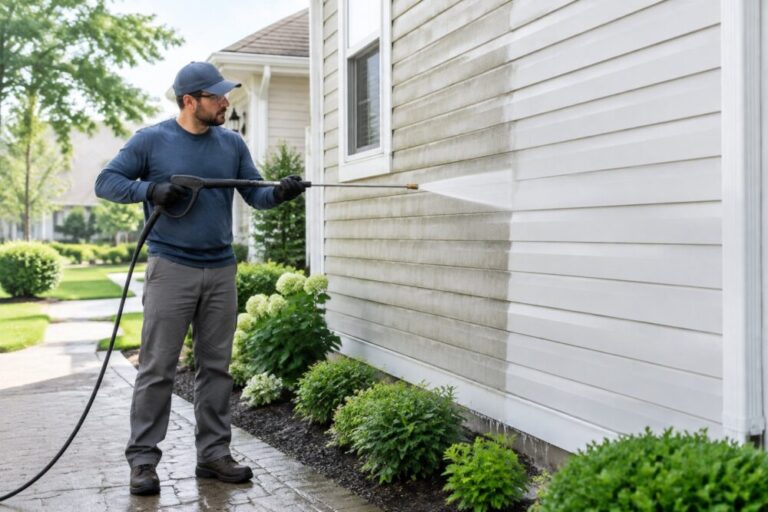
High pressure damages stucco because the stucco surface is a thin, porous cement layer, and a narrow jet of water hits it hard enough to chip texture, widen cracks, and push water inside the wall. When you power wash stucco, you strike a finish that was never built to take that force.
Traditional hardcoat stucco is a three-layer cement coating laid over building paper, metal lath, and sheathing. The outside coat is only part of the system. Damage at the surface affects everything behind it.
How Stucco Texture and Hairline Cracks Let Water In
Stucco has tiny pores and a rough texture. Both hold water. Most Florida homes also develop hairline cracks over time from heat, settling, and the sun.
A high-pressure jet drives water straight into those pores and cracks. Wet stucco behind the surface dries slowly, especially on a shaded wall. That trapped moisture feeds mold and can harm the paper and sheathing underneath.
High pressure also wears down texture. Sand-finish and knockdown patterns lose their edges, and you end up with smooth patches that do not match the rest of the wall.
What Can Happen to Painted Stucco Under High Pressure?
Most stucco in Central Florida is painted, and paint is often the first thing to fail under high pressure. Older or chalky paint can peel off in strips. Even sound paint can show “wand marks,” which are lighter stripes where the jet passed.
You might also see:
- Flaking around old patches where the paint bond was weaker
- Bare spots that let water soak into the stucco below
- Uneven color that needs touch-up paint to fix
- Water forced past window trim and light fixtures
Because the damage starts this easily, a careful look at the wall comes before any cleaning.
What Should You Check Before Washing Stucco?
Before any stucco cleaning, walk the whole house and look for damage, loose finish, and spots that must stay dry. A few minutes of checking keeps a routine wash from turning into a repair job.
Look for Cracks, Loose Finish, and Areas That Must Stay Dry
Start at eye level and work around the house. Press lightly on any area that looks raised or hollow. If paint or stucco flakes off under your fingers, that spot needs care.
Check these areas closely:
- Hairline and wider cracks, especially near window and door corners
- Bubbled or peeling paint, which often means moisture is already present
- Soft or crumbling spots near the ground or under sprinklers
- Openings that must stay dry, such as outlets, light fixtures, dryer vents, and AC disconnects
Note anything that looks like an active leak. Cleaning will not fix it, and water near it can make it worse.
Protect Plants, Windows, and Nearby Surfaces
Cleaning solutions can harm plants, so wet your landscaping with plain water before and after washing. The University of Florida extension reminds homeowners to protect plants from cleaning mixtures used on outside walls. A soaked leaf absorbs less of the cleaner.
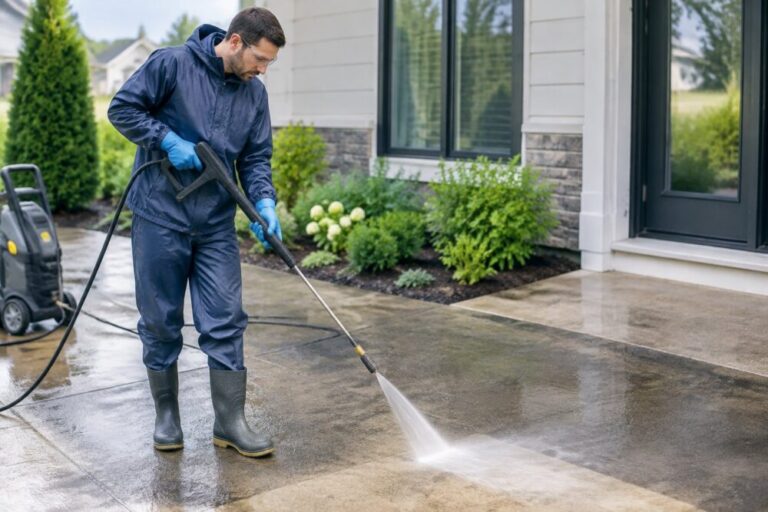
Close windows and doors. Move cars, patio furniture, and grills away from the wall. Cover outlets and fixtures if they are not weather sealed.
Think about the people too. Keep kids and pets inside during the wash, and wear gloves and eye protection if you handle any cleaner. With the wall checked and the yard protected, the cleaning itself can begin.
How Do Professionals Soft Wash Stucco?
Professionals soft wash stucco in three stages: they apply a cleaning solution at low pressure, give it time to break down growth, and then rinse gently. This is the core of how to wash stucco without damaging it.
Soft washing for stucco fits the surface because the chemistry does the cleaning. On a concrete driveway, a crew can use more pressure because concrete is thick and hard. A painted, textured wall needs the gentler approach.
Apply Cleaner with Low Pressure
The cleaner goes on with a low-pressure sprayer. Pros use a soft-wash pump system. On a small area, a homeowner might use a garden pump sprayer.
Crews usually work from the bottom up. Applying from the bottom up helps avoid clean streaks forming where solution runs down dry, dirty stucco. Every part of the wall gets an even coat, including the soffits and trim above it.
Allow Time for Organic Growth to Break Down
Next comes dwell time, which means letting the cleaner sit on the wall. This is when the solution kills mildew and algae and loosens their grip on the stucco texture.
Heavily shaded walls with thick growth get more treatment time, not more pressure. The cleaner should not dry on the wall in full sun. Crews keep the surface damp and work in sections on hot days.
Gently Rinse and Check Stubborn Spots
The rinse uses low pressure and plenty of water. It washes away the cleaner and the dead growth without pushing water into cracks.
After rinsing, step back and look at the wall in good light. A stubborn spot may need a second application. A soft-bristle brush can lift growth from deep texture by hand without scarring the finish.
The last step is a final rinse of plants and walkways. What you see after that rinse depends on the stain you started with.
Which Stucco Stains Respond to Cleaning?
Mildew, green algae, and everyday surface dirt usually come off stucco with a soft wash. Rust, water staining, and deep discoloration are harder and may not come out fully.
The right stucco cleaner depends on the stain. Most organic growth responds to diluted sodium hypochlorite, the active ingredient in bleach, mixed with a surfactant that helps it cling. Oxygen bleach is a milder choice that works slower on heavy growth.
Mildew, Green Algae, and Surface Dirt
Green algae on stucco is common on north-facing walls, under trees, and anywhere sprinklers hit the house. The Florida Department of Health lists outdoor sprinkler spray hitting walls as a moisture source that feeds mold growth.
Here is how these common stucco stains respond:
- Green algae: Responds well. It is soft and sits on the surface.
- Gray or black mildew: Responds well, though thick spots may need a second pass.
- Pollen and dust: Rinses off easily once the cleaner loosens it.
- Cobwebs and mud dauber nests: Come off with the rinse or a soft brush.
Deep Discoloration and Stains That May Remain
Some stains go into the stucco or paint, not just on top. Cleaning stucco will lighten these, but full removal is not promised.
- Rust from sprinklers or metal: Older stains often stay. Rust needs a different cleaner than bleach.
- Water tracking under gutters: May leave a permanent shadow line.
- Faded or chalky paint: Cleaning reveals the fade; it cannot restore color.
- Old mildew on bare stucco: Can leave a light stain after the growth is dead.
If a stain sits on top of damage, cleaning is not the first step.
When Should You Repair Stucco Before Cleaning?
You should repair stucco before cleaning when you find open cracks, crumbling areas, or signs that water is already inside the wall. Washing over these problems lets more water in. Knowing how to clean stucco includes knowing when to wait.
Cracks, Crumbling Areas, and Signs of Trapped Moisture
Hairline cracks thinner than a credit card are common and usually safe to soft wash. Wider cracks, or ones with edges that are shifting, should be sealed first.
Watch for these signs of trapped moisture:
- Stucco that sounds hollow when you tap it
- Dark patches that stay damp long after rain
- Bubbling paint or white, powdery deposits
- Soft spots near the base of the wall or around windows
Mold that comes back fast in the same spot can point to a leak. The fix is the water source, then the cleaning.
When a Surface-Matched Assessment Makes Sense
If you are unsure what you are looking at, ask someone to walk the wall with you. A surface-matched assessment checks the stucco, the paint, and the problem spots, then picks the method that fits.
That might mean a soft wash now and a repair note for later. It might mean cleaning most of the house and skipping one damaged section. Either way, you know the plan before any water hits the wall.
Choose Gentle Cleaning for Sound Stucco
Sound stucco cleans best with a soft wash: low pressure, the right solution, enough dwell time, and a gentle rinse. High pressure risks the paint, the texture, and the wall behind it. Check for damage first, protect your plants, and keep your expectations honest about rust and deep stains.
Essentials Pressure Washing has cleaned Central Florida exteriors since 2005, using a soft wash on stucco and the pressure each surface can take elsewhere. You can see the full list of house washing and driveway services. Or browse local pages for pressure washing in Orlando, Clermont pressure washing, and pressure washing in Minneola.
House washing is available for Orlando stucco homes, Clermont house washing, and Minneola house washing. Driveways can be priced in the same job, whether you need driveway cleaning in Orlando, Clermont driveway cleaning, or Minneola driveway cleaning.
Not sure which method fits your walls? Call or text (407) 284-9438 with your address, and you will get a free estimate with no obligation, usually the same day. You can also visit the Essentials Pressure Washing homepage or read more exterior cleaning tips.
Frequently Asked Questions
Can You Clean Exterior Stucco Without a Pressure Washer?
Yes. You can clean exterior stucco with a pump sprayer, a mildew cleaner, a soft-bristle brush, and a garden hose. This works for small areas, while a whole house is easier with a soft-wash system that covers the wall evenly.
What Cleaner Is Used to Soft Wash Stucco?
Most soft wash mixes use diluted sodium hypochlorite with a surfactant that helps the solution cling to the wall. Oxygen bleach is a gentler option for light growth. Never mix bleach with ammonia or acids, because it creates a dangerous gas.
Is Cleaning Stucco with Vinegar Safe?
Cleaning stucco with vinegar is fine for a small test spot, but it is weak on established mildew and algae. Vinegar is an acid, and acids can dull cement-based finishes with repeated use. Rinse well and test in a hidden area first.
Will Soft Washing Remove Old Stains From Painted Stucco?
Soft washing removes mildew, algae, and dirt from painted stucco, but it cannot reverse faded paint or deep stains. Old rust and long-term water tracking often stay visible after cleaning. Some of those spots need touch-up paint.
How Often Should Stucco Be Cleaned in Central Florida?
Many Central Florida homes need a stucco wash every one to two years. Shaded walls, walls near lakes, and walls hit by sprinklers grow back faster. Clean when you first see green or gray film, before it sets into the finish.