Green Stuff on House Siding: What It Might Be and How to Clean It Safely
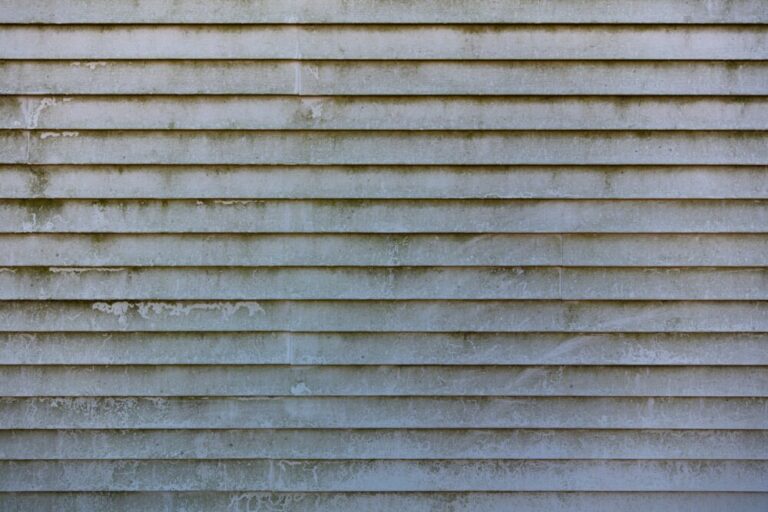
Green stuff on house siding is one of the most common sights on Central Florida homes after a long, humid summer. It shows up as a thin green film on the north wall, behind the hedges, or under the eaves where the sun never reaches. You might first notice it on white vinyl or pale stucco, where even a light coat makes the whole house look tired. In most cases, that green film is surface growth such as algae, and a low-pressure soft wash cleans it safely from siding, stucco, brick, and painted block.
Essentials Pressure Washing has cleaned exteriors across Orlando, Clermont, and Minneola since 2005. The crew sees this growth on local homes every week, and it mostly comes back to the same causes: damp walls, deep shade, and sprinklers that hit the house. Twenty-one-plus years of local work shapes the advice below.
Keep reading to find out what the green film might be, why some walls stay green longer than others, and how to clean it without harming your siding. You will also learn which moisture sources you can fix yourself and when a wall needs more than a wash. By the end, you can decide whether to handle a small patch yourself or book a professional house wash.
What Could the Green Film Be?
The green film on most Florida siding is a living growth that feeds on moisture and the dirt stuck to the wall. Algae is the most common cause. Mildew, moss, and lichen also show up, sometimes side by side on the same wall.
Is Green Stuff on House Siding Always Algae?
No, though algae on siding is the most likely answer in Central Florida. Airborne algae spores drift in on the wind and settle on any surface that stays damp. Once they land on a shady wall, algae growth spreads into a smooth green or yellow-green coat.
Mold and mildew can also look green. The Florida Department of Health notes that mold comes in many colors, including white, gray, brown, black, yellow, and green. So a green stain could be mold, algae, or a mix of both.
Moss is the third option. It grows thicker and shows up most often near the ground, in cracks, or on brick mortar joints that stay wet.
What Can You Tell from Its Color and Texture?
Color and texture give you clues, but they cannot confirm what is growing. Only a lab test can do that, and health agencies do not suggest testing for routine growth. Use these clues to guide your next step:
- Flat, powdery green film: often green algae on siding, and it wipes off on a wet finger.
- Fuzzy or spotted growth in mixed colors: may point to mold or mildew.
- Thick, raised, spongy green clumps: more likely moss, which needs constant moisture.
- Crusty gray-green patches stuck tight: possibly lichen, which grips harder and takes more treatment time.
The good news is that you do not need a name for the growth before cleaning it. The same gentle approach works on all of these surface growths. What changes is how long the cleaning solution needs to sit on the wall.
When Should You Check for Damage Beneath the Growth?
Check below the green film any time the growth sits in one tight spot or keeps coming back fast. A patch that returns in weeks often signals a steady water source, such as a leak or poor drainage. That water can also soak into the wall behind the siding.
Press gently on the area. Soft or spongy spots, bubbling paint, cracked stucco, or vinyl panels that feel loose all deserve a closer look. Green streaks that run down from a roof edge or window corner point to water that is not being shed away from the wall.
Once you know the surface is sound, the next question is why that one wall stays green while others stay clean.
Why Do Some Walls Stay Green?
Walls stay green when they stay wet. In humid climates like Central Florida, the shady side of a house can hold moisture for most of the day. That damp surface gives algae and mildew all they need to grow.
How Do Moisture and Shade Affect Growth?
Sunlight dries siding and slows growth. A wall facing north, or one tucked under big oak trees, may not get direct sun for hours. Morning dew and summer rain linger there long after the sunny side has dried.
Poor ventilation adds to the problem. Thick shrubs, fences, and screened enclosures block the breeze that would help a wall dry out. Moisture and shade together turn a few airborne spores into a full green coat in one season.
Texture plays a part too. Rough stucco and porous brick hold water and dirt longer than smooth vinyl, so growth tends to settle deeper into those surfaces.
What Should You Check Around Sprinklers, Plants, and Gutters?
Many green walls in Florida trace back to water you control. The Florida Department of Health lists sprinkler spray hitting walls as a moisture source that feeds mold growth. Walk your property while the irrigation runs and look for these signs:
- Sprinkler heads that spray directly onto siding or stucco
- Shrubs or vines touching the wall and trapping moisture
- Gutters that overflow, sag, or drip down the wall face
- Downspouts that dump water right at the base of the house
- Green or dark streaks that start below a roof edge or window corner
Good gutter maintenance keeps roof water off your walls. The U.S. Department of Energy recommends that downspouts end at least 5 feet from the foundation. Water that splashes back onto the bottom of the wall keeps that strip damp and green.
Once you have spotted the wet zones, you can clean the growth with a method that fits the surface.
How Can You Clean Green Growth Without Damaging Siding?
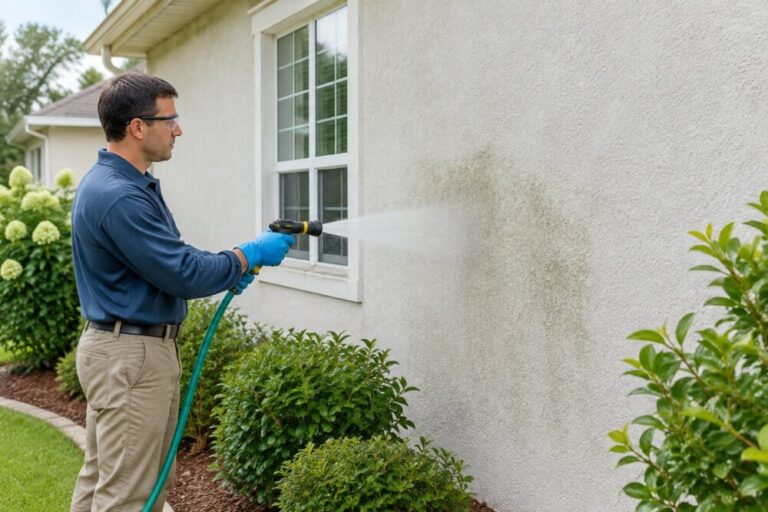
Siding is best cleaned with a soft wash: a low-pressure rinse paired with a cleaning solution that loosens the growth. The solution does the work, and gentle water carries it away. This protects the surface and keeps water out of seams and gaps.
How Do You Remove Green Algae from Vinyl Siding?
Green algae on vinyl siding sits on top of a smooth surface, so it comes off with patience and low pressure. For a small patch, a soft brush, a mild house-wash cleaner, and a garden hose will do the job. Work from the bottom up when applying the cleaner, then rinse from the top down to avoid streaks.
For a whole house, a professional soft wash covers far more ground. A crew applies the solution, lets it dwell, and rinses with low pressure. On heavily shaded walls, the fix is more treatment time on the surface. Adding pressure is the wrong answer.
Pre-rinse plants before cleaning and rinse them again after. Protect outlets, light fixtures, and anything else that needs to stay dry.
Why Is Low Pressure Used on Stucco, Brick, and Painted Surfaces?
High pressure can gouge stucco, chip paint, and blast sand out of brick mortar. It can also force water behind vinyl panels and into cracks, where it soaks the wall underneath. That trapped moisture feeds the next round of growth.
Pressure washers are also a safety risk for homeowners. The CDC warns that the strong spray can cause serious wounds that first look minor. Up on a ladder near a wall, that risk climbs.
A soft wash cleans the pores of stucco and the texture of brick without breaking down the surface. It also leaves no stripe marks from a wand held too close.
How Does Siding Cleaning Differ from Concrete Cleaning?
Siding and concrete need opposite approaches. Here is how they compare:
- Vinyl, stucco, brick, and painted block: low-pressure soft wash, cleaning solution, and longer dwell time
- Concrete driveways and walkways: higher pressure that the surface can handle, with spot treatment for oil, rust, and heavy growth
- Pavers: lower pressure to help keep joint sand in place
Concrete is hard and dense, so it handles the force needed to lift deep organic stains. Professional power washing at the right setting cleans a driveway edge to edge. That same setting would damage siding in seconds.
With the wall clean, the next step is to keep the green film from returning so soon.
How Can You Reduce Repeat Growth?
You reduce repeat growth by drying the wall out. Cleaning removes the film, but spores will land again. Less moisture means slower regrowth.
Which Moisture Sources Can You Fix?
Most fixes are simple and cheap. Start with these:
- Turn or adjust sprinkler heads so the spray lands on lawn and beds only.
- Trim shrubs and branches back from the wall to open up ventilation.
- Clean gutters so they drain freely, and check that they slope toward downspouts.
- Add downspout extensions to carry water away from the base of the house.
- Pull mulch and soil down so they do not sit against the bottom of the siding.
Even one of these changes can make a shady wall dry faster after rain. Pair them with routine gutter maintenance, and the green film will take longer to come back.
When Is It Time to Clean the Siding Again?
Clean again when you see the first light green haze on your shady walls. Small amounts lift off easier than a thick coat that has sat for a year. Florida humidity means some homes need yearly washing, while sunny homes go longer.
Watch the spots that turned green first last time. If they come back much faster than the rest of the house, a hidden water source may be at work.
That fast-returning patch is also the first place to look when deciding whether the siding itself needs help.
When Does Siding Need More Than a Wash?
A wash cleans the surface, but it cannot fix a wall that is broken or holding water. If growth hides damage, cleaning will show it, not solve it.
What If the Siding Is Loose, Cracked, or Stays Wet?
Loose vinyl panels, cracked stucco, and gaps around windows let rain get behind the outer surface. Those spots stay damp and turn green again within weeks. Washing those areas with pressure can push in even more water.
Look for these warning signs:
- Vinyl panels that rattle, bow, or pull away at the seams
- Stucco cracks wider than a hairline, or hollow sounds when tapped
- Paint that peels or bubbles in the same spot each year
- A section that feels damp long after the rest of the wall has dried
A good house-wash crew checks for these problems before starting and keeps water away from them.
When Should You Ask About Repair or Replacement?
Ask a siding or stucco contractor when you find soft spots, rot, or damage that spreads. Repairs, siding replacement, or new siding installation are jobs for a builder. A washing crew does not handle them.
Fix the water problem first, then clean. Washing a wall right after repairs gives you a fresh start, and the new surface stays cleaner longer.
Choose a Gentle Clean and Check the Moisture Source
Green growth on siding is usually algae or mildew, and a low-pressure soft wash removes it without harming vinyl, stucco, brick, or paint. The cleaning only lasts when you also cut down the water that feeds it. Fix the sprinklers, clear the gutters, and trim back plants that crowd the wall.
For small patches, a soft brush and a hose will do. For a full house, or a home with shaded walls and stucco, a professional soft wash is the safer choice. You can see the full list of house washing and driveway services to compare what fits your property.
Essentials Pressure Washing is a family-run crew working out of Minneola. We handle house washing in Orlando, Clermont house washing, and house washing in Minneola. If your concrete is green too, ask about driveway cleaning in Orlando, Clermont driveway cleaning, or Minneola driveway cleaning. Both can be priced as one job.
Not sure which method is right for your surface? Call or text (407) 284-9438 and we will tell you exactly what we would do and what it will cost. Your free estimate comes with no obligation and a same-day callback.
Frequently Asked Questions
Is the green stuff on my siding algae or mold?
It is most often algae, but mold and mildew can also look green. You cannot tell for sure by color or texture alone. The good news is that a soft wash cleans all of these surface growths the same way.
Can green algae damage vinyl siding?
Algae mostly stains vinyl and does not eat through it. The bigger risk is the moisture that feeds it, which can get behind loose panels. Left alone, heavy growth also gets harder to clean and can dull the finish.
Can I use a pressure washer to remove green growth from siding?
A high-pressure wand is risky on siding and can crack panels, chip paint, or push water behind the wall. Low pressure with a cleaning solution is the safer method. Save higher pressure for concrete, and learn more about pressure washing in Orlando for hard surfaces.
Will cleaning stop the green film from coming back?
Cleaning removes the growth, but spores will land again in Florida humidity. Fixing sprinkler overspray, gutters, and crowded plants slows regrowth on your walls. Plan on watching shady walls and cleaning again at the first sign of green.
What should I ask before booking a professional house wash?
Ask whether the crew uses a soft wash on siding and stucco, and how they protect plants and outlets. Ask what the wash covers, such as soffits, fascia, gutter faces, and trim. Local crews offering Clermont pressure washing or Minneola pressure washing should answer clearly; more tips live on the Essentials Pressure Washing blog and the home page.