Vinyl Siding Pressure Washing: How to Clean Safely Without Panel Damage
Mildew does not stay put on vinyl siding in Central Florida. After a humid summer, the north wall of your house can show green film along the lap lines. Gray streaks run down from the soffits, and black specks gather where sprinklers hit the lower panels. You can clean vinyl siding with a pressure washer only at low pressure, using a wide spray tip angled downward and a siding-safe cleaner that does most of the work. Soft washing is the safer choice for most homes.
Local crews in Orlando, Clermont, and Minneola have spent years learning what Florida humidity does to vinyl. Afternoon storms keep walls damp, and shaded sides go green first. A cleaning method that works up north can crack panels or push water into the wall here. That is why the method you choose has to match the surface.
Keep reading to find out how to check your siding before you spray and which cleaner fits mildew and algae. You will also see how to rinse without forcing water behind the panels. By the end, you will be able to decide whether this is a weekend job for you or one to hand off.
Can You Use a Pressure Washer on Vinyl?
Yes, but only with low pressure, a wide spray, and plenty of distance between the tip and the wall. Vinyl panels are thin and hang loosely on purpose so they can expand in the heat. A strong, narrow stream hits that loose fit hard and finds every gap.
Why Low Pressure Is Safer Than a Strong Spray
Low pressure lets the cleaning solution break down mildew and algae while the water only carries it away. A strong spray tries to blast growth off by force. On vinyl, that force lands on a soft plastic surface with overlapping seams.
Mildew and algae grow into the fine texture of the panel. Water alone knocks off the top layer and leaves the roots behind. That is why growth comes back fast when you clean with force and no cleaner.
Pressure washers can be dangerous to people, too. The CDC warns that the spray can cause serious wounds that look minor at first. Lower pressure cuts that risk along with the risk to your siding.
How High Pressure Can Crack Panels or Force Water Behind Them
High pressure damages vinyl in two ways: it hits the panel face, and it drives water into the wall. Each one causes its own set of problems.
- Cracks and chips: Older vinyl gets brittle in the Florida sun, and a close, narrow stream can split it.
- Loose or bent panels: Force at the bottom edge can pop a panel off its lock.
- Water behind the siding: Spraying upward pushes water into the overlaps and onto the sheathing behind it.
- Hidden mold: Trapped moisture in that dark space feeds new growth you cannot see from outside.
- Wet fixtures: Water forced into light boxes and outlets creates an electrical hazard.
If you see a panel flex or move while you spray, the pressure is too high or you are too close.
When Is a Light Rinse Enough, and When Is Soft Washing Better?
A light rinse works for loose dust, pollen, and cobwebs on siding that has no green or black growth. Soft washing is better once you see mildew, algae, or dark streaking. Here is a quick way to tell them apart.
| What You See | Better Choice | Why |
|---|---|---|
| Yellow pollen or light dust | Light rinse with a garden hose or wide tip | Nothing is rooted in the surface |
| Green film on shaded walls | Soft wash | Algae needs a cleaner to break it down |
| Black or gray streaks | Soft wash | Mildew grows into the panel texture |
| Chalky, faded panels | Gentle soft wash, no scrubbing | Old vinyl wears easily |
Once you know which job you have, the next step is checking the house before any water touches it.
What Should You Check Before Cleaning?
Check the siding, the openings, and your equipment before you start. Ten minutes of prep keeps a simple cleaning from turning into a repair.
Inspect Panels, Seams, Windows, and Electrical Fixtures
Walk all four sides of the house and look closely at the lower panels and corners. Look for cracks, holes, and panels that sag or have pulled loose at the bottom edge. Mark those spots so you can skip them or hand-wash them.
Next, check the openings. Close every window and check the caulk around frames and doors. Look at outdoor lights, outlets, and dryer vents, since water gets into these fast.
If a wall is much dirtier than the rest, look for a cause. A leaking gutter or a sprinkler head aimed at the house will keep that spot green no matter how often you clean it.
Protect Plants and Test a Small Area First
Soak your plants and beds with plain water before you apply any cleaner. Wet leaves absorb less solution. Rinse them again when you finish so nothing sits on them in the sun.
Then pick a small test spot low on a back wall. Apply your cleaner, wait a few minutes, and rinse. Look for fading, streaks, or any panel movement before you move to the front of the house.
Choose a Wide Nozzle and Keep the Spray Angled Down
Pressure washer nozzles are color-coded by spray angle. A wider angle spreads the water out and lowers the force on the panel. For vinyl, use the 40-degree nozzle (usually white) for rinsing and the black detergent nozzle for applying cleaner.
Skip the red 0-degree and yellow 15-degree tips on siding. Those belong on hard surfaces like concrete. The green 25-degree tip is still strong enough to cause trouble if you get close.
An electric pressure washer is lighter and easier to control for a single-story home. A gas pressure washer puts out more power, so you need more care with distance on vinyl. If you use gas, keep the engine outdoors and well away from open windows, doors, and vents because of carbon monoxide.
With any machine, hold the wand so the spray angles slightly down toward the ground. That way water runs with the overlaps and stays out of them.
Which Cleaning Solution Works on Mildew and Algae?
A vinyl siding cleaner made for mildew and algae works best, paired with low pressure. The cleaner kills and loosens the growth, so the rinse does not need force.
Match the Cleaner to the Stain and the Siding
Each type of cleaner handles a different problem. Read the label to confirm it is safe for vinyl.
- Vinyl siding cleaner: Made for the job, usually mixes a mild bleach and a surfactant (a soap that helps the cleaner stick and spread).
- Sodium hypochlorite: The active ingredient in chlorine bleach, it kills mildew and algae and brightens dark streaks.
- Oxygen bleach: Gentler on plants and colors, works on light growth but slower on heavy black mildew.
- Dish soap: Cuts dirt, grease, and pollen, but it does not kill mildew roots.
If you mix your own bleach solution, keep it weak. For mold cleanup, the CDC recommends no more than 1 cup of bleach in 1 gallon of water. Never mix bleach with ammonia or any other cleaner.
Follow Label Directions and Keep Cleaner Off Landscaping
The label tells you the mix ratio, how long to leave it on, and what to keep it away from. Stronger is not better. Too much bleach can fade colored vinyl and burn nearby plants.
Wear gloves and goggles, and cover your mouth and nose when you spray cleaner on a wall. Keep kids and pets inside until you finish rinsing.
Work on a cloudy morning or the shady side of the house when you can. Cleaner dries fast in direct Florida sun, and dry cleaner leaves streaks. That timing carries straight into the washing steps.
How to Wash Vinyl Siding Without Forcing Water Behind It
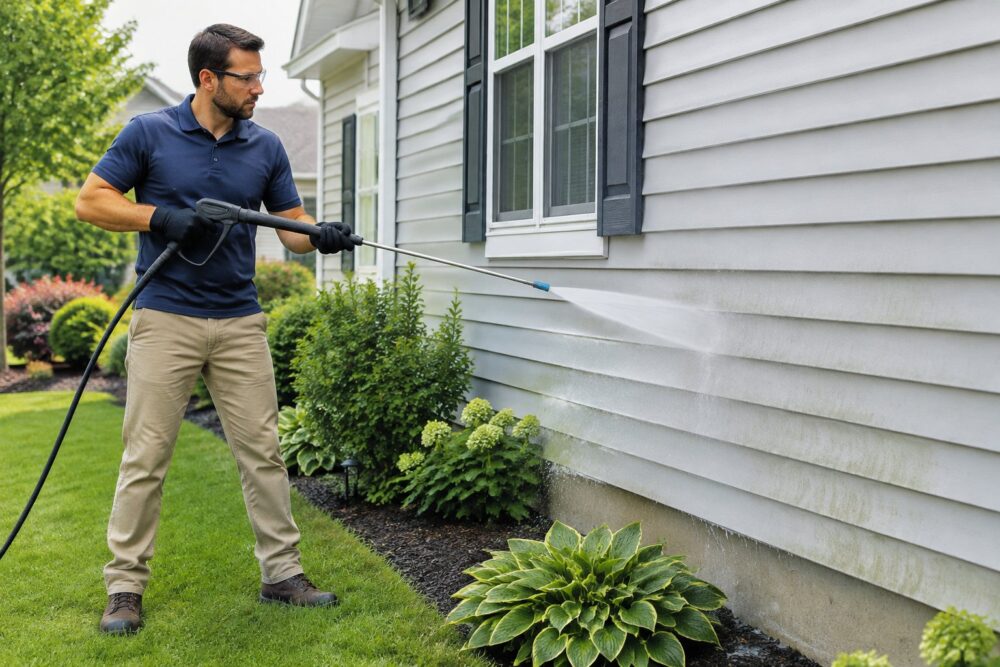
Wash one wall at a time: apply cleaner, let it work, then rinse from the top down with low pressure. Every step keeps water moving with the overlaps of the panels.
Apply Cleaner Gently and Do Not Let It Dry
Attach the black detergent nozzle and apply cleaner from the bottom of the wall up. Starting low keeps drips from landing on dry siding, which helps stop streaks.
Let the cleaner sit for the time on the label, often 5 to 10 minutes. Watch the wall. If it starts to dry, mist it lightly with water to keep it wet.
Break big walls into sections about the width of two or three windows. Smaller sections are easier to keep wet.
Rinse Downward in Sections with Low Pressure
Switch to the 40-degree nozzle and rinse from the top of the wall down. Clean water then flows over the already-rinsed panels below it. Keep the spray angled slightly down.
Stand back from the wall and move the wand in steady side-to-side passes. Never point the spray up under the bottom edge of a panel. For second-story walls, use an extension wand from the ground and skip climbing a ladder with a pressure washer.
Give extra time around windows, light fixtures, and vents. Use lighter passes there and keep the spray off the seals.
Check for Remaining Growth Without Turning Up the Pressure
Look at the wall once it dries a bit. Faint green or gray spots mean the cleaner needs another round, not more force. Reapply, wait, and rinse again.
For stubborn spots near the ground, use a soft brush with a long handle. Brush gently in the direction of the panel lines.
Some old, deep stains will lighten but not fully disappear. Rust from sprinklers and staining under the surface of sun-worn vinyl are common examples. If a wall still looks bad after two rounds, it may be time for help.
When Should You Leave the Cleaning to a Professional?
Call a pro when the house is tall, the panels are damaged, or growth keeps coming back after you clean. These are the jobs where DIY risk climbs fast.
Loose Panels, Upper Floors, and Growth That Keeps Returning
Loose or cracked panels need careful hand work around them. One wrong pass with a wand can pull a panel off and soak the wall behind it.
Upper floors add ladder risk on top of spray risk. Pressure washing house siding from a ladder is a common way for homeowners to get hurt. A trained crew reaches second-story soffits and gutter faces from the ground with soft wash equipment.
If your siding turns green again within a few months, the growth may be deeper than your cleaner reached. Heavy shade, damp north walls, and sprinkler spray all speed it up. A crew that does house washing in Clermont sees these patterns on homes every week.
What to Ask About the Cleaning Method and Quote
Before you hire anyone, ask how they will clean your vinyl. Good answers include:
- They use a low-pressure soft wash on siding, with a cleaner that does the work.
- They walk the house first to check for damaged panels and spots that must stay dry.
- They rinse your plants before and after washing.
- They wash soffits, fascia, gutter faces, and trim, along with the siding.
- They give you a clear price up front with no pressure to add extras.
Pressure washing cost depends on the size of your home, the number of stories, and how heavy the growth is. Ask for a free estimate in writing so you know what is included. You can see what a full list of services covers before you ask.
Choose a Gentle Method for Clean, Intact Siding
Soft washing is the right call for vinyl because the panels are thin and loose-fitting, and mildew grows into their surface. Low pressure plus the right cleaner removes growth at the root and keeps water out of your walls.
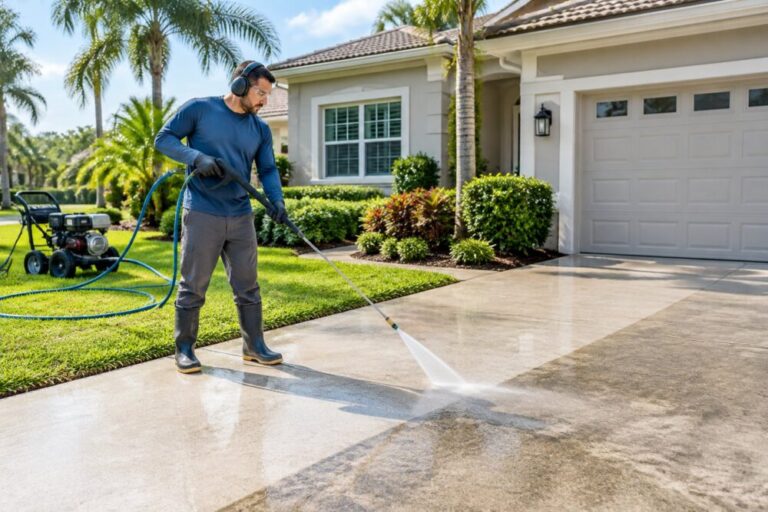
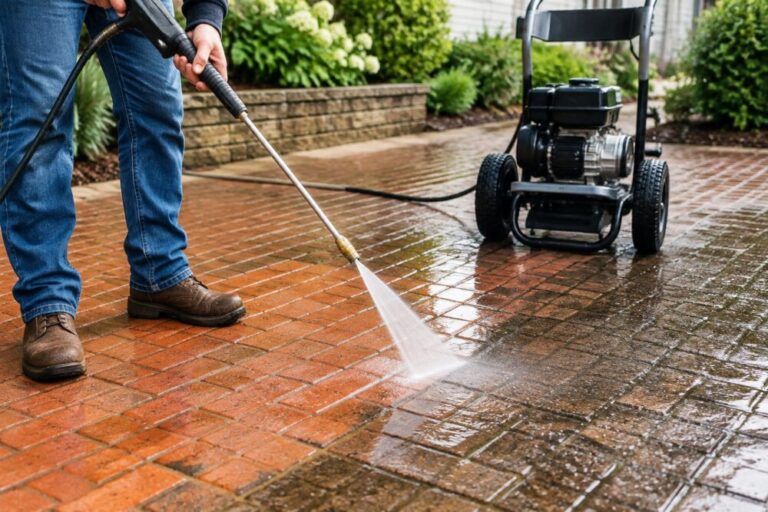
Concrete is a different story. A driveway can take more pressure, and it needs it to clear oil spots and tire marks. That is why driveway cleaning in Orlando calls for a different setup than siding. Pavers need a gentler pass so the joint sand stays put, the same thinking used for driveway cleaning in Clermont and driveway cleaning in Minneola.
If you would rather hand the job off, Essentials Pressure Washing has cleaned Central Florida homes since 2005. The family-run crew offers soft wash house washing in Orlando and house washing in Minneola, plus pressure washing in Orlando, pressure washing in Clermont, and pressure washing in Minneola for driveways. More tips live on the pressure washing blog.
Send your address and what needs cleaning, or call or text (407) 284-9438. You will get a free estimate with no obligation and a callback the same day.
Frequently Asked Questions
Is It a Good Idea to Pressure Wash Vinyl Siding?
It is fine at low pressure with a wide nozzle, a siding-safe cleaner, and the spray angled down. High pressure up close can crack panels and push water behind them. For mildew and algae, soft washing is the safer choice.
What PSI Will Damage Vinyl Siding?
No single number is safe on every house, because damage depends on nozzle angle, distance, and the age of the vinyl. A narrow tip held close can harm siding even on a modest machine. Start with the widest tip, stand back, and stop if a panel moves.
What Is the Best Solution for Cleaning Mildew Off Vinyl Siding?
A vinyl siding cleaner with a mild bleach and a surfactant works best on mildew. Follow the label mix, keep it wet while it works, and rinse your plants before and after. Dish soap handles dirt, but it will not kill mildew roots.
Can Pressure Washing Warp or Crack Vinyl Siding?
Yes, high pressure can crack brittle, sun-worn panels and knock panels loose from their locks. Spraying upward also forces water behind the siding, where it feeds hidden mold. Low pressure and a downward angle prevent most of this damage.
How Much Does It Cost to Have Vinyl Siding Washed?
The price depends on your home’s size, number of stories, and how heavy the growth is. Adding a driveway to the same visit can be priced as one job. A free estimate gives you an exact number for your house with no obligation.