How Does Soft Washing Work? A Homeowner’s Guide to Safer Exterior Cleaning
After a long, humid summer in Central Florida, you might step outside and see green streaks running down your stucco. Black mildew may be spreading across the north side of your vinyl siding. You want it gone, but you have heard that a pressure washer can crack stucco, strip paint, or push water behind panels.
Soft washing cleans your house with a low-pressure spray and a cleaning solution that kills mold, mildew, and algae, then rinses them away gently. The solution does the hard work, so the water pressure can stay low. That makes it a good fit for siding, stucco, brick, and painted block. Hard concrete is a different job, and it takes a different method.
Keep reading to find out how does soft washing work from start to finish. You will see what goes into the solution, what a crew does on your property, and which surfaces need it. You will also get a fair picture of the results, so you can decide what your house needs before you call anyone.
What Makes a Soft Wash Effective?
A soft wash works because the cleaning solution kills organic growth at the root, and the water only carries it away. High pressure tears off the top layer of mildew. The roots stay behind in the pores of stucco or the grain of painted surfaces, so the stain comes back fast.
Most soft wash cleaners mix three things: water, a sodium hypochlorite base, and a surfactant. Sodium hypochlorite is the active ingredient in bleach. Most household bleach contains 5%–9% sodium hypochlorite, according to the Centers for Disease Control and Prevention (CDC). Professionals dilute their mix to match the surface and the type of growth.
How Does Soft Washing Work on Algae and Mildew?
Algae, mildew, and mold are living things. They feed on dust, pollen, and moisture that settle on your exterior walls. In Central Florida, shaded walls stay damp for hours after rain or sprinklers, which gives growth a steady place to spread.
The sodium hypochlorite in the solution breaks down those living cells. Green algae turns pale, and black mildew spots fade as the growth dies. The surfactant is the soap part of the mix. A surfactant lowers the surface tension of water so liquid spreads and soaks in more evenly, as the University of Florida explains.
On a house, that means the solution clings to textured stucco and spreads into the small grooves of siding. It also helps the mix stay on vertical walls long enough to work. Without a surfactant, much of the solution would run straight down to the ground.
Why Does Dwell Time Matter Before Rinsing?
Dwell time is how long the solution sits on the surface before rinsing. The growth needs that time to break down. Rinse too early and some of the mildew survives, so it returns sooner.
Dwell time changes with the job. A light film of pollen and dirt on sunny siding clears faster than thick algae on a shaded wall. For heavy organic staining in deep shade, a good crew adds more treatment time and keeps the pressure low.
Crews also watch the weather. Hot sun and wind can dry the solution before it finishes, so the surface is kept wet during the dwell period. Once the growth has broken down, the rinse comes next, and that is where the full process on your property begins to make sense.
What Happens During a House Soft Wash?
A professional soft wash follows a set order: inspect, protect, treat, wait, and rinse. Each step guards a different part of your property, from window seals to the shrubs along your foundation.
Inspecting the Exterior and Protecting Landscaping
The job starts with a walk around your house. The crew looks for loose siding, cracked stucco, peeling paint, and gaps around windows. They also note anything that needs to stay dry, such as outdoor outlets, light fixtures, and open vents.
This check tells you about problems before washing starts. A loose panel or a crack that lets water in should be pointed out, so it gets protected or avoided. Common items a crew checks include:
- Cracks or soft spots in stucco
- Loose, warped, or broken siding panels
- Peeling or chalky paint on block and trim
- Outlets, lights, and electrical boxes
- Windows, door seals, and dryer vents
- Plants, grass, and garden beds near the walls
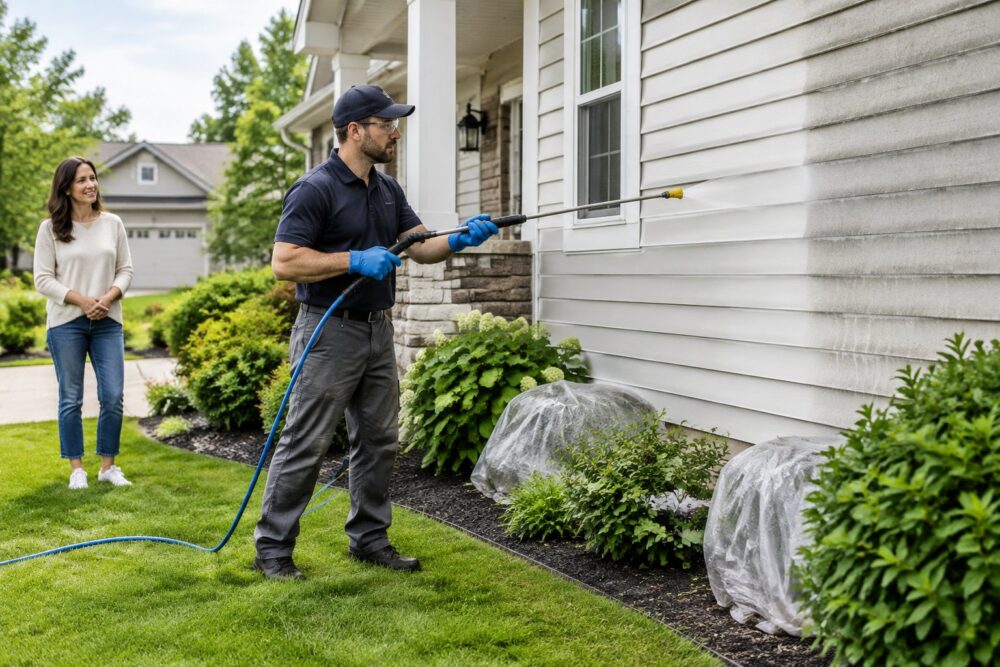
Next comes your landscaping. Plants and grass along the house get a good rinse with plain water before any solution goes on. Wet leaves and soil absorb less of the cleaning mix if a little drifts their way.
Applying the Treatment and Rinsing at Low Pressure
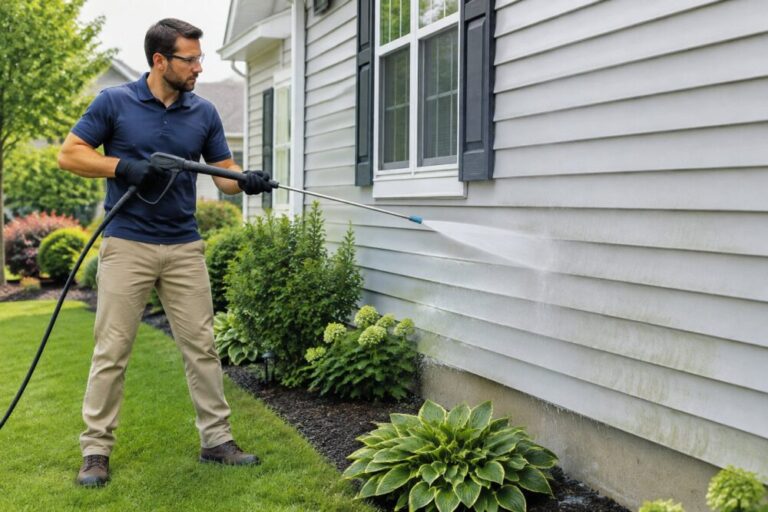
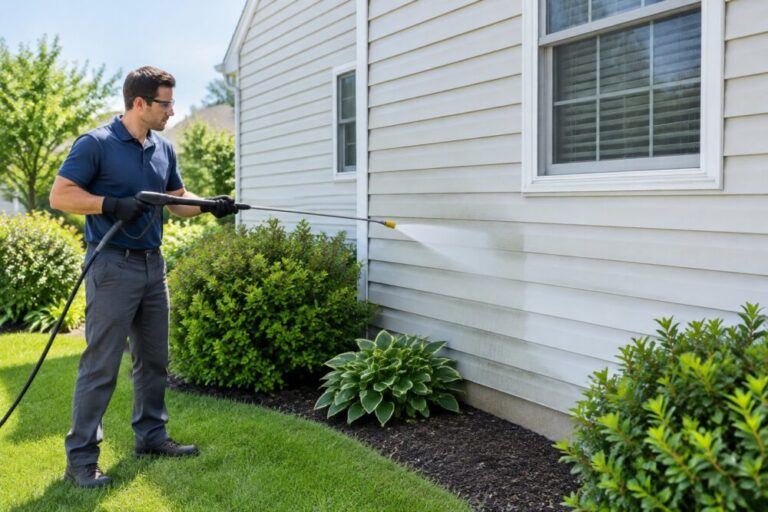
The soft wash system sprays the solution at low pressure, about like a strong garden hose. Crews cover siding, soffits, fascia, gutter faces, and trim. Working in sections keeps the solution from drying out before the rinse.
After the dwell time, the crew rinses every treated area with clean water at low pressure. The rinse carries off the dead growth, dirt, and cobwebs. It also clears leftover solution so it does not dry into streaks.
The last step is another rinse of your plants and lawn. If you want to see how this looks on a local home, house washing service pages for Orlando house washing, Clermont house washing, and house washing in Minneola walk through each area. Which parts of your home get this treatment depends on what they are made of.
Which Surfaces Call for Soft Washing Instead of Pressure Washing?
Siding, stucco, brick, and painted block are the main surfaces that call for soft washing. They can be dented, cracked, or stripped by strong water force. Concrete driveways can take more pressure, so they get a different setup.
Siding, Stucco, Brick, and Painted Block
Each house surface has its own weak spot. Knowing them explains why low pressure fits these materials:
- Vinyl siding: Panels overlap. A strong spray aimed upward forces water behind them, where it can soak the wall sheathing.
- Stucco: It is porous and often has hairline cracks. High pressure can widen cracks, chip texture, and drive water into the wall.
- Brick: The brick itself is tough, but mortar joints are softer. Strong spray wears them down over time.
- Painted block: The paint is the weak layer. High pressure peels it off in patches and leaves bare spots.
Water behind a wall is a real concern. Building scientists call liquid water the most common cause of building durability problems. A cleaning method that keeps water on the outside of your walls protects more than looks.
Soft washing reaches the same goal on these surfaces with chemistry. The solution kills the growth, and a gentle rinse lifts it off. Your siding, stucco, and paint stay in place.
Why Concrete Driveways and Pavers Need a Different Approach
Concrete is dense and hard. It holds up to higher pressure, and it often needs that force to lift oil spots, tire marks, and ground-in dirt. A surface cleaner moves in even passes to avoid stripe marks.
Pavers sit in between. They are tough, but the sand in their joints washes out under strong spray. A lower-pressure approach helps keep that joint sand in place. Oil and irrigation rust get spot treatment first, since pressure alone will not lift them.
Local pages for driveway cleaning in Orlando, Clermont driveway cleaning, and Minneola driveway cleaning show how this works on hard surfaces. With surfaces sorted, the next question most homeowners ask is about safety.
Is Soft Washing Safe for Your Home?
Soft washing is safe for siding, stucco, brick, and painted block when the crew matches the solution strength and pressure to the surface. Safety comes from the right method on the right material. A strong mix sprayed carelessly can still cause harm.
How Low Pressure Reduces the Risk of Surface Damage
High pressure puts a lot of force into a small spot. The CDC warns that a pressure washer’s strong spray can cause serious wounds that look minor at first. Force like that can gouge soft wood, etch stucco, and lift paint just as easily.
Low pressure spreads the water out and keeps it gentle. Panels stay in place, mortar stays in its joints, and paint stays on the wall. You also avoid the striped, uneven look that a wand held too close can leave on siding.
Common damage from too much pressure on house surfaces includes:
- Water forced behind vinyl siding
- Chipped stucco texture and widened cracks
- Paint stripped from block, trim, and wood
- Worn mortar between bricks
- Broken window seals and screens
Why Cleaning Solutions and Landscaping Still Need Care
Low pressure solves one risk, but the solution brings its own. Sodium hypochlorite irritates skin, eyes, and lungs at strong levels. It can also burn leaves if it sits on plants without dilution or a rinse.
That is why pre-wetting and rinsing landscaping are part of the job. Covering or rinsing outlets, keeping pets and kids inside, and rinsing walls fully all lower the risk. The mix should never be blended with ammonia or acid cleaners, since that releases dangerous gas.
Paint is the other area to watch. Old, chalky, or failing paint may lift no matter how gentle the wash. A careful inspection catches this early, so you know what to expect from the results.
What Results Can Homeowners Expect?
Most homeowners see green algae, black mildew, pollen, and cobwebs cleared in a single visit. Siding looks brighter, stucco loses its gray cast, and your home’s curb appeal improves from the street. Two things limit those results: Florida’s climate and the age of the stain.
Why Growth May Return in Central Florida’s Humidity
Soft washing kills the growth on your walls, but it cannot change the weather. Mold and mildew thrive in warm, damp air. Spores in the air land on clean siding again within weeks or months.
Some parts of your house will grow back faster than others. Watch these spots:
- North-facing walls that get little direct sun
- Walls under trees or next to thick shrubs
- Areas hit by sprinkler spray each day
- Spots under gutters that overflow or drip
Trimming plants away from walls and aiming sprinklers away from the house help slow regrowth. Many Central Florida homeowners schedule a wash every year or two, depending on shade and moisture.
Why Old Stains May Not Wash Away Completely
Some marks are not living growth. Rust from irrigation water, red clay splash, and tannin stains from leaves do not respond the same way to a mildew solution. They may fade but not disappear.
Age plays a part too. Algae that has sat in stucco pores for years can leave a faint shadow after the growth is dead. Paint that has faded under mildew may look uneven once the growth comes off. A good crew tells you about these limits before the job, so the results match what you were told. For more tips on caring for your exterior, browse the pressure washing blog.
Choosing the Right Method for Your House
Soft washing is the right choice for siding, stucco, brick, and painted block because it kills mildew and algae without forcing water or stripping paint. Concrete driveways need higher pressure, and pavers need a lighter touch to protect joint sand. Matching the method to each surface protects your home and gets it clean.
Here is a quick guide to sort your property:
- Vinyl siding, stucco, brick, painted block: soft wash with low pressure and a cleaning solution
- Soffits, fascia, gutter faces, trim: soft wash as part of the house wash
- Concrete driveways, walkways, sidewalks: pressure washing at a setting concrete can take
- Pavers: lower pressure to keep joint sand in place
If you have both a house and a driveway to clean, they can be booked as one job. You can see both house washing and driveway services side by side. Local pages cover pressure washing in Orlando, Clermont pressure washing, and pressure washing in Minneola.
Essentials Pressure Washing is a family-run crew based in Minneola, cleaning Central Florida homes since 2005. Not sure which method fits your walls? Call or text (407) 284-9438 with your address and what needs cleaning, and you will get a free estimate with no obligation, usually the same day.
Frequently Asked Questions
What Chemicals Are Used to Soft Wash a House?
Most soft wash solutions use diluted sodium hypochlorite, the active ingredient in bleach, mixed with water and a surfactant. The sodium hypochlorite kills mold, mildew, and algae, and the surfactant helps the mix cling to walls. The strength is adjusted for the surface and the amount of growth.
Can Soft Washing Damage Paint or Landscaping?
Soft washing is gentle on sound paint and plants when the crew dilutes the mix correctly and rinses well. Old, chalky, or peeling paint may lift during any wash. Plants are protected by rinsing them with plain water before and after the solution goes on.
Will Soft Washing Remove Every Stain on Siding?
No, soft washing removes living growth like mildew and algae, but not every stain. Irrigation rust, clay splash, and very old staining may fade without clearing fully. A crew should point out these stains before work begins.
How Often Should a House Be Soft Washed in Florida?
Most Central Florida homes need a soft wash every one to two years. Shaded walls, nearby trees, and sprinkler spray bring growth back sooner. Sunny, open homes can often wait longer between washes.
Is Soft Washing Worth the Cost for a House?
For most homeowners, yes, because it cleans siding and stucco without the repair risk of high pressure. A cracked stucco patch or water behind siding costs far more to fix than a careful wash. Cost depends on your home’s size, height, and how much growth is on the walls.