Commercial Exterior Cleaning Orlando: Plan a Safer Wash for Your Business
Your storefront looks fine at 9 a.m. on a Monday, until the sun hits the stucco and shows a gray film, green streaks under the gutters, and dark spots by the front door. Commercial exterior cleaning in Orlando works best when each surface gets its own method: a low-pressure soft wash for siding and stucco, and pressure washing for concrete walks and entries. Central Florida heat, humidity, summer storms, and shade all help mildew grow on walls and algae spread across concrete.
That buildup comes back faster here than in drier parts of the country. A local crew that has worked Central Florida exteriors since 2005 has seen how shaded north walls, irrigation overspray, and heavy foot traffic speed it up. That local knowledge helps you plan a wash that cleans the building without stripping paint, etching stucco, or flooding your planters.
Keep reading to find out which parts of your business exterior need attention, how the surface decides the method, and what to check before a crew arrives. You will also see what shapes the price and how often to clean. By the end, you will be able to define a clear scope and request a quote with confidence.
Which Business Exteriors Need Cleaning?
The surfaces customers see and walk on need cleaning first: the front facade, the entry, and the concrete leading to your door. These areas collect mildew, pollen, gum, tire marks, and drip stains fastest. They also shape a first impression before anyone steps inside.
Storefronts, Building Facades, and Entryways
Your facade is the largest surface a customer sees. On stucco, painted block, and siding, mildew shows up as gray or black patches, often worst on shaded walls and under overhangs. Pollen adds a yellow-green dust that turns sticky after rain.
Entryways need a closer look. Soffits and fascia above the door collect cobwebs and mildew. Gutter faces get dark “tiger stripe” streaks where water runs over the edge.
Painted trim around doors and signs also holds dirt. A full storefront pressure washing job, done as a soft wash, covers these areas in one visit:
- Siding, stucco, brick, or painted block walls
- Soffits and fascia under rooflines and awnings
- Gutter faces and trim
- Areas around entry doors and signage
Sidewalks, Walkways, and Other Concrete Surfaces
Concrete takes the most abuse at a business. Foot traffic grinds in dirt, dropped drinks leave stains, and parked cars leak oil near the curb. In shady spots, black algae creeps in and makes walks slick after storms.
Irrigation is another common cause. Sprinklers that hit concrete leave orange rust lines that grow darker each month. Cracks and expansion joints (the cut lines in concrete) trap dirt and weeds if no one details them.
Pavers at a patio or entry need extra care. Too much pressure blasts out the joint sand that holds them in place.
What Falls Outside Exterior Surface Cleaning?
Exterior surface cleaning covers outside walls and hard ground surfaces. It does not include janitorial work, office cleaning inside the building, or interior retail cleaning. Floors, restrooms, and lobby glass from the inside belong to a separate cleaning vendor.
Dedicated window cleaning and roof cleaning are separate trades too. Ask any crew which of those it handles before you assume they are included. A focused provider will list its exterior cleaning services plainly, so you know what is in the job and what is not.
Once you know which surfaces need work, the next step is matching each one to the right method.
How Does the Surface Change the Cleaning Method?
Each surface material can handle a different amount of water pressure, so one setting for the whole building causes damage. Stucco and painted walls need low pressure plus a cleaning solution. Bare concrete can take higher pressure, and pavers sit in between.
Soft Washing for Sensitive Siding and Painted Surfaces
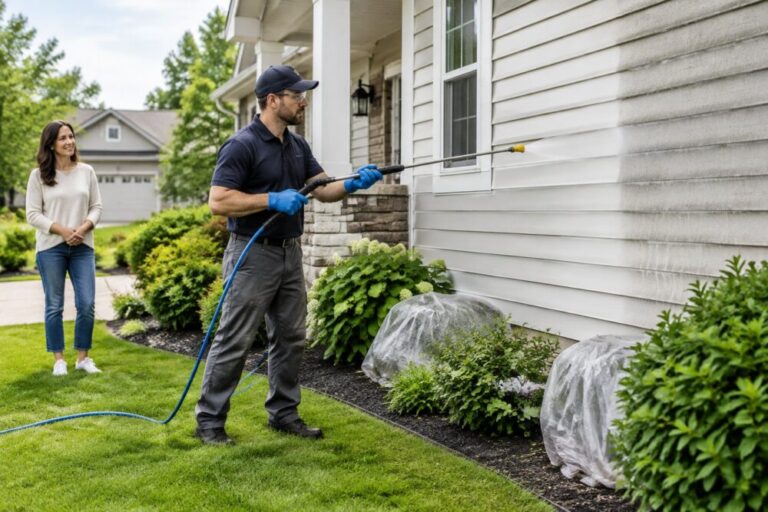
Soft washing uses low water pressure, close to a garden hose, with a cleaning solution that breaks down mold and mildew. The solution does the work. The rinse carries the loosened growth away.
This fits stucco, siding, brick, and painted block because high pressure harms them. It can chip stucco, push water behind siding, peel paint, and leave lines on the wall. Soft washing removes the growth at the root and leaves the surface intact.
Heavily shaded walls with stubborn staining get more time for the solution to work. More pressure is the wrong fix. That same approach is used in house washing in Orlando and works the same way on a commercial facade.
Pressure Washing for Concrete and Surface-Matched Care for Pavers
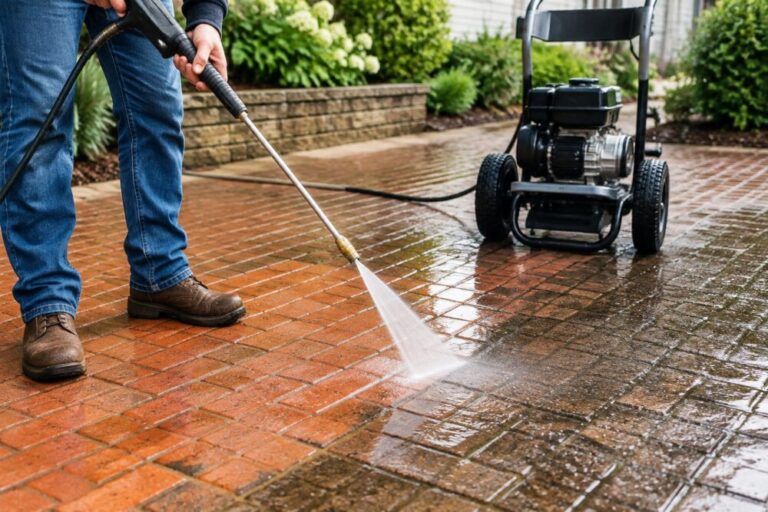
Plain concrete can take real pressure, which it needs to lift oil spots, tire marks, and ground-in grime. Crews spot-treat oil, rust, and heavy algae first. Then they clean in even, overlapping passes to avoid stripe marks.
Edges, cracks, and expansion joints get detailed by hand at the end. That step keeps the finished walk looking even from the door to the curb. It is the same process used for driveway cleaning in Orlando, scaled to sidewalks and entries.
Pavers, brick pavers, and stamped concrete get a lower-pressure approach. That keeps joint sand in place and protects any sealed or patterned finish. Good commercial pressure washing in Orlando adjusts for each of these, even on the same property.
Why Stains and Surface Condition Need an Assessment
A walk-around before cleaning shows what the method should be. Cracked stucco, loose trim, and open outlets need protection or a lighter touch. Lights, signs, and door seals that should stay dry get noted too.
Stains vary as well. Fresh oil lifts more easily than oil that has soaked in for years. Rust removal depends on how long the stain has been there, so very old rust lines may fade without disappearing.
That assessment is also the right time to talk through your own property details with the crew.
What Should You Check Before Booking a Crew?
Before you book, make sure the crew knows exactly what to clean, when it can work, and what needs protection. Clear answers here prevent wet customers, damaged plants, and surprise charges.
Define the Areas, Access, and Business Hours
List every surface you want cleaned: front facade, side walls, entry walk, sidewalk, or patio. Note anything you want left alone. Photos help a crew price the job fairly.
Then cover access. Crews need a water spigot, a place to park, and a clear path around the building. Tell them about locked gates, shared walls with neighbors, or tight alleys.
Timing comes next. Early mornings before opening work well for most storefronts, and the hours of a 7:30 a.m. to 7:30 p.m. schedule leave room on either side of a normal business day. Ask whether work can be split so the entry is clean before customers arrive.
Ask How Landscaping and Nearby Openings Will Be Protected
Plants near the building should be rinsed with fresh water before and after a soft wash. That dilutes any cleaning solution that drifts onto leaves and soil. Ask the crew to confirm they do this.
Openings matter too. Ask how they will handle these spots:
- Exterior outlets and light fixtures
- Door seals and weather stripping
- Signs, menu boards, and displays
- Vents and any gaps in siding or trim
A good crew answers these questions without hesitation. Business owners in Lake County ask the same things before house washing in Clermont, since the plant and stucco concerns are identical.
Confirm the Scope Before Work Starts
Get the scope in writing, even if it is a short text message. It should name each surface, the method for each, and the price. That keeps the job clear for both sides.
On the day of the visit, walk the property with the crew before any water is turned on. Point out problem stains, fragile trim, and areas that must stay dry. This short walk prevents most misunderstandings.
With the scope settled, the price comes down to a handful of property details.
What Affects the Quote and Cleaning Schedule?
Your quote depends on how much surface there is, what it is made of, and how bad the staining is. Your schedule depends on how fast buildup returns, which in Central Florida is quicker than many owners expect.
Property Size, Surface Type, and Stain Severity
A single-story storefront with a short sidewalk takes less time than a two-story building with a long walkway. Height adds setup time. Square footage of concrete adds pass time.
Surface type changes the work. Soft washing stucco takes different equipment than pressure washing concrete. Pavers need a slower, gentler pass to protect joint sand.
Stain severity is the last piece. Thick black algae, old oil, and set-in rust need spot treatment and dwell time. Booking the building and the concrete together lets the job be priced as one visit, the same way it works for pressure washing in Clermont.
When Humidity, Shade, and Foot Traffic Call for Another Cleaning
Humid summers and daily storms feed mildew on walls and algae on concrete. Shaded walls and walks stay damp longer, so they green up first. Sunny faces of the same building stay cleaner longer.
Watch for these signs that it is time to clean again:
- Gray or green film returning on shaded walls
- Dark streaks under gutters and overhangs
- Slick or dark patches on shaded walkways
- New oil spots or rust lines near curbs and sprinklers
High-traffic entries show wear soonest. Many owners clean the entry and walkway more often than the full facade. Concrete jobs like driveway cleaning in Clermont follow the same pattern, with shaded areas needing attention first.
Choose a Scope That Fits Your Property
Start with what customers see and touch: the front facade, the entry, and the walk to your door. Soft wash the walls, pressure wash the bare concrete, and use a gentler approach on pavers. Add side walls and back areas when the budget and buildup call for it.
A focused scope for Orlando commercial exterior cleaning often looks like this:
- Entry refresh: front wall, soffits over the door, and the entry walk
- Full front: entire facade, gutter faces, trim, and the public sidewalk
- Whole building: all walls plus every walkway and concrete pad on the lot
Essentials Pressure Washing has cleaned Central Florida exteriors since 2005, focused on two services: house washing and driveway cleaning. The crew covers Orlando, Clermont, and Minneola, including pressure washing in Minneola, house washing in Minneola, and driveway cleaning in Minneola. You can browse more tips on the pressure washing blog.
Send your address and a short list of what needs cleaning, and you will get a free estimate with no obligation, usually the same day. Call or text (407) 284-9438, or start on the Essentials Pressure Washing website.
Frequently Asked Questions
What Does Commercial Exterior Cleaning Include in Orlando?
It includes soft washing outside walls (siding, stucco, brick, and painted block) along with soffits, fascia, gutter faces, and trim. It also covers pressure washing concrete walks, sidewalks, and entries. Interior janitorial work is a separate service.
Can a Storefront Be Cleaned Without Damaging Its Siding or Landscaping?
Yes, when the crew uses a low-pressure soft wash on the walls and rinses plants before and after. A walk-around first identifies outlets, signs, and cracked areas that need protection. High pressure on stucco or siding is what causes damage.
How Much Does Commercial Exterior Cleaning Cost in Orlando?
Price depends on building size, surface types, height, and how heavy the staining is. Booking walls and concrete together lets the work be priced as one job. A free estimate based on your address and photos gives you an exact number.
Can Cleaning Be Scheduled Around Customers and Employees?
Yes, most crews can start early in the morning or work after closing. With hours from 7:30 a.m. to 7:30 p.m., seven days a week, there is room to clean the entry before you open. Tell the crew your hours when you request a quote.
How Often Should an Orlando Business Clean Its Exterior?
Clean whenever mildew, algae, or stains return, which happens faster on shaded walls and busy entries. Many businesses clean high-traffic walkways more often than the full building. Watch shaded areas first, since they show regrowth soonest.