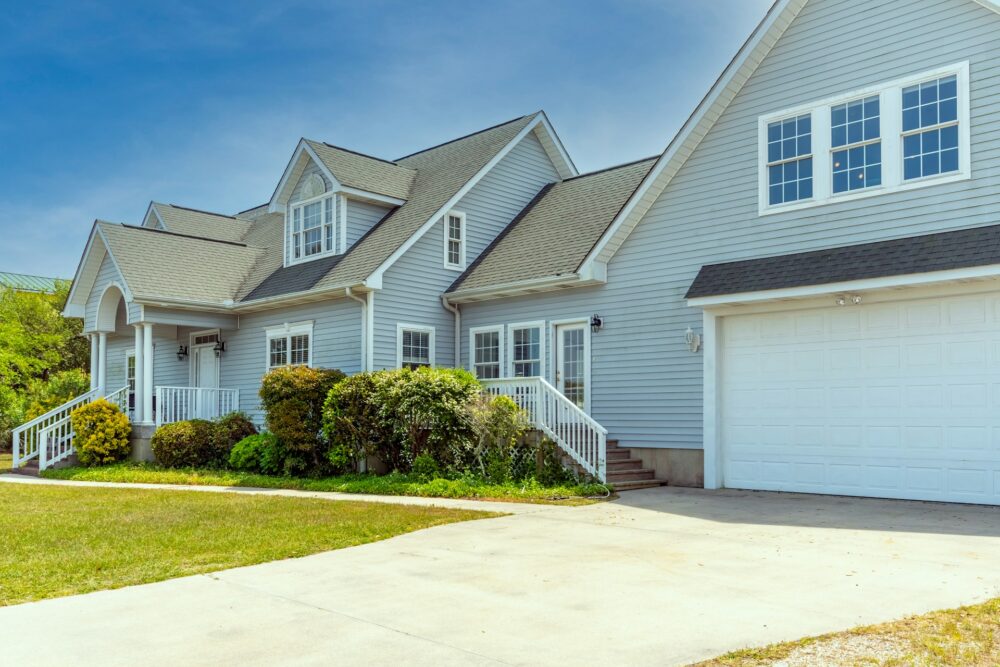
Residential Soft Washing: How It Cleans Siding Without Damaging Your Home
You walk outside after a humid Central Florida summer and see it: a gray-green film creeping across the north wall. Dark streaks run down from the soffits, and pollen dulls the trim. Residential soft washing is the low-pressure method that cleans this growth off siding and stucco. A cleaning solution loosens the buildup, and a gentle rinse carries it away without forcing water into your walls.
Since 2005, Essentials Pressure Washing has cleaned homes and driveways across Orlando, Clermont, and Minneola. That is 21-plus years of seeing what Florida humidity does to stucco, vinyl, brick, and painted block. It is also 21-plus years of learning which method each surface can handle.
In this guide, you’ll learn how soft washing works and why low pressure suits siding and stucco. You’ll also see how a house wash differs from driveway cleaning. By the end, you’ll know what a soft wash should cover and which questions to ask before you book.
How Does Residential Soft Washing Work?
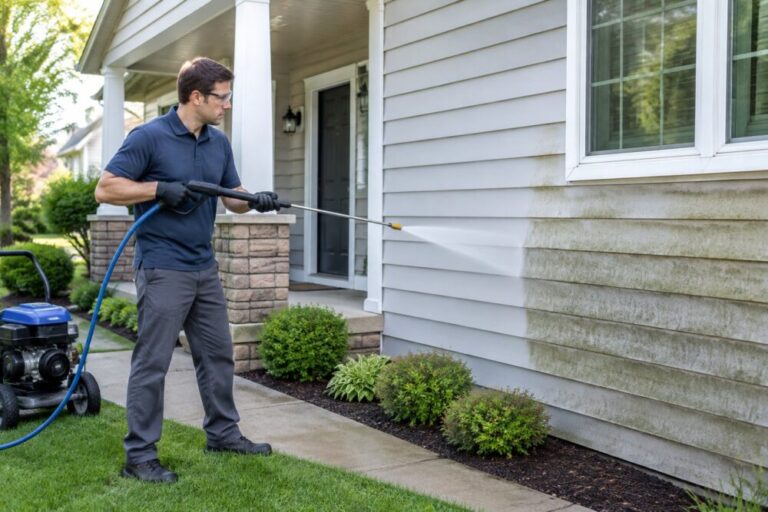
Soft washing cleans your home with a cleaning solution and low water pressure, so the solution does the heavy lifting. Mold, mildew, and algae cling to siding with tiny roots. Blasting them with high pressure can tear the surface before it removes the growth.
How Cleaning Solutions and a Low-Pressure Rinse Remove Buildup
A soft wash runs in a set order. Each step has a job:
- Pre-rinse plants. Landscaping near the walls gets a water rinse first, so leaves are less likely to absorb the solution.
- Apply the solution. The crew sprays a cleaning mix onto the siding at low pressure, starting from the bottom and working up.
- Let it dwell. The solution sits for a few minutes to break down mold, mildew, and grime. Heavily shaded walls get extra dwell time, never extra pressure.
- Rinse the walls. Clean water at low pressure washes the loosened buildup off the surface.
- Rinse plants again. A final rinse of landscaping clears any drift.
The solution handles the organic growth. The water carries it away. That split is why a soft wash can clean a stucco wall without pitting it or leaving stripe marks.
What Soft Washing Can and Cannot Remove
Soft washing works well on the buildup Florida homes collect most:
- Mold and mildew on shaded walls
- Green or black algae film
- Pollen, dust, and dirt
- Cobwebs and spider nests under eaves
Some stains need a different fix. Rust from irrigation water, paint overspray, and deep oxidation on old vinyl may fade without disappearing. If growth returns fast, moisture is likely feeding it. The Florida Department of Health notes that sprinkler spray hitting walls is one common moisture source. Cleaning removes what is on the surface; fixing a leak or aiming a sprinkler head away stops the cause.
Knowing what the method removes leads to the next question: why keep the pressure low on your walls in the first place?
Why Use Low Pressure on Siding and Stucco?
Low pressure protects your siding and stucco from damage that high pressure can cause. Stucco is porous and textured. Vinyl panels overlap with seams. Both let a strong spray drive water behind the surface or chip it away.
High-pressure spray is strong enough to injure people. The CDC warns that pressure washer wounds can look minor yet be serious. Spray that forceful can also lift paint, gouge soft stucco, and crack caulk around windows.
How the Approach Changes for Siding, Stucco, Brick, and Painted Surfaces
Each material needs its own approach. Here is how house soft washing adjusts by surface:
- Vinyl siding: Low pressure and an upward application keep water from getting behind the overlapping panels.
- Stucco: The rough texture holds mildew in tiny pockets. Longer dwell time lets the solution reach in, so pressure stays low.
- Brick: Brick itself is tough, but mortar joints can be soft or crumbling. Mortar condition sets how gentle the rinse needs to be.
- Painted block: Paint can flake if it is already chalky or peeling. A gentle rinse cleans without stripping a weak coat.
The goal is the same on every wall: a clean, even finish with no stripe marks and no damage.
Why Surface Condition Matters Before Cleaning
A good crew looks before it sprays. Cracked stucco, loose trim, gaps around windows, and peeling paint all change the plan. Water forced into a crack can end up inside the wall.
Outlets, light fixtures, and vents also need to stay dry. The UF/IFAS Extension advises checking that Florida exterior walls are free of cracks that let rainwater in. That same check is the first step before any exterior cleaning.
Your driveway sits on very different ground, and that is where the method changes.
How Is a House Soft Wash Different from Driveway Cleaning?
A house soft wash relies on solution and low pressure, while driveway cleaning uses more pressure because concrete can take it. Pressure washing and soft washing each fit a surface. Neither one fits everything.
Why Concrete Can Take a Different Cleaning Approach
Concrete is hard and dense. Oil spots, tire marks, and dark organic stains settle into its surface pores. Low pressure alone won’t lift them.
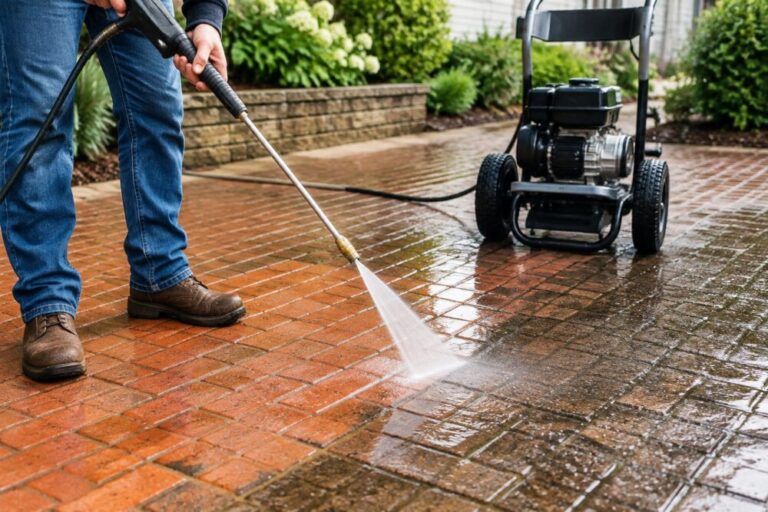
A proper driveway cleaning starts with spot treatment for oil, irrigation rust, and heavy growth. Then the surface gets cleaned in even passes, so you don’t see stripes. Edges, cracks, and expansion joints get detail work. Older rust stains are harder to remove than fresh ones. You can see how this works in Orlando driveway cleaning, driveway cleaning in Clermont, and Minneola driveway cleaning.
Why Pavers Need Attention to Their Surface and Joint Sand
Pavers sit on a bed with sand packed between them. That joint sand locks the pavers in place and slows weeds. Too much pressure washes it out, and pavers can shift or wobble.
Many paver driveways use polymeric sand, a mix of sand and binders. The UF/IFAS Extension explains that polymeric sand holds pavers in place and stops weeds. A lower-pressure approach on pavers helps keep that sand where it belongs.
Here is a quick side-by-side of how each surface gets cleaned:
- Siding and stucco: Soft wash, low pressure, solution and dwell time do the work.
- Brick walls: Low pressure, adjusted for mortar condition.
- Concrete driveways: Pressure washing at a setting concrete can handle, plus spot treatment.
- Pavers: Lower pressure to protect the surface and joint sand.
With the methods sorted, the next step is knowing what a house wash should include.
What Does a House Soft Wash Cover?
A full house soft wash cleans your siding, soffits, fascia, gutter faces, and trim. It covers the vertical surfaces and the edges that frame them, where mildew and cobwebs gather.
Which Exterior Areas Are Usually Included
A complete soft wash should reach every part of the outer shell you see from the yard:
- Siding or stucco walls on every side, including shaded north walls
- Soffits, the flat undersides of your roof overhang, where cobwebs and mildew collect
- Fascia, the boards along the roof edge
- Gutter faces, the outside of the gutters, where black streaks form
- Trim around windows and doors
If you want to see the full scope, the house washing services page lays it out. Local pages cover house washing in Orlando, Clermont house washing, and house washing in Minneola.
Are Roofs and Gutter Interiors Part of the Job?
No. A house soft wash covers the walls and trim. Roof cleaning, roof soft washing, and gutter cleaning (clearing leaves from inside the gutter) are separate jobs.
Some companies offer them and some don’t. When you request a quote, say exactly what you want cleaned. That keeps the price and the scope clear from the start, and it leads straight into the questions worth asking.
What Should You Ask Before Booking?
Ask how the crew checks your home, protects your plants, handles solution, and rinses at the end. Clear answers tell you whether a provider matches the method to your surface. They also show whether your curb appeal will improve without side damage.
How Will the Crew Check Damaged Areas and Protect Landscaping?
A careful crew walks your property before any spraying starts. Ask whether they look for cracked stucco, loose trim, and peeling paint. Ask how they keep outlets, light fixtures, and vents dry.
For landscaping, ask if they rinse plants before and after the wash. Wet leaves soak up less solution. Also ask them to point out anything fragile, like a new garden bed or potted plants near the walls.
How Will Cleaning Solutions Be Handled and Surfaces Rinsed?
Cleaning products should be mixed and used as their labels direct. The UF/IFAS Extension sums it up for pesticide products this way: “The Label is the Law.” The same habit applies to any chemical a crew brings to your home.
Ask how they rinse the walls and what they do about runoff near plants, pools, or pets. Ask whether they rinse down walkways and patios at the end, so no residue is left behind.
What Affects the Quote and What Is Included?
House wash prices depend on a few things:
- The size of your home and number of stories
- How much mold, mildew, or algae has built up
- The surface type, such as stucco, vinyl, brick, or painted block
- Access around fences, pool cages, and thick landscaping
- Whether you add driveway or walkway cleaning
Ask for a written list of what the price includes. Make sure soffits, fascia, gutter faces, and trim are on it. Your options for pressure washing in Orlando, Clermont pressure washing, and Minneola pressure washing all start with the same step: a clear, free quote.
Choose a Cleaning Method That Fits Your Home
Soft washing is the right way to clean siding and stucco; pressure washing at a proper setting is the right way to clean concrete. Pavers fall in between and need lower pressure to keep their joint sand in place. When each surface gets its own method, you get a clean house and driveway with no stripe marks and no damage.
Before you book, confirm the crew checks for cracks, rinses your plants, and lists every area in the quote. For more tips on caring for Central Florida exteriors, browse the pressure washing blog.
If your siding or driveway is overdue for a cleaning, Essentials Pressure Washing can help. Send your address and tell us what needs cleaning, or call or text (407) 284-9438. You’ll get a free estimate the same day, with no obligation.
Frequently Asked Questions
Is Soft Washing Good for a Stucco House?
Yes. Stucco is porous and textured, so low pressure protects it while the solution reaches mildew in the tiny pockets. Cracks should be checked first, since water can get into damaged spots.
What Is the Average Cost to Soft Wash a House?
The cost depends on your home’s size, number of stories, surface type, and how much growth has built up. Access and add-ons like driveway cleaning also change the price. A free estimate based on your address gives you a real number.
How Often Should a House Be Soft Washed in Central Florida?
Plan on a wash whenever you see green, gray, or black film returning on your walls. Shaded walls, walls near thick plants, and walls hit by sprinklers get dirty fastest. Fixing moisture sources helps your home stay clean longer.
Can Soft Washing Damage Plants or Landscaping?
Plants are protected when the crew rinses them with water before and after the wash. Wet leaves absorb less solution, and the final rinse clears any drift. Ask your provider to explain their landscaping steps before work starts.
Can I Book a Driveway Cleaning with a House Soft Wash?
Yes. House washing and driveway cleaning can be booked together and priced as one job. Just list both when you request your quote.