How to Remove Mildew from Siding Without Damaging Your Home’s Exterior
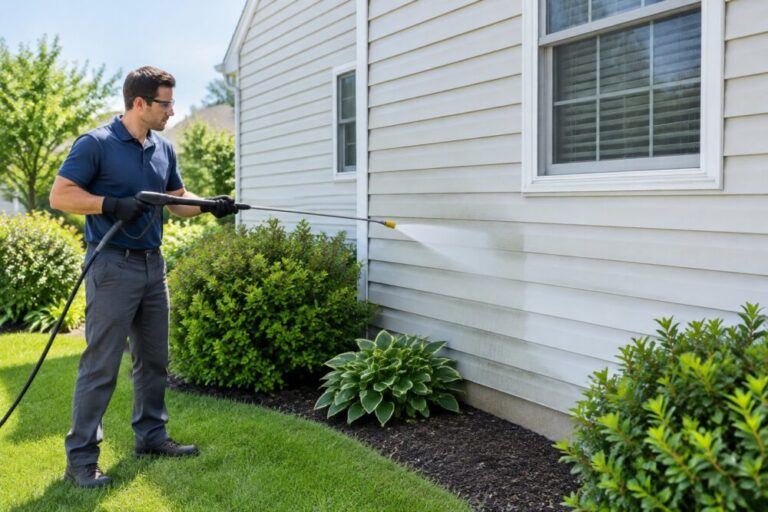
Dark gray speckles creep along the north wall after a wet Central Florida summer. A green film spreads under the eaves where the sun never reaches. To remove mildew from siding safely, apply a gentle cleaner at low pressure, let it sit long enough to break down the growth, scrub lightly by hand, and rinse from the top down. A pressure washer aimed straight at the wall is the step that causes most of the damage.
Homes in Orlando, Clermont, and Minneola deal with this year round. Heat, shade, sprinkler overspray, and humidity keep vinyl, wood, stucco, and painted surfaces damp for long stretches, and mildew loves damp. Local crews have used soft-wash methods on these homes for decades because high pressure strips paint, cracks finishes, and drives water behind panels.
Keep reading to learn how to clean visible mildew and algae step by step. You will also see how household cleaners compare and how your siding material changes the method. By the end, you will be able to decide whether a small patch is a weekend job or whether the whole house needs a professional soft wash.
How to Clean Visible Mildew Safely
Clean mildew in three stages: prepare the wall, give a cleaner time to work, then scrub lightly and rinse. Skipping the waiting stage is what tempts people to grab more pressure.
Before you start, put on gloves, goggles, and long sleeves. For mold cleanup, the CDC advises wearing at least a NIOSH Approved N95 respirator. The agency also says people with allergies, asthma, or weak immune systems should stay out of the cleanup.
Inspect the Siding and Protect Nearby Plants
Walk the whole house first and look closely at each wall. Mildew shows up as black or gray dots, while algae looks like a green or greenish-brown film. Both gather on north-facing walls, under eaves, and behind shrubs.
Check for loose panels, cracked boards, peeling paint, and gaps around windows and outlets. Water and cleaner can slip into these openings. Mark them so you can avoid spraying there, and close nearby windows and doors.
Next, protect your landscaping:
- Soak plants and the soil around them with plain water before you begin.
- Cover delicate plants with breathable fabric drop cloths, since plants can cook under plastic in the Florida sun.
- Move patio furniture, grills, and pots away from the wall.
- Turn off outdoor outlets and lights near the work area.
Apply a Suitable Cleaner and Give It Time to Work
Use a garden pump sprayer to apply your cleaner. It puts solution on the wall without force. Work one section at a time, starting at the bottom so the cleaner does not run down and streak dry siding below.
Let the solution sit for about 10 to 15 minutes. That dwell time lets the cleaner soak into the growth and loosen its grip. Do not let it dry on the wall, so mist it lightly if the sun is drying it fast.
Avoid working in direct midday sun on a hot Florida afternoon. Early morning or a shaded side of the house gives the cleaner more time to work before it evaporates.
Gently Scrub Stubborn Spots and Rinse Thoroughly
A soft-bristled scrub brush on an extension pole handles spots that the cleaner did not fully lift. Use light, even strokes. Stiff wire brushes scratch vinyl and scuff paint, so leave them in the garage.
Rinse with a regular garden hose, working from the top down to carry loosened growth off the wall. Rinse your plants again when you finish. If some staining remains, repeat the cleaner and dwell time once more before you scrub harder.
Results depend on how deep the growth has gone. Light surface mildew on vinyl often lifts in one pass. Growth that has soaked into old paint or bare wood may leave a faint shadow behind. The cleaner you choose plays a big part in how well that first pass works.
Which Cleaners Can You Use on Mildewed Siding?
Mild options like vinegar and water handle light growth, while oxygen bleach suits heavier mildew on most siding. Whatever you pick, test it first and use it alone.
When Might a Vinegar and Water Solution Help?
A mix of equal parts white vinegar and water works on light, fresh mildew spots. It is cheap, easy to find, and gentle on most vinyl and aluminum siding. Put it in a spray bottle for small patches or a pump sprayer for a wider area.
Vinegar has limits. It struggles with thick green algae and old, set-in mildew. It is also acidic, so keep it off natural stone accents and rinse plants well afterward.
Think of vinegar as a spot treatment for a few square feet near a hose bib or downspout. A whole shaded wall usually calls for something stronger.
How Do Oxygen Bleach and Hydrogen Peroxide Compare?
Oxygen bleach is a powder that releases hydrogen peroxide when you mix it with water. A common ratio is 1 cup of powder per gallon of water, stirred until it fully dissolves. It is easier on plants and colors than chlorine bleach.
Here is how the main household options line up:
- Vinegar and water (1:1): Best for light, new spots. Low cost. Weak on heavy algae.
- Oxygen bleach: Good for moderate to heavy mildew on vinyl, painted wood, and fiber cement. Gentler on landscaping.
- Hydrogen peroxide: Works on small spots and lightens some stains. Can lighten paint, so test it.
- Chlorine bleach: Kills surface growth fast but can fade colors, harm plants, and corrode metal flashing.
- Commercial siding cleaners: Follow the label for your siding type and the dilution it lists.
If you choose chlorine bleach, keep it weak. The CDC says to use no more than 1 cup of bleach in 1 gallon of water.
Why Should You Test a Cleaner and Never Mix Products?
Always test a cleaner on a hidden spot first, such as behind a shrub or near the bottom of a wall. Let it sit, rinse it, and check the area once it dries. Look for fading, chalky spots, or dull paint.
Never mix cleaning products. Bleach combined with ammonia or acids like vinegar can release toxic chlorine gas. The Florida Department of Health gives the same bleach mixing warning. Rinse the wall well before switching to a different cleaner.
A cleaner that is safe on vinyl may not be safe on raw cedar or chalky old paint. That is why the material on your walls shapes every step.
Why Does the Siding Material Change the Cleaning Method?
Each siding material handles water and pressure differently. Vinyl and aluminum have seams that let water in, while wood and fiber cement depend on their paint or stain to stay protected.
Vinyl and Aluminum Siding: Keep Water Out of the Seams
Vinyl and aluminum panels overlap and hang loosely so they can expand in the heat. Those overlaps are made to shed rain falling down the wall. They are not made to block a spray aimed upward or sideways.
When water gets behind the panels, it soaks the sheathing and stays there. That hidden moisture can feed mold inside the wall. Spray at a downward angle and never aim under the bottom edge of a panel.
Aluminum has one extra issue: old, chalky paint. Heavy scrubbing can wipe off the color in streaks. Use a soft brush, light passes, and plenty of rinse water.
Wood and Fiber Cement Siding: Check the Finish Before Cleaning
Wood siding stays healthy only as long as its paint or stain keeps water out. Look for peeling, cracking, or bare spots before you clean. Water forced into bare wood can lead to swelling and rot.
Fiber cement is harder, but its factory finish can still scuff, fade, or etch. Strong cleaners and stiff brushes leave marks that show up in the afternoon sun. Test first and stick with gentle products.
If paint is already failing, cleaning may lift more flakes. In that case, plan for touch-up painting after the wash.
Soft Washing vs. a Pressure Washer: What Can Go Wrong?
Soft washing uses low pressure, about like a garden hose, plus a cleaning solution that breaks down mildew and algae. The solution does the work, so the wall takes very little force. That fits siding, stucco, and painted surfaces because their finish is the main barrier against water.
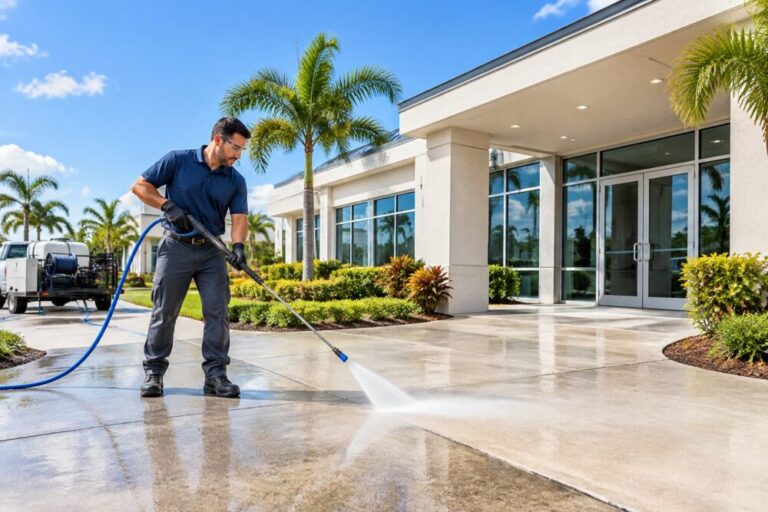
A pressure washer is a different tool. It fits hard surfaces like a concrete driveway, where the right setting clears oil spots and grime without harm. On siding, the wrong setting causes problems like these:
- Water forced behind vinyl panels and into wall cavities
- Dented, cracked, or loosened panels
- Paint and stain stripped off wood
- Gouges and fuzzy grain on soft wood boards
- Etched or chipped stucco and fiber cement finishes
- Broken window seals and soaked outlets
High pressure also cuts off the top of the growth without killing what has soaked in, so stains return faster. The CDC notes that pressure washer spray can cause serious wounds that look minor. Even a clean wall will not stay that way if the conditions that grew mildew stay the same.
How Can You Slow Mildew and Algae Regrowth?
Mildew needs moisture, shade, and food like dust and pollen. Cut down on those, and growth returns more slowly, though in Central Florida humidity it will come back eventually.
Reduce Shade and Water That Repeatedly Wets the Siding
Start with the water you can control. Sprinkler heads that hit the wall every morning keep siding wet for hours. Turn them away from the house or lower the spray.
Other fixes that help with siding maintenance:
- Clean gutters and repair leaks so water does not spill down the wall.
- Make sure downspouts carry water away from the foundation.
- Slope soil and mulch away from the house to improve drainage.
- Trim shrubs back at least a foot from the siding to improve ventilation.
- Cut back tree limbs that keep a wall in constant shade.
Airflow and sunlight dry siding faster after rain and morning dew. Walls that dry quickly give mildew less time to take hold.
Watch for Stains That Return or Do Not Fully Lift
Some stains come back in a few months in the same spot. That pattern often points to a water source, like a leaky gutter seam, a dripping AC line, or a sprinkler head. Fix the source, and the stain usually slows down.
Other stains never fully lift. Mildew that has grown into old paint, raw wood, or textured stucco can leave a faint shadow. More scrubbing will damage the surface before it removes the last trace.
If growth covers most of a wall, keeps returning, or sits high up near the roofline, a professional soft wash is the safer choice.
Choose a Gentle Method for Cleaner Siding
The safest way to remove mildew from siding is low pressure, the right cleaner, enough dwell time, and a careful rinse. Small spots near the ground are a fair DIY job. Large, high, or stubborn growth is better left to someone who matches the method to your siding.
Essentials Pressure Washing is a family-run crew based in Minneola that has cleaned Central Florida homes since 2005. Every house wash uses a low-pressure soft wash on siding, stucco, brick, and painted block. It covers soffits, fascia, gutter faces, and trim. The crew checks for damage first and rinses landscaping before and after.
You can see local details for soft wash house washing in Orlando, Clermont house washing, or Minneola house washing. Not sure what your siding needs? Call or text (407) 284-9438 for a free estimate, no obligation, with a same-day callback.
Frequently Asked Questions
What Takes Mildew off of Siding Without Heavy Scrubbing?
A cleaner with enough dwell time does most of the work. Oxygen bleach mixed with water, sprayed on and left for 10 to 15 minutes, loosens mildew so a soft brush and hose rinse can clear it.
How Do I Get Green Algae off the Side of My House?
Treat green algae the same way as mildew: apply a gentle cleaner, let it sit, scrub lightly, and rinse top down. Then fix the shade or sprinkler overspray that keeps that wall wet, or the film will return.
Does Dish Soap Kill Mildew on Siding?
Dish soap cuts dirt and grime, but it does little to kill mildew on its own. It works best as a small boost added to a vinegar mix. For heavier growth, oxygen bleach or a siding cleaner made for mildew works better.
Can Mildew Stains Remain After Siding Is Cleaned?
Yes, some stains remain when mildew has grown into old paint, raw wood, or textured surfaces. A second treatment often lightens them, but repainting may be the only fix for deep staining.
When Should I Call a Professional Instead of Cleaning Siding Myself?
Call a pro when growth covers large areas, reaches second-story walls, or keeps returning. The Florida Department of Health suggests handling mold patches under about 10 square feet yourself. You can browse pressure washing in Orlando, Clermont pressure washing, or Minneola pressure washing. Driveway pages cover Orlando driveway cleaning, Clermont driveway cleaning, and Minneola driveway cleaning. The Essentials Pressure Washing homepage and exterior cleaning tips blog have more.