Driveway Oil Stain Removal: What Works on Fresh and Old Concrete Spots
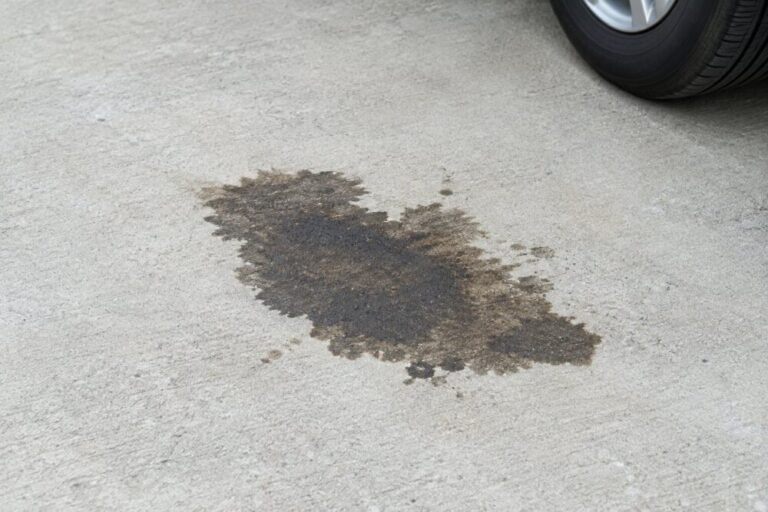
You back the car out and see a dark, shiny spot on the concrete where the engine sat overnight. Maybe it is fresh. Maybe it has been there since last spring and has turned into a gray shadow that every guest walks past. Either way, the fix depends on how long the oil has been there. For driveway oil stain removal, you get the best results by absorbing a fresh spill right away with clay kitty litter. Then scrub with dish soap. Older spots need a concrete degreaser, dwell time, and a proper rinse.
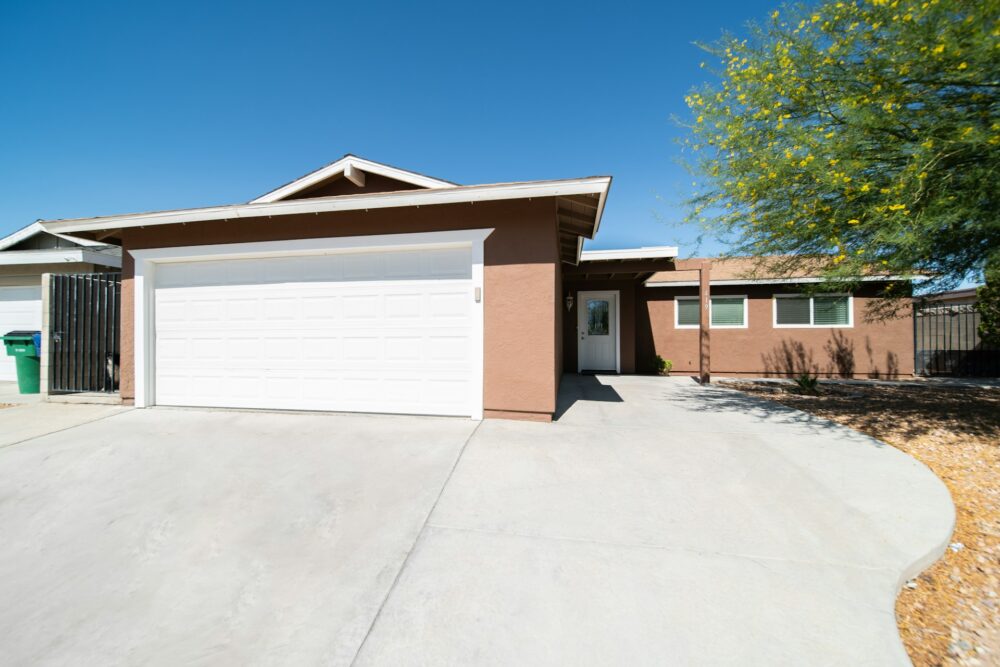
Central Florida driveways take a beating. Our afternoon storms and constant humidity keep concrete damp, so dirt and grime stick to oily patches. Light-colored concrete is common across Orlando, Clermont, and Minneola, and it shows every drip. The Essentials Pressure Washing crew sees it on driveways in all three towns.
Keep reading to learn what to do in the first hour after a spill and which products are worth buying. You will also see what pressure washing can and cannot do. By the end, you will know whether your stain is a weekend project or one that needs a professional look.
What Should You Do Right After Oil Spills on Concrete?
Soak up as much oil as you can before it sinks into the concrete. Concrete is full of tiny pores, and fresh oil keeps moving deeper until something pulls it back out. The first hour makes the biggest difference.
Absorb the Spill Before It Soaks In
Cover the wet spot with a thick layer of clay-based cat litter. Grind it under your shoe so the granules touch the surface. Cornstarch or baking soda works on small drips if you have no litter in the garage.
Give the absorbent time to work. One home-care guide suggests leaving kitty litter for a few hours before you scoop it up and sweep. On a big spill, swap in fresh litter once the first layer looks dark and clumpy.
Use these materials for a fresh spill:
- Clay cat litter: best for puddles and larger leaks from an engine or oil change
- Cornstarch: good for small drips, and you likely have it in the kitchen
- Baking soda: handy for light spots, and it adds a little scrubbing grit later
- Sawdust: works in a pinch, though it holds less oil than clay litter
Scrub the Remaining Spot with Dish Soap
Once the loose oil is gone, wet the spot and squeeze on a grease-cutting dish soap. Work it in with a stiff-bristled brush in small circles for two or three minutes. Use nylon bristles; a wire brush can scratch the cream layer on top of the concrete.
Let the suds sit for about ten minutes, then rinse with a garden hose. Repeat once or twice if a shadow remains. Dish soap handles fresh oil well because the oil is still near the surface.
Collect Oily Materials Instead of Washing Them Into a Drain
Sweep used litter into a sturdy bag and seal it. Oily water and absorbent should never go into a storm drain, since those drains flow toward Central Florida lakes and ponds. Check your county’s rules for disposing of oily waste, and take used motor oil itself to a recycling drop-off.
When you rinse, aim the water toward a lawn edge in small amounts and never toward the street. If the spot is still dark after soap and water, the oil has already moved below the surface.
How Do You Treat Oil That Has Set Into Concrete?
Old oil stains need a product that breaks the oil down and pulls it back up. Dish soap and a hose rarely reach oil that has spent weeks or months in the pores.
Start With a Cleaner Made for Concrete
A concrete degreaser or cleaner sold for driveways is your best starting point. Follow the label for mixing and dwell time, which is the period the cleaner sits before you rinse. Keep the spot damp during that time, because a dried-out cleaner stops working.
A poultice also helps. A poultice is a paste that dissolves oil and then soaks it up as it dries. If you use a poultice product, follow its label for mixing and drying time. Wear gloves and eye protection, and read the product’s safety label first.
For a set-in stain, follow these steps:
- Sweep the area and wet it lightly.
- Apply the concrete cleaner or poultice and work it in with a nylon brush.
- Let it dwell as the label directs, misting it if it starts to dry.
- Scrape off any paste and rinse well.
- Repeat on a different day if the stain lightens but does not clear.
When Can Laundry Detergent Help?
Powdered laundry detergent is a decent step up from dish soap on a medium stain. Wet the spot, sprinkle the powder, and scrub hard so the grains act like a mild abrasive. Leave it for 15 to 20 minutes, then rinse.
It works best on stains that are a few days to a few weeks old. On years-old spots, detergent will lighten the surface without reaching the deeper oil.
Why Skip WD-40 and Oven Cleaner?
WD-40 is a petroleum-based product. On a driveway, it thins old oil and can spread it wider, leaving an oily film of its own. It solves a different problem than the one you have.
Oven cleaner contains lye, a harsh chemical meant for metal ovens. It can discolor the top of your concrete, and the runoff harms grass and plants along the edge. A cleaner made for concrete does the same job with less risk to the slab and your yard. Once a cleaner has loosened the oil, the next question is how to rinse it out.
Can Pressure Washing Improve Driveway Oil Stain Removal?
Yes, when it follows a degreaser. Pressure washing oil stains with water alone mostly cleans the dirt around them, which can make the dark spot stand out more.
What a Pressure Washer Can and Cannot Remove
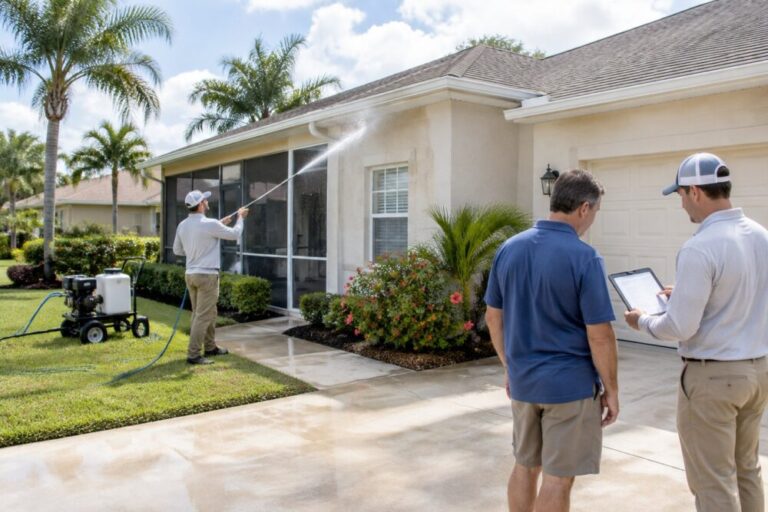
Concrete is tough enough for real pressure. A pressure washer at the right setting clears grime, loosened oil, and old cleaner from the pores. It also cleans the rest of the slab evenly, so the treated spot blends in with a full driveway cleaning.
What it will not do is pull deep oil out by force. Oil bonded below the surface needs chemistry to loosen first. Too much pressure, held too close, can also etch concrete and leave stripe marks or a rough patch.
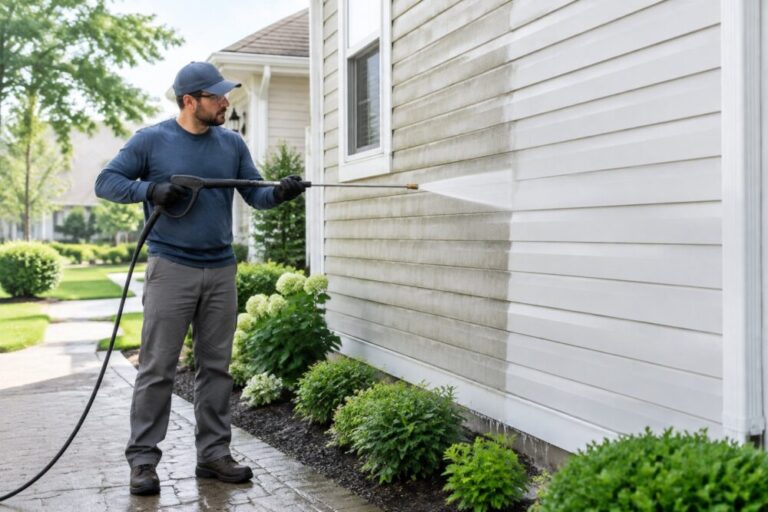
Pavers are a different case. They need lower pressure so the joint sand stays in place. Siding and stucco need a soft wash, which uses low pressure and cleaning solution. High pressure can force water behind the surface or damage it.
Why Cleaning Products and Surface Condition Matter
A pre-treatment does the heavy lifting on oil. The pressure washer then rinses away what the cleaner released. Skipping the first step is the most common reason a DIY rinse leaves the stain behind.
Surface condition changes the plan, too. Older, worn concrete has more open pores, so oil goes deeper and cleaning takes longer. Sealed concrete holds stains closer to the top, which makes them easier to lift.
If you rent a machine, read the owner’s manual first. The Centers for Disease Control and Prevention (CDC) warns that the spray can cause serious wounds that look minor at first. Wear closed shoes and keep kids and pets away.
When to Consider Professional Driveway Cleaning
Professional driveway cleaning makes sense when you have several stains or a whole slab that looks dull. The same goes for a stain that has survived two rounds of DIY work. A trained crew spot-treats the oil, cleans in even passes, and details edges, cracks, and expansion joints.
It also makes sense before listing photos or a family event, when you want one clean, even surface. Even then, a pro can lighten some stains without fully removing them. If cost is part of the decision, see what shapes driveway pressure washing cost.
Why Might an Oil Stain Remain After Cleaning?
Some oil goes too deep for any method to reach. A faint shadow after good cleaning usually means the oil has bonded inside the concrete itself. Rust, tire marks, and algae are covered in driveway stain removal.
How Stain Age and Depth Affect the Result
Here is what to expect by stain age:
| Stain age | Approach | Realistic result |
|---|---|---|
| Same day | Absorbent, then dish soap | Can often clear it, but fast action can’t guarantee full removal |
| A few days to a few weeks | Degreaser or detergent, then a pressure rinse | Usually lightens a lot |
| Months | Concrete cleaner or poultice, in more than one round | A big improvement, though a light outline may stay |
| Years, or repeated drips in one spot | Any method | A permanent shadow is possible |
Florida heat plays a part. A hot slab in summer thins the oil, so it spreads and sinks faster. Repeated drips from the same car keep feeding the stain, so fix the leak or use a drip pan while you clean.
Why Oil Stains on Asphalt Need a Different Approach
Oil stains on asphalt are harder to see, but they cause a different problem. Asphalt is made with petroleum, so motor oil and gas can soften it and break it down over time.
Concrete cleaners and high pressure are not the right match for asphalt. Absorb the spill quickly and clean it with a product labeled for asphalt. If the surface has softened, an asphalt sealer over the area protects it and evens out the color. For most Central Florida homes with concrete, though, the next step comes down to how much you want to take on yourself.
Choosing the Next Step for Your Concrete Driveway
Treat fresh spills yourself, and call a pro when a stain is old, large, or sitting on a slab that needs a full cleaning. Absorb first, scrub with dish soap, move to a concrete cleaner for set-in oil, and finish with a careful rinse.
If you would rather hand it off, Essentials Pressure Washing has cleaned Central Florida driveways since 2005. The crew spot-treats oil, uses the pressure concrete can take, and tells you up front if a stain may leave a shadow. The crew offers driveway cleaning in Orlando, Clermont, and Minneola.
Many homeowners add a soft wash for the house at the same visit. You can ask for a combined estimate that includes house washing.
Send your address and a quick note about the stain, and you will get a free, no-obligation quote. You may hear back the same day. Call or text (407) 284-9438, or start at the Essentials Pressure Washing home page.
Frequently Asked Questions
Can You Completely Remove an Old Oil Stain From Concrete?
Sometimes, but not always. Stains that are months or years old often lighten a lot and still leave a faint shadow, because the oil has gone deep into the pores. Age, depth, and how many times the spot was dripped on decide the final result.
Does Dish Soap Work on a Driveway Oil Stain?
Yes, on fresh spills after you absorb the loose oil. Scrub it in with a stiff nylon brush, let it sit about ten minutes, and rinse. On older stains, move up to powdered detergent or a concrete degreaser.
Will Pressure Washing Alone Remove Oil From Concrete?
Rarely. Water pressure cleans the surface around the stain, but deep oil needs a degreaser to loosen it first. Pre-treat, let it dwell, then rinse with the washer at a setting concrete can handle.
How Many Treatments Might a Set-In Oil Stain Need?
Plan on two or three rounds for a stain that is several weeks old or more. Let the concrete dry between rounds so you can see real progress. If the stain stops lightening after the third try, more product will not help much.
When Is It Worth Getting a Professional Estimate for an Oil Stain?
It is worth it when DIY work has stalled, when you have several stains, or when the whole driveway looks dull. A pro can clean the full slab evenly and tell you honestly what will and will not come out. The estimate is free, so you lose nothing by asking.