Commercial Building Washing: What Central Florida Business Owners Should Know
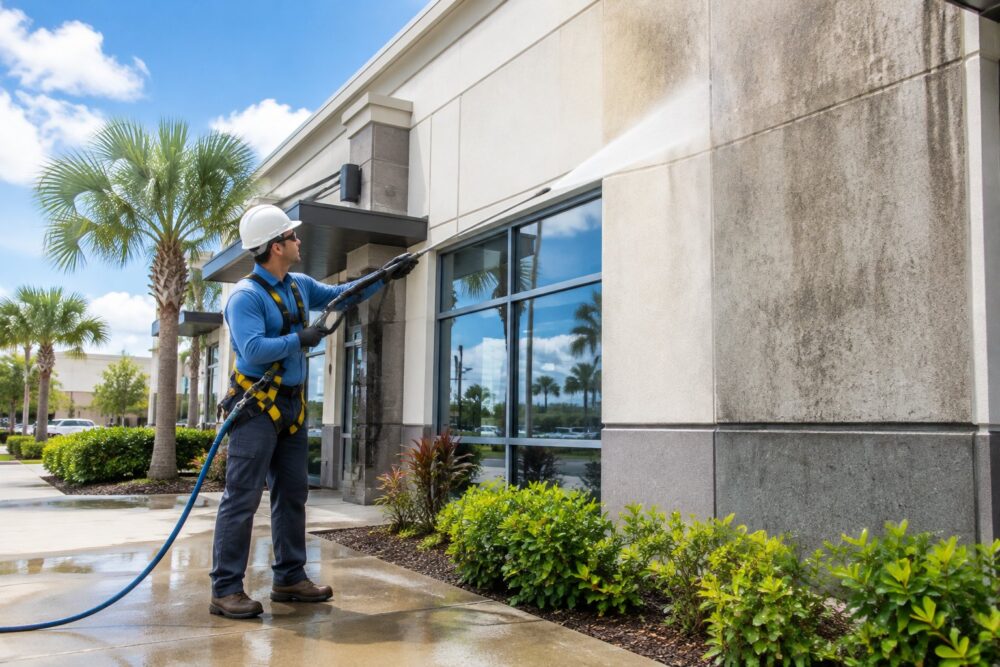
Green streaks spread across a stucco storefront after a wet Central Florida summer. Gray film settles on the trim, and the sidewalk by your front door turns dark near the drip line. Commercial building washing is exterior cleaning for your facade, storefront walls, trim, and entry concrete. The method is matched to each surface. It covers the outside of your building only, with no interior or janitorial work.
Orlando, Clermont, and Minneola sit in year-round humidity, so mold, mildew, and algae grow back fast on shaded walls. Essentials Pressure Washing has worked on these same stucco, block, and concrete surfaces since 2005. That experience shows in how the crew chooses a gentle wash for walls and firmer pressure for sound concrete.
Keep reading to find out how a wash runs from walk-around to final rinse and how to schedule it around open hours. You will also see what the quote should include and what shapes the price. By the end, you can decide what your building needs and what to put in an estimate request.
What Should a Building Wash Scope Include?
A building wash covers the vertical surfaces customers see first: walls, soffits, fascia, gutter faces, and trim. Entry concrete is often added as a separate line item. Writing down which areas are in the scope keeps two quotes comparable. For how exterior work differs from janitorial work, see commercial building cleaning.
| Area | Usual method | How it is usually quoted |
|---|---|---|
| Stucco, block, or siding walls | Low-pressure soft wash | The main wash |
| Soffits, fascia, gutter faces, and trim | Low-pressure soft wash | Part of a full wash |
| Brick | Soft wash after a mortar check | The main wash |
| Sidewalks and entry pads | Pressure washing with spot treatment | Often its own line item |
Facades, Storefront Walls, and Exterior Trim
Most Central Florida commercial buildings use stucco, painted block, brick, or siding. Stucco holds green algae in its texture, and painted block shows black mildew spots near the ground. A full wash cleans trim, soffits, and gutter faces along with the main walls, so the building looks even from the parking lot.
Glass storefronts get rinsed during a wall wash, but that rinse differs from a detailed window cleaning finish. If spotless glass is part of your goal, ask about it as its own item.
Sidewalks and Entry Concrete at Businesses or HOAs
Entry walkways at shops, offices, and HOA common areas take heavy foot traffic. They collect gum, dark algae, irrigation rust, and drips from vehicles near the curb. Those stains sit right where customers and residents walk.
Concrete cleaning uses a different tool and setting than wall washing. Crews spot-treat oil and rust, then clean in even passes and detail edges, cracks, and expansion joints. Rust removal depends on how long the stain has been there, so older orange marks may only fade.
What to Confirm Before Work Begins
A short list before the job prevents surprises on wash day:
- Which walls, or elevations, are included, front only or all sides
- Whether sidewalks and entry pads are part of the price
- Areas that must stay dry, such as electrical panels, signs, or open vents
- Damaged spots like loose paint, cracked stucco, or failing caulk
- Water access and where the crew can park
- Landscaping near walls that needs rinsing before and after
With the scope settled, the next question is how each of those surfaces gets cleaned safely.
How Is the Cleaning Method Matched to the Surface?
On wash day, the method follows the material. Walls get a low-pressure soft wash, while durable flatwork gets commercial pressure washing. Pavers and worn surfaces get a lighter touch.
Soft Washing for Stucco and Siding
Soft washing uses low water pressure and a cleaning solution that breaks down mold, mildew, and algae. The solution does the work, and a gentle rinse carries the growth away. This protects stucco texture, paint, and siding seams.
High pressure on stucco can chip the finish, open hairline cracks, and push water behind the surface. On siding, it can force water under the laps. Heavy shaded staining gets more treatment time, so pressure stays low even on the worst wall.
Pressure Washing for Suitable Concrete
Concrete sidewalks and entry pads are dense and hard, so they benefit from commercial pressure washing. That force lifts ground-in dirt, gum residue, and algae from the pores. Even passes avoid the light and dark stripe marks left by a wand moved unevenly.
Pressure washers are serious tools. The CDC warns that high pressure spray wounds can look minor but still need medical care. That risk is one reason crews keep the public well back from the spray zone.
Why Brick and Worn Surfaces Need a Closer Look
Brick looks tough, but older brick and soft mortar joints can erode under strong spray. Many brick walls are soft washed for that reason. A crew should check the mortar before choosing a setting.
Pavers need lower pressure so joint sand stays in place. Peeling paint, oxidized siding, and spalling concrete also need a careful look. Washing cleans a surface; it cannot repair a failing coating, and those areas should be discussed first.
Once the methods are set, the job has to fit around a business that stays open.
What Happens During a Job at an Active Business?
A job at an open business starts with a walk-around and ends with a final rinse. In between, the crew works in sections so customers can still reach your door.
Assessing Mold, Mildew, Algae, and Grime
The walk-around sorts the stains by type. Green algae and black mildew are organic and respond to a soft wash solution. Gray grime and pollen rinse off more easily, while oil and rust on concrete need spot treatment.
Shaded north walls and spots near sprinklers grow the most. Florida’s public health agency notes that outdoor sprinkler spray hitting walls is one source of the moisture mold needs. If your irrigation soaks a wall, adjusting the heads helps the clean look last longer.
Planning Around Entrances, Staff, and Customers
Timing is the biggest concern for most owners. Many businesses start with the back or side walls during open hours and save the main entrance for a slow window. Early morning works well for many storefronts.
Share these details when you book:
- Your busiest hours and any delivery windows
- Which doors must stay open the whole time
- Where staff and customers park
- Tenant needs, if the building has several businesses
Keeping Foot Traffic Clear While Surfaces Are Wet
Wet concrete and a fresh rinse can be slick. Employers have a duty under federal workplace rules to keep walking surfaces clean and safe, so a wet entry needs a plan. Crews often clean one half of a walkway while the other half stays dry and open.
Cones or tape mark the wet zone, and doors near the spray stay closed. Central Florida sun dries most concrete quickly, which shortens the time a path stays blocked. Those planning choices also affect what the job costs.
How Is Commercial Building Washing Priced?
Commercial building washing is priced per job, based on the size of the surfaces, the material, the buildup, and access. No flat rate fits every building, so a site look or good photos come first.
How Surface Area, Material, and Buildup Affect the Scope
A one-story storefront with light pollen takes less time than a two-story office with heavy algae on every shaded wall. Larger wall area means more solution and more rinse time. Thick growth needs longer treatment.
Material plays a part too. Stucco and textured block hold growth deep in the surface, so they take extra dwell time. Smooth siding usually rinses clean faster.
Why Access and Separate Sidewalk Cleaning Matter
Height, tight setbacks, parked cars, and thick landscaping all slow a crew down. A wall behind a row of shrubs needs careful rinsing to protect plants. Night or early-morning work to avoid customers can also change scheduling.
Sidewalks and entry pads often require commercial pressure washing and are quoted as their own line. That way you can see the wall and flatwork prices side by side. You can add or drop areas based on your budget.
What to Include When Requesting an Estimate
A good request gets you a fast and accurate quote:
- The property address
- Photos of each wall and the entry area
- The building’s main surface: stucco, block, brick, or siding
- Whether you want sidewalks or entry pads cleaned
- Problem spots such as oil, rust, or heavy green growth
- Your preferred work times
With a clear price in hand, you can pick the plan that fits your building.
Choose a Cleaning Plan That Fits Your Building
The right plan balances wall washing with commercial pressure washing for high-traffic flatwork, timed around your business hours. That simple match protects your surfaces and brings back the curb appeal customers notice from the street.
Start with the walls and entrance people see most, then add side walls and walkways as needed. Buildings in heavy shade or near sprinklers may need cleaning more often. You can read about commercial exterior cleaning to see how walls and concrete are handled separately.
Essentials Pressure Washing has served Central Florida since 2005 and is based in Minneola. Its pressure washing in Minneola work includes commercial building washes.
To get a free estimate with no obligation, call or text (407) 284-9438 or reach the crew online. You may hear back the same day.
Frequently Asked Questions
How much does commercial building washing cost?
The cost depends on wall area, surface type, how much growth is present, and access. A small storefront with light grime costs less than a large building with heavy algae. Photos and an address get you an accurate quote.
Will building washing block customer entrances?
Entrances can stay open with planning. Crews clean back walls first, work walkways in halves, and save the front door for a slow time of day.
When is the best time to schedule a building wash?
Many businesses start with back or side walls during open hours and save the main entrance for a slow window. Early morning works well for many storefronts. Share your busiest hours and delivery windows when you book.
What should I send to get an accurate quote?
Send the property address, photos of each wall and the entry, and the building’s main surface. Note problem spots like oil, rust, or heavy green growth, plus your preferred work times.
Does a building wash include sidewalks and oil stains?
Sidewalks are usually priced as a separate line item from the wall wash. Oil and rust get spot treatment, but older, deep stains may lighten without fully coming out.