Commercial Exterior Cleaning in Orlando: What to Wash and How to Plan It
Commercial exterior cleaning covers the outside of your business only. That means walls, storefront glass frames, entryways, sidewalks, and other concrete customers walk across. It has nothing to do with indoor janitorial work. In Orlando, that work often starts with a north-facing stucco wall gone gray-green after a humid summer. Or it starts with a front walk spotted with gum, drink spills, and black algae in the joints. Start with the surfaces customers see first, soft wash stucco and siding, and use controlled pressure on concrete walks and entrances.
Central Florida heat and afternoon storms keep building exteriors damp for much of the year. Mildew and algae grow back faster here than in drier climates, so a facade that looked fine last spring can look neglected by fall. Shaded walls, entrances under awnings, and walkways near irrigation heads show it first. Essentials Pressure Washing has cleaned Central Florida exteriors since 2005 and plans around those spots.
Keep reading to find out which areas to clean first and which method fits each surface. You’ll also learn how to schedule the work around open hours and what to ask before you request a quote. By the end, you’ll be able to describe your property clearly and compare quotes on the same terms.
What Should You Clean First on a Business Property?
Clean the areas customers see and touch on the way in: the front facade, the entrance, and the walkway leading to your door. These spots shape curb appeal before anyone steps inside, and they collect the most visible grime.
After that, work outward to side walls, rear entrances, and secondary sidewalks. Back-of-house areas matter for upkeep, but they rarely drive first impressions.
Commercial Exterior Cleaning for Storefronts and Facades
Your storefront and facade are the largest surfaces a customer sees. On Central Florida buildings, these are usually stucco, painted block, vinyl or metal siding, or brick. Each picks up the same problems: green and black organic growth, pollen film, dirt splash along the base, and cobwebs in corners and under soffits.
Building washing for a facade should cover more than the flat wall. Ask that soffits, fascia, gutter faces, and trim be included, since dark streaks often start there and run down the wall. Light fixtures, signs, and door frames near the entrance also hold dust and spider webs.
Before any washing starts, a careful crew checks the walls for cracks, loose trim, and outlets or vents that need to stay dry. On stucco, hairline cracks let water in if someone hits them with a strong stream. That inspection step protects your building more than any cleaning solution does.
Entryways, Sidewalks, and Other Customer-Facing Concrete
Your entry pad and front sidewalk take more foot traffic than any other surface on the property. Concrete is porous, so it soaks up drink spills, grease from food service, and rust from irrigation water. In shaded spots, black algae settles into the surface and turns slick when wet.
Common stains on commercial concrete include:
- Gum and dark foot-traffic paths near doors and benches
- Oil and drip spots where cars park close to the walkway
- Orange rust stains from well water in sprinkler systems
- Green or black algae in shaded corners and along expansion joints
- Grease spots outside restaurants and near dumpster paths
Some stains need spot treatment before the main cleaning pass. Older rust and deep oil set into concrete over time and may lighten without fully disappearing. A good provider tells you that up front.
What Falls Outside a Building and Walkway Washing Quote?
A building and walkway washing quote covers walls and hard surfaces at ground level. Several related services are separate trades with their own equipment, and they often come from different contractors.
- Commercial window cleaning: Detailed exterior window cleaning with squeegees and spot-free rinse is its own job.
- Roof cleaning: Roofs need specific methods and safety gear.
- Parking lot cleaning: Large asphalt lots use sweepers and specialized equipment.
- Parking lot striping: Painting lines is a paving service, not a cleaning service.
- Graffiti removal: Paint removal uses different chemicals and techniques.
Glass near the work area gets rinsed during a wash, but that rinse is not detailed window cleaning. Commercial building cleaning explains how exterior work differs from janitorial work. Ask each provider to list what is in and out of scope. Once you know which surfaces you are cleaning, the next question is how each one should be cleaned.
When Is Soft Washing Better Than Pressure Washing?
Soft washing is the better choice for stucco, siding, and painted walls, where high pressure can etch, strip, or force water behind the surface. Pressure washing fits hard, sturdy concrete that can handle more force. The right method depends on the material, its age, and its condition.
You’ll also hear the term power washing. Most people use it to mean the same thing as pressure washing. Some providers use it for heated water. Either way, the question is how much force a surface can take.
Low Pressure for Stucco, Siding, and Painted Surfaces
Soft washing uses low water pressure with a cleaning solution that breaks down mold, mildew, and algae. High pressure can etch stucco, chip paint off block, and drive water behind siding. Shaded walls with heavy staining get more treatment time instead of more pressure. For the full wash process, see commercial building washing.
Controlled Pressure for Concrete Walkways and Entrances
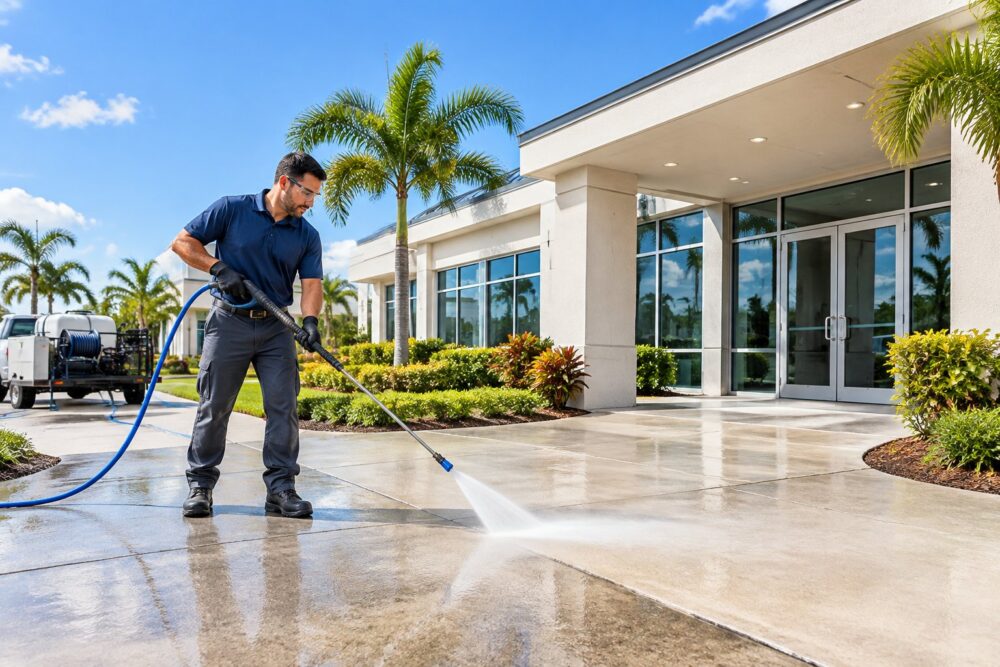
Concrete sidewalks and entry pads can handle higher pressure, and they need it. Dirt, gum, and algae settle into the pores of concrete, and low pressure alone won’t pull them out. A surface cleaner (a spinning disc tool that runs flat over the ground) cleans in even passes and prevents the stripe marks a single wand leaves behind.
Safety matters on an active commercial site, too. The CDC warns that gasoline washers should never run within 20 feet of a window, door, or vent. Plan where equipment sits so exhaust stays away from your open entrance.
Why Brick, Mortar, and Pavers Need a Closer Look
Brick looks tough, but mortar joints wear down under high pressure. Older, soft brick can also flake on its face when hit with too much force. These surfaces get a closer look before anyone picks a method.
Here is how common commercial surfaces line up:
| Surface | Usual method |
|---|---|
| Stucco and painted block | Soft wash with low pressure and a cleaning solution |
| Vinyl and metal siding | Soft wash, with care around seams and panel edges |
| Brick walls | Soft wash in most cases, after checking mortar condition |
| Concrete sidewalks and entries | Controlled pressure with a surface cleaner |
| Pavers | Lower pressure to keep joint sand in place |
If the mortar is crumbling or joints are open, call a mason for repairs before washing. On older or historic buildings, the National Park Service’s historic preservation guidance is a helpful starting point. With methods sorted, the next step is fitting the work into your business day.
How Can Cleaning Work Around Business Hours?
Most exterior cleaning can happen while your business stays open, with the busiest areas cleaned before opening or after closing. Good planning starts with a property walk and a clear plan for people, cars, and deliveries.
Walk the Property and Identify Sensitive Areas
A walk-through before work begins shows the crew what needs protection. You or your manager should point out spots that only you know about.
Things to flag during the walk:
- Electrical outlets, exterior lights, and outdoor speakers
- HVAC units and air intakes near the wall
- Doors that don’t seal well and let water inside
- Landscaping beds, planters, and potted plants at the entrance
- Signs, awnings, and any damaged trim or cracked stucco
Landscaping should be rinsed before and after the wash so plants don’t sit in cleaning solution. This step is a regular part of exterior maintenance, and it protects the planters that frame your front door.
Plan for Foot Traffic, Parked Cars, and Deliveries
Wet concrete and overspray don’t mix with customers. Rope off the area being cleaned and use a side door when the main entry is wet. Tell staff ahead of time so they can steer people around the work zone.
Parked cars near walls should move before soft washing begins, since mist drifts in the wind. Check your delivery schedule, too. A truck arriving at the back dock mid-wash slows everything down. Share those times with your provider so they can clean that area before or after.
Use Phased Cleaning When Areas Must Stay Open
Phased cleaning splits the property into sections and finishes them one at a time. You might clean the rear walls and side walk on a weekday afternoon, then do the front entrance early on a Sunday before you open.
This approach works well for strip centers, restaurants, and offices with long hours. Each phase gets its own start and finish, so one entrance always stays open. Fitting it into your commercial building maintenance calendar makes the next cleaning easier to plan, and it gives you clear details to bring to a quote.
What Should You Check Before Requesting a Quote?
Before you ask for a price, know which surfaces need cleaning, what stains you see, and when the work can happen. Clear details lead to accurate commercial exterior cleaning quotes you can compare side by side.
Define the Surfaces, Stains, and Areas to Be Cleaned
List each surface by material and location. “Front stucco wall, about 40 feet wide, green growth near the ground” helps a provider far more than “clean the building.” Photos taken in daylight help even more.
Note the stain types you see: mildew streaks, oil spots, rust, gum, or algae. Mention how long stains have been there, since older rust and oil are harder to lift. If you want walkways, entries, and walls handled together, say so in one request.
Ask How the Provider Will Protect Each Surface
Ask each provider what method they will use on each surface and why. A clear answer names soft washing for stucco and siding and controlled pressure for concrete. If someone plans one high-pressure method for everything, treat that as a warning sign.
Other good questions include:
- How will you protect landscaping, lights, and outlets?
- What do you do with heavily shaded walls that have deep staining?
- Will you detail edges and expansion joints on the concrete?
- Do you walk the property with me before starting?
For more on choosing a provider, see commercial pressure washing.
Confirm Scheduling and What the Price Includes
Ask whether the price covers soffits, fascia, gutter faces, and trim, or just flat walls. Confirm whether spot treatment for oil and rust is included. A straightforward quote lists each area so nothing surprises you later.
Confirm the start time, the order of work, and how long each phase should take. If you’re searching for commercial exterior cleaning Orlando providers, ask how quickly they return calls. A crew that answers the same day and shows up on time makes the whole job easier. Unlike broad facility services contracts, a focused exterior quote should be short and easy to read.
Choose a Cleaning Plan That Fits Your Property
The best business exterior cleaning plan starts with your most visible surfaces and matches the method to each material. Soft wash your stucco, siding, and painted walls. Clean concrete entries and sidewalks with controlled pressure. Look closely at brick, mortar, and pavers before choosing either.
Schedule busy areas outside open hours and use phased cleaning when you can’t close. Write down your surfaces, stains, and scope before you call, and you’ll get quotes that line up. Many Central Florida properties benefit from yearly cleaning, and shaded walls may need it sooner.
Essentials Pressure Washing is a family-run crew that has cleaned Central Florida exteriors since 2005. We focus on two services: exterior washing and hard-surface cleaning. In Orlando, we handle stucco soft washing, sidewalk and concrete cleaning, and full pressure washing in Orlando. Clermont and Minneola properties get the same service.
Not sure which method fits your building? Call or text (407) 284-9438 with your address for a free estimate with no obligation. You may hear back the same day.
Frequently Asked Questions
How Much Does Commercial Exterior Cleaning Cost?
The cost depends on the surfaces, their size, and how much growth or staining is present. A small storefront with one facade and a short walkway costs far less than a building with several walls and large concrete areas. A free estimate based on your address and photos gives you an accurate number.
How Much Does It Cost to Clean a 10,000-Square-Foot Building?
Square footage alone doesn’t set the price for a 10,000-square-foot building. Wall height, surface type, shade, staining, and how much sidewalk is included all change the number. Send your address and the areas you want cleaned to get a quote built on your property.
Can a Storefront Be Cleaned Without Closing the Business?
Yes, most storefronts can be cleaned while you stay open. The main entrance is often cleaned before opening or after closing, and other sections are done in phases with roped-off work zones. A side door or alternate path keeps customers moving safely.
What Should an Orlando Business Clean First?
Start with the front facade, the entrance, and the walkway to your door, since customers see those first. Then move to side walls, rear entrances, and secondary sidewalks.
Are Window Cleaning and Parking Lot Services Included in an Exterior Washing Quote?
No, a building and walkway washing quote covers walls and ground-level hard surfaces. Glass near the work area gets rinsed, but detailed window cleaning, parking lot sweeping, and striping are separate services from separate trades. Ask each provider to list exactly what their quote covers.