Pool Enclosure Cleaning: How to Clean the Frame, Screens and Kick Plates Without Damage
You notice it first from the kitchen window. The white aluminum beams over the pool have gone gray along the top edges, the screens look hazy, and there is a black line creeping along the bottom rail where the sprinklers hit. Pool enclosure cleaning is one of those jobs that gets put off because the cage is so big and the screen looks so easy to tear. Both worries are fair.
The safe way to clean a pool enclosure is to treat it as three separate surfaces: the painted aluminum frame, the mesh screen panels and the solid kick plates near the ground. Each one gets dirty in its own way, and each one tolerates a different amount of pressure. The pool deck under it is a fourth job with its own rules.
Essentials Pressure Washing has been cleaning homes across Clermont, Minneola and the rest of Central Florida since 2005. Below is how a cage gets cleaned properly, what to check before you start, and how often a Florida enclosure actually needs it.
What Builds Up on a Pool Cage in Central Florida
A screen enclosure sits in sun, shade, pool splash and sprinkler spray all at once. That mix grows things you rarely see on the house.
Black algae on the frame. The top of each horizontal beam collects pollen, leaf dust and water. Algae and mildew settle into that film and darken it. On one Windermere cage our crew cleaned, the beams were covered in heavy black algae while the screens had turned green, which is a typical split.
Green film on the screens. Mesh holds moisture between its strands. On shaded sides of the cage, or on cages that back onto a lake or conservation area, a green tint builds up until the view through the screen looks foggy.
Dark bands on kick plates. The solid panels along the bottom catch sprinkler water and soil splash. They often stain worse than anything above them.
Spider webs, wasp nests and lizard droppings. These collect in the corners where beams meet and make an otherwise clean cage look neglected.
Check the Cage Before Any Water Touches It
Walk the whole perimeter and look up. A few minutes here can save a torn panel.
- Loose spline. The rubber cord that holds each screen in its channel can dry out and pop free. A water stream will push a loose panel right out.
- Small tears and pinholes. Water pressure turns a pinhole into a gash. Note them so they are patched or replaced, and keep spray away from them.
- Sagging roof panels. A screen that already dips will hold water and sag further if it gets soaked from above.
- Corrosion at the base. White, powdery spots where the frame meets the deck point to aluminum that needs a gentle hand.
If more than a couple of panels are loose or torn, have the screen repaired first. Cleaning a cage that is about to be rescreened is wasted effort.
How Each Part Should Be Cleaned
The Aluminum Frame
The frame is powder coated or painted, and that finish is what keeps the metal looking new. Scrubbing it with abrasive pads or blasting it with a narrow spray tip can dull or chip the coating.
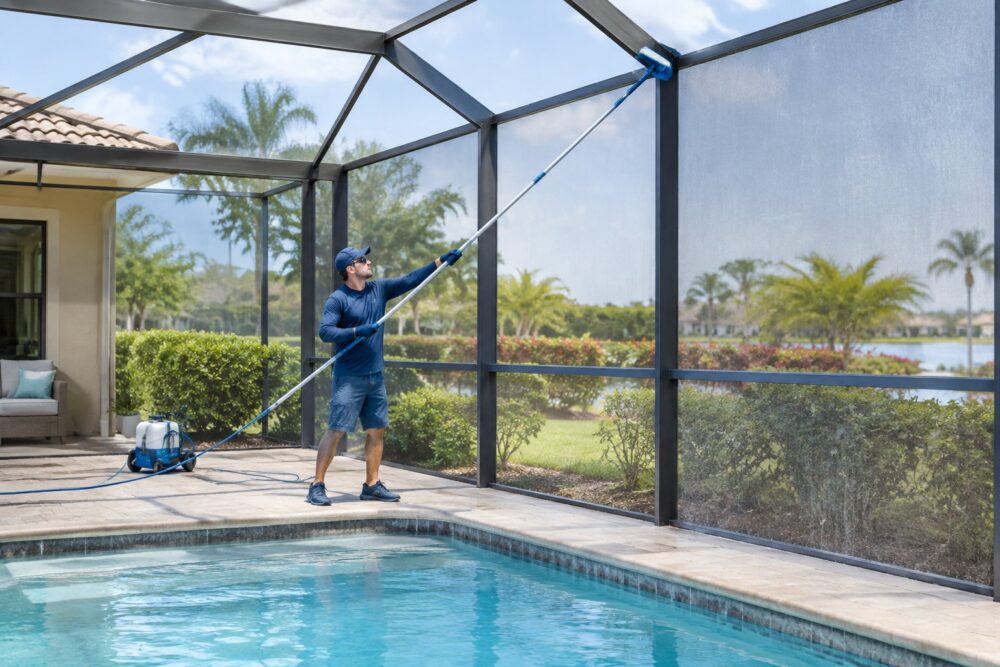
A soft wash suits the frame well. A diluted cleaning solution is applied at low pressure, left to work on the algae for a few minutes, then rinsed off thoroughly so no residue sits on the coating in the sun. The cleaner does the heavy lifting, so the water never has to hit hard. For the tops of high beams, that means working from the ground with the right extension rather than climbing onto the structure.
If you mix your own solution, wear eye protection and gloves, keep it off your skin, and never combine a bleach-based cleaner with ammonia, vinegar or any acid product.
The Screen Panels
Screens are where most do-it-yourself attempts go wrong. Fiberglass mesh is light and flexible. A pressure washer held close will stretch it, pull it out of the channel or punch straight through it.
The approach that works:
- Apply cleaner from the outside or inside at very low pressure, enough to wet the mesh evenly.
- Let it dwell so the green film loosens on its own.
- Rinse with a wide, gentle spray, moving across the panel, never holding still in one spot.
- Work from the top down so dirty runoff does not streak panels you have already finished.
Never walk on a screen roof or lean a ladder against the screen itself. The roof panels are not built to carry weight, and a ladder resting on mesh will tear it.
The Kick Plates and Lower Rails
Kick plates are solid aluminum, so they handle a little more scrubbing than the screen. A soft brush and the same cleaner usually lift the sprinkler bands. If a stain stays orange after cleaning, it is likely iron from irrigation water rather than dirt, and it needs a different treatment.
The Pool Deck Under the Cage
Whatever comes off the frame lands on the deck, so the deck always goes last. Concrete, pavers and textured coatings each need their own approach, which is why the deck is often booked alongside patio washing rather than treated as part of the screen job.
Protecting the Pool, Plants and Furniture
A lanai cleaning job happens right next to open water and usually next to landscaping too.
The pool. Cleaning solution running off a cage roof can drip into the water. Running the pump during and after the job keeps that runoff circulating through the filter, and testing the chemistry the next day tells you whether anything needs adjusting. If you use a pool service, let them know the cage is being cleaned that week.
Plants. Shrubs around the outside of the cage should be soaked with plain water before any cleaner goes on and rinsed again afterward. Wet leaves absorb less.
Furniture and fans. Move cushions and lightweight chairs out. Ceiling fans and outdoor speakers mounted inside the lanai should be covered or switched off.
People and pets. Keep everyone out of the enclosure until the rinse is finished and the deck has dried, since wet decks get slippery.
Most Central Florida Cages Need a Yearly Clean
For most enclosures here, once a year keeps the frame bright and the screens clear. Some need attention more often:
- Cages on the north side of the house or under oaks, which stay damp
- Enclosures that back onto lakes, ponds or wooded lots
- Screens next to sprinkler heads that spray them daily
- Homes where the pool sees heavy use and lots of splash
Zoom your phone camera in on the top of a beam. If there is a dark film along the edge, it is time, and catching it then means a light soft wash instead of a long dwell on heavy growth.
Tall Cages and Heavy Algae Are Jobs for a Crew
A small, single-story cage with light growth is a reasonable weekend job with a pump sprayer and a garden hose. The ones that tend to go better with a crew are two-story cages, enclosures with screen roofs you cannot reach safely from the ground, and cages where heavy black algae has settled on every beam.
Essentials Pressure Washing uses soft washing with biodegradable cleaners for surfaces that should not take high pressure, which is exactly what a screen enclosure needs. If you are already planning a house wash, it is worth asking about the pool enclosure at the same time. You can see the rest of our soft washing services or check the service area pages for Clermont and Windermere.
To get your screens clear again, call (407) 284-9438 and ask for a free estimate on your pool enclosure. There is no obligation to book.
Frequently Asked Questions
Can You Pressure Wash a Pool Screen Enclosure?
Not at full pressure. High pressure tears fiberglass mesh and pops the spline out of the channel. A low-pressure soft wash with a dwell time cleans the screens without stressing them.
What Removes Black Algae From a Pool Cage Frame?
A diluted cleaning solution designed for exterior surfaces, left to sit for several minutes, breaks down the algae on the aluminum. A low-pressure rinse then carries it away. Scrubbing with abrasive pads can strip the powder coat, so it is best avoided.
Will Cleaning the Enclosure Affect My Pool Water?
Some runoff can reach the pool. Keeping the pump running during the job and testing the water afterward handles most cases. Tell your pool service the date so they can adjust the chemistry if needed.
Is It Safe to Climb on a Screen Enclosure Roof?
No. Screen roof panels are not designed to hold a person, and the beams can bend. High sections should be cleaned from the ground with extensions or by a crew with the right equipment.
Should the Screens Be Repaired Before Cleaning?
Yes, if several panels are torn or loose. Water will widen small tears and push loose panels out. Repairing first means the cleaning finishes the job instead of creating more work.