Why Does My Driveway Turn Black? Causes and Practical Fixes for Florida Homes
Your concrete driveway looked bright when it was poured. Now there is a dark band along the shaded edge, black streaks where the gutter drains, and a sooty patch where you park. In most Central Florida homes, a driveway turns black because of black algae, mold, and mildew feeding on moisture and dirt in shaded, damp spots, plus rubber tire marks and oil left by the cars that park there. Each cause looks a little different and needs its own fix.
Orlando, Clermont, and Minneola sit in one of the most humid parts of the country. Morning dew, afternoon storms, and sprinklers keep concrete damp for hours. Oak trees and tall hedges block the sun that would dry it out. That mix makes local driveways darken faster than driveways in drier climates.
Keep reading to find out how to tell algae from tire marks, what cleaning method fits each stain, and how to slow the black film from coming back. By the end, you will know what is on your concrete and what to ask for before anyone turns on a pressure washer.
What Causes Black Stains on a Concrete Driveway?
A concrete driveway turning black almost always has one of four causes: algae, mold or mildew, tire and oil residue, or plain dirt buildup. Concrete is porous, so all of them settle into tiny pits in the surface. The cause tells you which cleaning approach will work.
Black Algae in Damp, Shaded Areas
Black algae concrete stains start where the sun rarely reaches. Look along the north side of the house, under oak limbs, and beside thick shrubs. These spots stay wet long after the rest of the driveway dries.
Algae is a simple plant-like growth that lives on water and light. On concrete it first shows up as a green or gray film. Over time it darkens to a black, slick coating that gets slippery after rain.
Sprinkler overspray makes it worse. If a rotor hits the same strip of driveway every morning, that strip will often be the darkest part of your concrete.
Mold and Mildew on Concrete
Mold and mildew are fungi, and they need moisture to grow. The Florida Department of Health notes that common molds can take hold when water stands for just 24 hours. Low spots on a driveway that hold puddles fit that pattern.
Fungi feed on organic matter. Leaves, pollen, and grass clippings that sit on concrete give them food. You will see mold as blotchy black or gray spots, sometimes with a fuzzy edge.
Mold and algae often grow side by side. Both thrive in the same damp, shaded zones, which is why one cleaning treatment is built to handle both.
Tire Marks and Oil Deposits
Tire marks driveway stains come from rubber, not living growth. Hot Florida pavement softens tires a little. When you turn the wheel while parked, rubber rubs off and leaves dark arcs.
Oil, brake dust, and transmission fluid drip under parked cars. Fresh oil looks wet and shiny. Older oil soaks in and turns into a flat, dark blotch that collects more dirt.
These stains stay in fixed places. They line up with where your tires rest and where the engine sits, which makes them easy to spot.
Dirt Accumulation and Other Surface Stains
Dirt accumulation is the slow, even graying of the whole slab. Foot traffic, runoff from the lawn, and dust from the road all add up. The result is a dull, dark tone instead of distinct spots.
Other stains add to driveway discoloration. Leaf tannins leave brown shadows. Irrigation water with iron leaves orange rust, which can look dark brown from a distance. Once you know the possible causes, the next step is figuring out which ones are on your slab.
How Can You Tell What Is Darkening Your Driveway?
The fastest clue is location. Living growth follows shade and water, while tire marks and oil follow your car. A short walk around the driveway on a dry afternoon will tell you most of what you need to know.
Where the Stain Appears and How It Spreads
Use these quick checks:
- Shaded edges, joints, and drain paths: likely algae or mold. It spreads outward over months and feels slick when wet.
- Fuzzy or blotchy spots in low areas: likely mold or mildew, especially where puddles sit.
- Curved dark arcs near where you park: tire marks. They do not spread on their own.
- Shiny or flat blotches under the engine: oil or fluid. Press a paper towel on it; a fresh drip will leave a mark.
- Even gray across the whole slab: general dirt buildup.
- Hard, crusty gray-green circles: possibly lichen, which grows very slowly.
Run a fingertip over the spot. Algae smears. Rubber marks feel smooth. Lichen does not budge, since the crustose type, as a UF/IFAS Extension lichen guide explains, grows so tightly to its surface that you cannot pull it off.
When Dark Patches May Be Concrete Discoloration
Some concrete driveway discoloration is part of the slab. Concrete poured or finished on different days can cure to slightly different shades. Patches where the finisher added water or troweled harder may look darker for years.
These areas have sharp, straight edges that follow pour lines or control joints. They look the same wet or dry and do not get slick. Cleaning will brighten the surface around them, but the color difference in the concrete itself will remain.
If you see a mix of causes, that is normal. Most Central Florida driveways have algae in one corner and tire marks in another, so the cleaning plan has to cover both.
What Is the Right Way to Clean Black Stains?
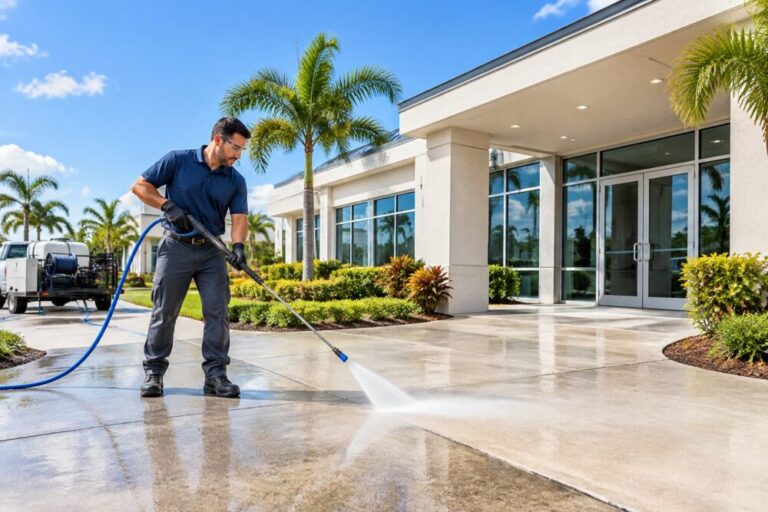
Driveway cleaning works best when each stain gets spot-treated first, then the whole slab is cleaned in even, overlapping passes. Concrete can handle real pressure, so a properly set surface cleaner removes grime evenly without leaving stripe marks. Pavers and stamped surfaces need a lower setting so joint sand stays put.
Treating Algae, Mold, and Mildew
Driveway algae removal starts with a cleaning solution applied to the dark, shaded areas. The solution needs time to soak in and break down the growth. Heavily shaded concrete gets extra treatment time so the pressure can stay at a level the surface can take.
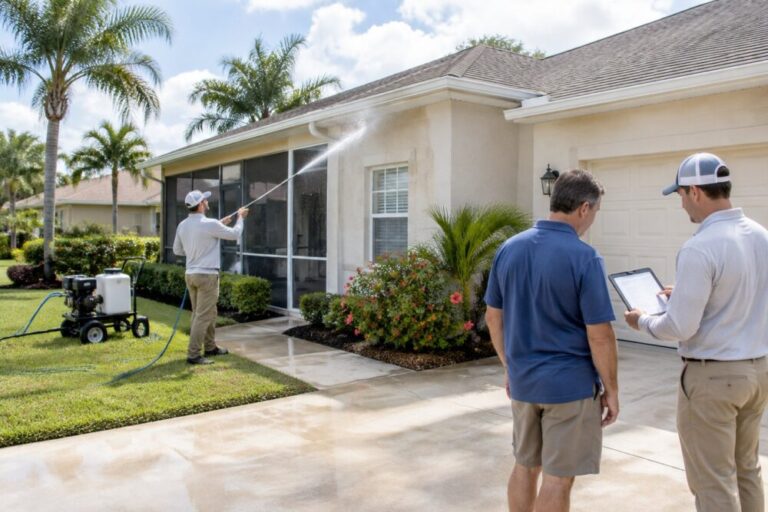
After dwell time, the slab is cleaned with a rotating surface cleaner. Edges, cracks, and expansion joints get detailed by hand. Plants nearby are rinsed before and after to protect them from the solution.
The same growth on your driveway is likely on your siding too. Walls are a different surface, so they get a low-pressure soft wash. You can see how that works for house washing in Orlando, Clermont house washing, and house washing in Minneola.
Addressing Oil and Tire Marks Without Damaging the Surface
Oil and tire marks need a degreaser that loosens the residue before any pressure touches it. Blasting a stain with a narrow tip can etch concrete and leave a lighter “scar” that looks worse than the stain. A wide, even pass after treatment avoids that.
Older oil that soaked deep may lighten a lot without fully vanishing. Rust from irrigation follows a similar rule: how well it comes out depends on how long it has been there.
If you plan to clean it yourself, read the CDC pressure washer safety tips first. A high-pressure spray can cause serious wounds that look minor at first. Once the slab is clean, the goal shifts to keeping it that way longer.
How Can You Slow Down Black Buildup?
You slow the black film by cutting off what feeds it: moisture, shade, and organic debris. Small habits around the driveway make a visible difference in how fast it darkens again.
Clear Debris and Check for Persistent Moisture
Blow or sweep leaves, pollen, and grass clippings off the concrete each week. That debris holds water and gives mold food. Pay close attention to corners and joints where it piles up.
Next, look at where water comes from:
- Aim sprinkler heads at the lawn and away from the slab.
- Extend gutter downspouts so they drain onto grass.
- Trim branches that keep the driveway in full shade all day.
- Watch for low spots that hold puddles after storms.
If one strip keeps going black within weeks of cleaning, look for a hidden water source. A leaking hose bib or a broken sprinkler line is a common culprit.
Ask Whether a Concrete Sealer Fits Your Driveway
A concrete sealer fills some of the tiny pores where algae and oil settle. A sealed slab sheds water faster and releases stains more easily at the next cleaning. It works best on concrete that has been cleaned well and fully dried.
A sealer is a separate job from cleaning, and not every slab needs one. Ask a concrete or sealing contractor whether your driveway’s age, finish, and condition make it a good fit. Even with sealer, Florida humidity means some regrowth over time, so plan on regular cleaning either way.
Identify the Stain Before Choosing a Cleaning Method
Your driveway turns black for more than one reason, and each reason has its own fix. Algae and mold follow shade and moisture. Tire marks and oil follow your car. Dirt dulls the whole slab. Naming the stain first keeps you from using too much pressure in the wrong place.
Concrete gets the pressure it can take, after the stains are pretreated. Pavers get a gentler pass to protect the joint sand. Siding and stucco get a soft wash. That surface-matched approach is how Essentials Pressure Washing has cleaned Central Florida homes since 2005, and you can see both house washing and driveway cleaning services on one page.
If your driveway is overdue, send your address and a short description of the stains. Essentials Pressure Washing serves driveway cleaning in Orlando, Clermont driveway cleaning, and driveway cleaning in Minneola, seven days a week from 7:30 a.m. to 7:30 p.m. Call or text (407) 284-9438 for a free estimate, with no obligation and a same-day callback.
Frequently Asked Questions
Why Does My Driveway Turn Black When It Rains?
Wet concrete always looks darker, but black patches that show up only after rain are often algae. The growth absorbs water and turns darker and slicker when wet. If the spots fade as the slab dries and return with each storm, treat them as algae.
What Causes Black Spots on a Driveway Under a Car?
Spots under a parked car are almost always oil, transmission fluid, or brake dust. Dark curved marks near the tires are rubber from turning the wheel while parked. Both need a degreaser before cleaning, since pressure alone tends to spread oil.
Could the Black Patches on My Concrete Be Lichen?
Yes, if the patches are hard, crusty, and round, and they will not scrape off. Lichen grows very slowly and is harmless, but it holds tight to concrete. It often needs repeated treatment, and faint outlines can remain after cleaning.
How Can I Remove Black Mold From My Driveway?
Apply a mold and mildew cleaning solution, let it soak, then clean the slab in even passes with a surface cleaner. Detail the joints and edges where growth hides. For more tips on Central Florida exteriors, browse the pressure washing blog.
Will Cleaning Remove Every Dark Stain From Concrete?
No, cleaning removes most algae, mold, mildew, dirt, and tire marks, but some stains go deeper. Old oil and long-standing rust may lighten without fully clearing. Color differences from the original pour stay too. Local crews offering pressure washing in Orlando, Clermont pressure washing, or pressure washing in Minneola can tell you what to expect after a walk-through.