Driveway Stain Removal: What Works on Oil, Rust, Algae, and Tire Marks
You back the car out and see it: a dark oil spot where you park, an orange streak from the sprinklers, and a green film creeping across the shady side of the concrete. Maybe you want the driveway clean before family visits. Maybe listing photos are coming up. Either way, those stains are what people notice first from the street.
In Central Florida, year-round humidity, afternoon storms, and well water from irrigation give stains plenty to work with. Oil soaks into porous concrete. Rust from iron in sprinkler water sets fast in the heat. Algae grows anywhere shade and moisture linger. Each of these is a different problem, and each one needs its own fix. The Essentials Pressure Washing crew has handled all four on Central Florida driveways since 2005.
Good driveway stain removal starts with matching the cleaner to the stain. Use absorbents and degreaser for oil, a rust remover for rust, a growth cleaner and pressure for algae, and degreaser for tire marks. Keep reading to see which steps you can handle yourself and when a stain has likely set for good. You will also know when a professional cleaning makes more sense than another weekend of scrubbing.
What Should You Check Before Treating a Stain?
Before you pour anything on your concrete driveway, check three things: what the stain is, whether the surface is sealed or coated, and where the rinse water will go. A few minutes of checking keeps you from wasting product or harming the surface.
Identify the Stain and How Long It Has Been There
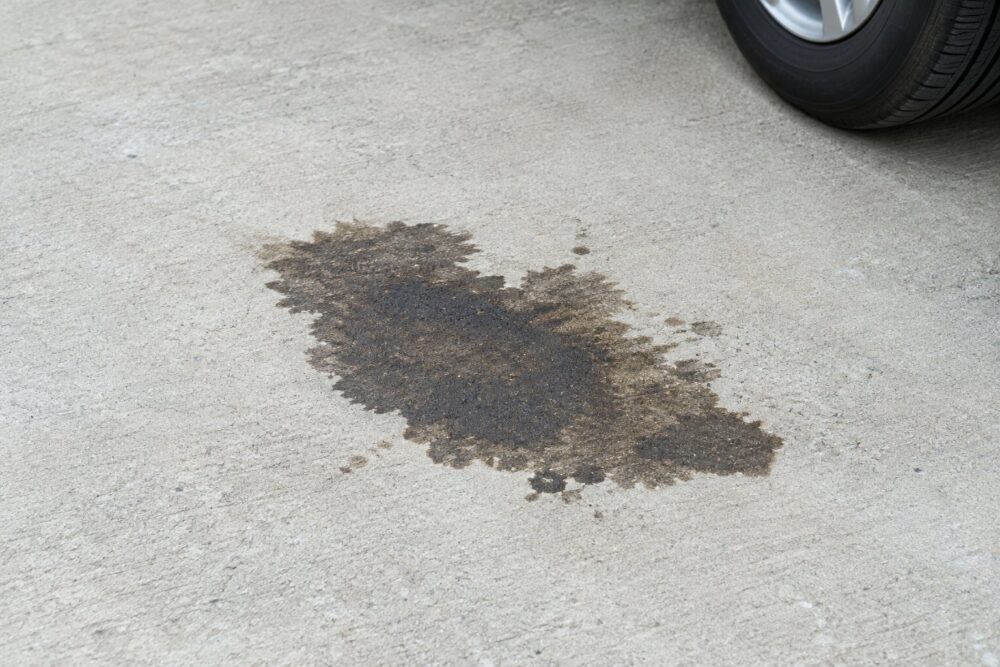
Color and texture tell you a lot. Oil and grease look dark and slick, and they spread in a rough circle. Rust shows up orange or brown, often in streaks near sprinkler heads, planters, or metal furniture. Algae and mildew look green, gray, or black, and they feel slimy when wet. Tire marks show up as black, rubbery strips where you turn the wheel or pull in. If the dark spots are black, see what causes black stains on concrete.
| Stain | How it looks | Starting treatment |
|---|---|---|
| Oil and grease | Dark, slick, roughly round | Absorbent, then a concrete degreaser |
| Rust | Orange or brown streaks near sprinklers | A rust remover labeled for concrete |
| Algae and mildew | Green, gray, or black, slimy when wet | A cleaner for organic growth, then a rinse |
| Tire marks | Black, rubbery strips | A degreaser, then scrubbing |
Age matters just as much. A fresh spill sits near the top of the concrete. A stain that has baked through a Florida summer has soaked deeper into the pores. Older rust and deep oil stains may never fully lift, depending on how long they have set and how porous your concrete is. Plan for improvement, and treat full removal as a bonus.
Check for Sealed Concrete or Concrete Coatings
Sealed concrete and painted or stained coatings react differently from bare concrete. Strong acids and some degreasers can dull a sealer, strip a coating, or leave a light patch. To check, drip a little water on the surface. If it beads up, there is likely a sealer. If it soaks in and darkens the concrete, the surface is bare.
Some products also warn against use on colored or new concrete, so check before you buy. Read the label before any concrete cleaning job, and test in a corner first.
Protect Nearby Plants and Keep Cleaner Out of Drains
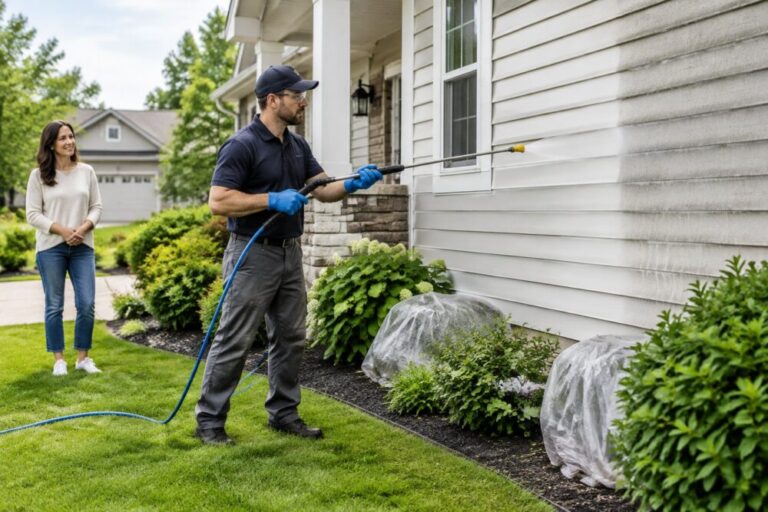
Cleaner runoff can burn grass and shrubs along the driveway edge. Before you start, use this short routine:
- Wet nearby plants and grass with plain water so they absorb less cleaner.
- Cover delicate beds with a tarp or plastic sheet.
- Block or redirect runoff away from the street gutter and storm drain.
- Rinse plants again with plain water once you finish.
Storm drains in Florida flow to lakes and ponds without treatment. University of Florida researchers note that soaps and detergents in runoff add ammonia, phenols, and acids that harm aquatic life. Rinse toward the lawn when you can. Once the area is protected, you can start on the most common driveway stain: oil.
How Do You Remove Oil and Grease Spots?
Oil and grease stains come off best in two stages: pull up as much oil as you can, then break down what is left with a degreaser. How well this works depends on how fast you act.
Absorb Fresh Oil Spills Before Scrubbing
With fresh oil spills, do not start scrubbing or spraying water. Water and scrubbing push oil deeper into the pores and spread the stain wider. Cover the spot right away with an absorbent such as clay cat litter, baking soda, or cornstarch.
Grind the litter in with your shoe so it can reach the oil in the surface texture. Let it sit for several hours, or overnight for a large spill. Sweep it up and bag it. If the spot still looks dark, repeat the process before moving to a cleaner. For a deeper guide, see driveway oil stain removal.
Treat Old Oil Stains with a Concrete Degreaser
Old oil stains need a concrete degreaser or a heavy-duty concrete cleaner. Wet the area lightly, apply the product, and give it the full dwell time on the label. Scrub with a stiff nylon brush, then rinse. Wear gloves and eyewear, and follow the label.
Dish soap helps with light, fresh grease. It rarely touches oil that has set for months. For stubborn spots, plan on two or three rounds of degreaser before you judge the result.
Know When Oil Has Soaked Too Deep to Fully Lift
Oil that has dripped onto the same spot for years can soak well below the surface. After cleaning, you may see the stain lighten to a faint shadow. More oil can wick back up after a few hot days, so the spot looks darker again.
At that point, extra scrubbing or harsh chemicals start to wear the concrete itself. A lighter shadow is a realistic win on an old oil stain. Fix the leak on the car too, or the stain will return. Rust stains behave differently, because they need acid to dissolve.
What Works on Rust Stains?
Rust stains need a mild acid to dissolve them, since detergent and water alone do little to iron staining. In Central Florida, the usual cause is irrigation water with high iron content, which leaves orange bands across concrete.
Start Small on Recent Rust Marks
For small, fresh marks, start with a rust remover labeled for concrete. Clean the area first so the product reaches the stain. Follow the label for dwell time, then scrub with a stiff brush and rinse well with water.
Repeat if the mark is fading. On sealed or colored concrete, use only a product the label says is safe, since even mild acids can dull the finish.
Choose a Concrete-Safe Rust Remover for Stubborn Stains
If a mild product stalls, step up to a stronger rust remover made for concrete. Many contain oxalic acid, which works on deeper stains. Follow the label closely, wear gloves and goggles, and keep the area ventilated.
Strong acids can etch bare concrete and strip sealers or coatings, so test a small spot first. Older rust, especially from years of sprinkler overspray, may only lighten. Rust removal depends on how long the stain has been present.
Find the Rust Source Before It Stains the Driveway Again
Cleaning rust without fixing the cause means you will be doing it again next month. Look for these common sources:
- Sprinkler heads spraying well water onto the concrete. Adjust them to hit the lawn only.
- Granular fertilizer left on the driveway. Sweep it off right after spreading, since the metals rust quickly once wet.
- Metal furniture or planters sitting on the surface. Move them or set them on pads.
- Cracks over rebar, where moisture reaches the steel inside. Repair those cracks.
Once the rust is handled, the remaining stains are usually the green and black ones.
How Do You Clean Green Growth and Tire Marks?
Green growth comes off with a surface-safe cleaner and controlled pressure, while tire marks need a degreaser first. Treating them the same way leaves one of them behind.
Remove Algae and Green Film Without Damaging Concrete
Algae, mold, and mildew live in the pores of concrete, so you need to kill the growth before rinsing it away. Apply a concrete cleaner made for organic growth and let it work for the full dwell time. On heavily shaded slabs, more treatment time does more good than extra pressure. Learn more about green algae on concrete.
Then rinse with a pressure washer at a setting the concrete can take. Concrete is hard and dense enough to handle firm pressure, which flushes growth out of the pores. Use a surface cleaner attachment or keep a steady wand distance, and move in even, overlapping passes. Holding the tip too close or waving it unevenly causes stripe marks.
This method is matched to concrete. Pavers need lower pressure so the joint sand stays in place. Siding and stucco need a low-pressure soft wash, since high pressure can crack stucco or force water behind siding. Follow the pressure washer safety guidance from the Centers for Disease Control and Prevention (CDC), including never pointing the spray at people.
Treat Tire Marks Separately from Organic Growth
Tire marks are rubber and oils transferred from hot tires, especially when you turn the wheel while parked. An algae cleaner will not break them down. Spray a degreaser on the marks, let it sit, and scrub with a stiff brush before rinsing.
Fresh marks lift fairly easily. Marks left in the summer sun for months can leave a faint gray outline, even after a good driveway cleaning. Knowing how each stain responds helps you decide how much of this work to take on yourself.
When Is DIY Cleaning Enough?
DIY concrete cleaning is enough for fresh spills, small rust marks, and light green film on a modest area. Bigger or older problems call for more equipment and time than most weekends allow.
Start with a Small Test Area and a Surface-Safe Cleaner
Always test first. Pick a corner near the garage or behind a planter, apply your cleaner, and let it dry fully. Check for light patches, etching, or a dull spot on sealed surfaces.
If the test looks good, work in small sections so the cleaner never dries on the surface. Rinse each section before moving on. After cleaning, a concrete sealer helps slow oil and rust from soaking in, but let the slab dry completely first.
Consider Professional Cleaning for Set-In Stains or Large Areas
Signs it is time to hand off the job:
- Stains have faded only slightly after two or three rounds of treatment.
- Algae covers most of the driveway or walkway.
- You see stripe marks or etching from earlier DIY attempts.
- You want the house and driveway done together before listing or an event.
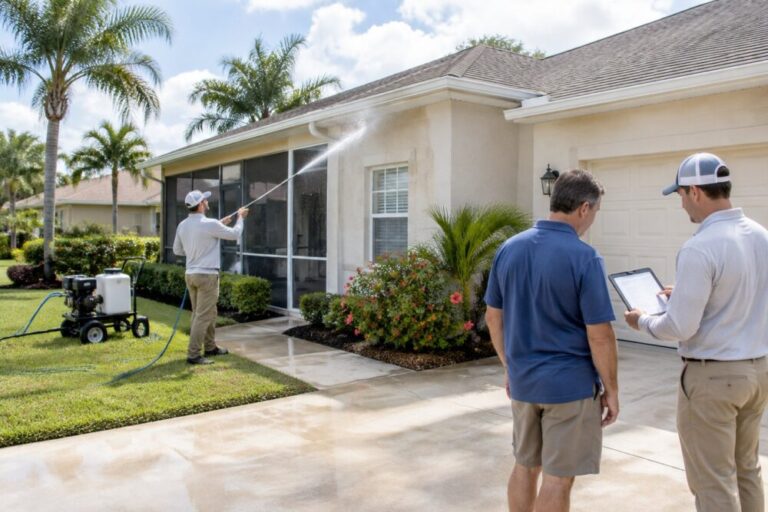
A professional crew spot-treats oil, irrigation rust, and heavy growth, then cleans in even passes and details edges, cracks, and expansion joints. You can see how that works on the driveway cleaning in Orlando page.
Choose the Method That Fits the Stain
Every driveway stain responds to its own method. Oil needs absorbents and degreaser, rust needs a rust remover, algae needs a growth cleaner and firm pressure, and tire marks need degreaser. Fresh stains have the best odds. Old rust and deep oil may only lighten.
If your stains have not responded to DIY efforts, Essentials Pressure Washing has cleaned Central Florida driveways since 2005. As a family-run local crew, we match pressure to the surface and spot-treat stains before the full clean.
Want the siding done too? You can request a combined estimate for a soft wash and the driveway. To get a free estimate with no obligation, call or text (407) 284-9438. You may hear back the same day.
Frequently Asked Questions
How Do I Get Stains off My Concrete Driveway?
Identify the stain first, then use the matching cleaner: degreaser for oil, mild acid for rust, and a growth cleaner for algae. Test in a hidden spot, protect nearby plants, and rinse well.
Will Dish Soap Remove Oil Stains From a Driveway?
Dish soap helps on light, fresh grease, but it rarely lifts oil that has set into concrete. Absorb the spill first, then use a concrete degreaser for older stains.
Can Old Rust Stains Be Removed From Concrete?
Old rust stains often lighten with an oxalic acid rust remover, but some will not come out fully. Results depend on how long the stain has set and how porous the concrete is.
Will Pressure Washing Remove Green Growth and Tire Marks?
Pressure washing removes green growth well when a cleaner is applied first and the pressure suits the concrete. Tire marks need a degreaser before rinsing, and old marks may leave a faint outline.
When Should I Hire a Driveway Cleaning Service?
Hire a service when stains survive two or three DIY rounds, when growth covers large areas, or when you need results before a listing. A free estimate tells you what is realistic for your concrete.