
Is Soft Washing Safe for Your Home? Surface Risks and Safer Cleaning Choices
Green streaks creeping across your stucco after a long, humid summer are hard to miss. So is the worry that cleaning them off will chip paint, etch the finish, or soak your flower beds. Soft washing is safe for most home exteriors, including vinyl siding, stucco, brick, and painted block, when the crew uses low pressure, a properly mixed cleaning solution, and careful rinsing. The risk comes from the wrong pressure, a poorly handled solution, or washing over damage that should have been fixed first.
Central Florida makes this question come up often. Afternoon storms keep walls damp, and shaded north-facing sides grow mildew faster than sunny ones. That means many homeowners in Orlando, Clermont, and Minneola face a cleaning decision every year or two, and a bad choice can cost more than the wash itself.
Keep reading to learn how low-pressure cleaning works, which surfaces need extra care, and what can make a soft wash go wrong. You will also see where pressure washing still fits, such as a concrete driveway. By the end, you will know what to ask a cleaner and which method fits each part of your property.
How Does Low-Pressure Cleaning Protect a Home?
Low-pressure cleaning protects your home by letting a cleaning solution break down mold and mildew so the water stream does not have to blast it off. The spray feels close to a garden hose, so it rinses the surface without forcing water into seams or wearing down the finish.
What Does the Cleaning Solution Do?
Most soft wash mixes are built around sodium hypochlorite, the same active ingredient in household bleach. It kills mold, mildew, and algae at the root, which is why stains fade without scrubbing or high pressure. Household bleach usually runs 5% to 9% sodium hypochlorite, so a wash crew dilutes its mix to fit the surface and the type of growth.
The second key part is a surfactant. A surfactant is a soap-like agent that helps the solution spread and cling to vertical walls so it does not run straight off. Many crews choose biodegradable detergents for this part of the mix to reduce the impact on plants and runoff.
Strength matters for your safety too. The health effects of hypochlorite depend on concentration, and strong solutions can irritate skin, eyes, and lungs. That is one reason mixing and applying the solution is a job for a trained crew with proper gear.
Why Does Application Matter as Much as Pressure?
A safe soft wash follows a set order. Each step protects the house or the yard from a specific problem:
- Wet the plants first. Leaves soaked with plain water absorb less solution.
- Apply from the bottom up. This helps prevent streaks as the solution runs down the wall.
- Let it dwell. The solution needs time to kill growth. Heavy shade staining gets more time, not more pressure.
- Rinse top to bottom. Every inch of siding, trim, and glass gets cleared of solution.
- Rinse the plants again. Nothing should sit in solution after the job is done.
Skipping the dwell time leads some crews to raise the pressure, and that is where damage starts. Some materials handle low pressure well but still need a closer look before any water touches them.
Which Exterior Surfaces Need a Gentler Approach?
Stucco, vinyl siding, painted wood, and painted block all need a gentle approach because high-pressure water can crack, lift, or force water behind them. Brick handles more, but its mortar joints can erode under a narrow, hard spray.
Can Pressure Washing Damage Stucco?
Yes, high pressure can damage stucco. Stucco is a cement-based coating with a textured, slightly porous finish. A strong stream can etch that texture, widen hairline cracks, and leave visible wand marks across a wall.
Stucco over concrete block also holds water. Building scientists describe these walls as storage-type mass masonry that absorbs rain and dries out later. Forcing extra water into cracks slows that drying, and Florida humidity already keeps walls damp.
A soft wash lifts the black and green growth that collects on stucco without grinding at the surface. That is why stucco worries push so many homeowners toward low-pressure washing in the first place.
What Should You Check Before Washing Siding, Brick, or Painted Block?
A quick walk around the house tells you a lot. Look for these issues before anyone starts:
- Vinyl siding: loose, cracked, or warped panels that let water slip behind them.
- Painted wood and painted block: peeling, chalky, or blistered paint that a stream can lift.
- Brick: crumbling or missing mortar between bricks.
- Stucco: cracks wider than a hairline, or hollow-sounding spots when tapped.
- Openings: outlets, light fixtures, vents, and window seals that should stay dry.
Write down anything you find and point it out during the estimate. A good crew notes these spots and keeps water away from them. Some damage calls for a different plan before washing starts at all.
What Can Make a Soft Wash Unsafe?
A soft wash turns unsafe when the solution is too strong, the runoff is not controlled, or the crew washes over damaged surfaces. Each of these problems comes from how the job is done, so you can spot them by asking the right questions.
How Can Cleaning Solutions Affect Plants and Nearby Finishes?
Plants are the most common casualty of a careless wash. Solution that drips onto dry leaves and sits in the sun can brown hedges and spot flower beds. Pre-wetting and a full rinse after the job prevent most of this.
Runoff control matters beyond your yard. Detergent runoff flows into storm drains and ponds, and University of Florida research notes that surfactants in detergent runoff can harm fish. Careful crews limit overspray and rinse thoroughly so solution does not pool on the driveway.
Nearby finishes need attention too. Solution left on dark window frames, metal fixtures, or outdoor furniture can spot or dull them. Professional soft washing services rinse these areas along with the walls.
When Should Damaged Surfaces Be Repaired Before Washing?
Fix the damage first when water could get inside the wall. That includes loose siding panels, open stucco cracks, failed window caulk, and peeling paint over wood. Washing these spots can push water behind the surface, where it causes rot or staining you will not see for months.
Minor issues are a different story. Hairline stucco cracks and a few faded paint spots can usually be washed around with care. The crew should tell you which spots it will skip and why.
If you are planning to paint or repair soon, wash first and then repair. A clean surface shows cracks and peeling paint more clearly, and new paint sticks better to a clean wall.
Soft Washing vs. Pressure Washing: Which Fits the Surface?
Soft washing fits siding, stucco, brick, and painted block, while pressure washing fits hard, dense surfaces such as concrete driveways. Each method is matched to how much force the material can take. Here is a quick comparison:
- Vinyl siding: soft wash. High pressure can push water behind overlapping panels.
- Stucco and painted block: soft wash. Pressure etches texture and lifts paint.
- Brick: soft wash. Hard spray wears down mortar joints.
- Concrete driveways and walkways: pressure washing at a setting matched to the slab.
- Pavers: lower pressure, so the joint sand stays in place.
Why Is High Pressure a Poor Fit for Delicate Exteriors?
High-pressure washing, sometimes called power washing, concentrates force on a small spot. On siding and stucco, that force goes into the surface instead of the dirt. You get stripes, gouges, and water pushed into wall cavities.
The equipment carries personal risk too. The CDC warns that pressure washer spray injuries can look minor at first and still lead to serious infection. That is one more reason to leave high-pressure work to trained crews.
When Is Pressure Washing Appropriate for a Driveway?
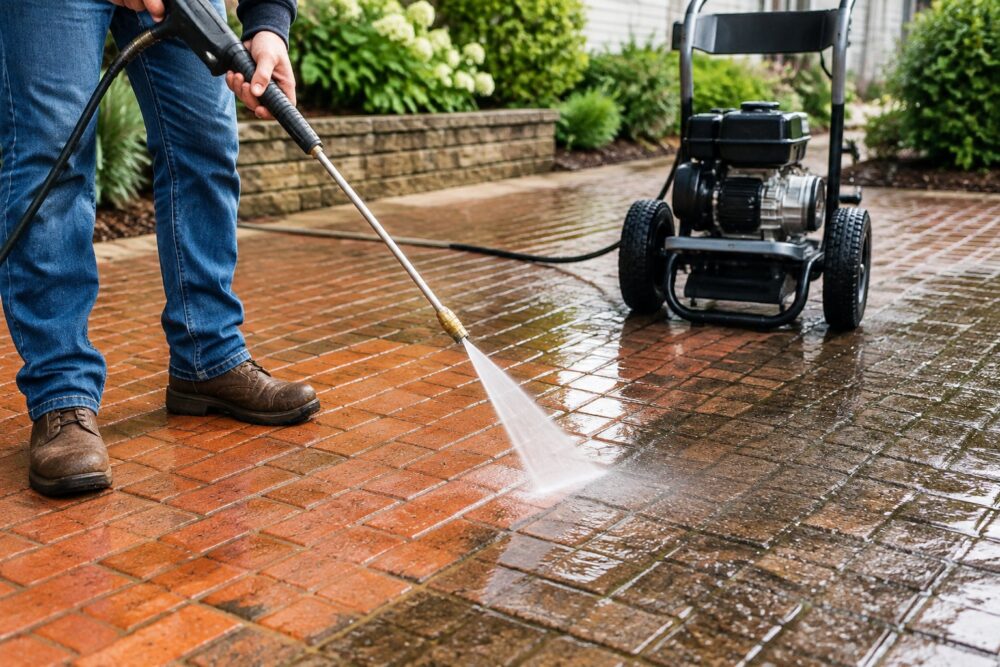
Concrete is dense and tough, so it can take the pressure needed to clear oil spots, tire marks, and black algae. Even so, the setting matters. Too much pressure held in one place leaves stripes or roughens the surface.
A careful job starts by spot-treating oil, irrigation rust, and heavy growth. The crew then cleans in even passes and details the edges, cracks, and expansion joints. Rust removal depends on how long the stain has been there, so older rust may only lighten.
You can see how this works on concrete in Orlando driveway cleaning, Clermont driveway cleaning, and Minneola driveway cleaning. Knowing the right method is half the job; the other half is hiring someone who follows it.
What Should You Ask Before Booking a House Wash?
Ask how the crew checks your exterior, how it protects your yard, and what results it expects on your specific stains. Clear answers to those questions tell you more than a low price.
Will the Cleaner Inspect the Exterior and Protect Landscaping?
A good soft wash service walks the house before starting. The crew should check the siding type, look for damaged areas, and note anything that needs to stay dry. If no one looks at your walls before spraying, that is a warning sign.
Ask how plants are handled. The answer you want is that beds get rinsed before and after so nothing sits in solution. Also ask what is covered. A full house washing in Orlando visit, for example, covers siding, soffits, fascia, gutter faces, and trim.
What Results Are Realistic for Mold, Mildew, and Stubborn Stains?
Mold, mildew, pollen, dirt, and cobwebs come off well with a soft wash. Green and black growth on shaded walls responds to the solution and dwell time. Heavy staining may need a longer treatment.
Some stains are different. Rust from irrigation water, paint oxidation, and deep stains in porous block may lighten without disappearing. An honest cleaner tells you this up front.
Results do not last forever in Florida. Growth returns over time, faster on shaded walls and slower in full sun.
Choose a Cleaning Method That Protects Your Exterior
Soft washing is safe for your siding, stucco, brick, and painted block when it is done with low pressure, the right solution strength, and full rinsing. Save pressure washing for concrete, and fix open cracks or loose panels before any wash.
If you want help sorting out your own home, Essentials Pressure Washing has cleaned Central Florida exteriors since 2005. The family-run crew offers soft wash house washing in Clermont and house washing in Minneola, plus driveway cleaning. You can browse all house and driveway services, or read about pressure washing in Orlando, pressure washing in Clermont, and pressure washing in Minneola.
Not sure which method fits your surface? Call or text (407) 284-9438 or visit Essentials Pressure Washing for a free estimate with no obligation and a same-day callback.
Frequently Asked Questions
Is Soft Washing Safe for Stucco With Small Cracks?
Yes, soft washing is safe for stucco with hairline cracks when the crew keeps the pressure low. Wider cracks or hollow spots should be repaired first so water does not get behind the coating.
Can Soft Washing Damage Vinyl Siding or Painted Surfaces?
Soft washing rarely damages vinyl siding or sound paint when done correctly. Loose panels, peeling paint, or a solution mixed too strong can cause problems, so point out weak spots before the wash.
Are Soft Washing Chemicals Safe for Plants and Pets?
They are safe for plants and pets when beds are rinsed before and after and the solution is fully rinsed away. Keep pets inside during the wash and until surfaces dry.
Is Soft Washing Safe for Roofs?
Many cleaners soft wash roofs because high pressure can strip granules from asphalt shingles and damage wood shakes or metal roof coatings. The black streaks on Florida roofs often come from algae called Gloeocapsa magma, and moss removal needs care too. Roof cleaning is its own specialty, so ask any roofer or cleaner about your roof’s warranty first.
Can You Soft Wash With a Pressure Washer?
Yes, some crews soft wash using a pressure washer fitted with a low-pressure tip or a separate low-pressure pump. The key is the low pressure at the surface and the cleaning solution, not the machine name.
How Often Should a House Be Soft Washed in Central Florida?
Most Central Florida homes need a soft wash about once a year. Heavily shaded houses and damp north-facing walls can need it sooner, and you can find more seasonal tips on our exterior cleaning blog.